Aug 20, 2026 · 56 min · 12 segments
Mark Cuban did not set out to become the most disruptive force in American drug pricing. He just wanted to know why the same generic pill could cost $15 at one pharmacy and $500 at another. In this…
Anthony ParavatiHost
Amar RewariHost
I wanted to pivot a little bit and talk about just healthcare and markets and free markets.

And now that you've been in deep down in the US healthcare system with all the price asymmetry and all the issues, what do you think? What do you think about free markets and healthcare?
I mean, the biggest conglomerate has more than 3,000 subsidiaries, does $150 billion a year in intercompany transfers.
by paying more to the subsidiaries providing care that they own so that it looks like their MLR ratios are higher and meet the statutory requirements, but they're just keeping money somewhere else.
You know, they have companies that are copay maximizers, that do copay maximizers and accumulators, which go out and get copay cards from brand manufacturers and to cover the copay of an employer's member, but they don't tell them, A, that that copay card doesn't count against the deductible.
So all you've done is push paying the amount out of pocket to the end of the year instead of the beginning of the year.
And to make matters even worse, they don't tell the employer who they're charging 25% or more of the percentage of money that they've received in copay cards, they don't tell them that that's a subsidiary.
Or they don't tell them that they've outsourced Prius and Denials to a company that they say, oh, that's the bad guy.
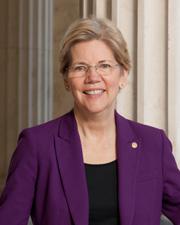
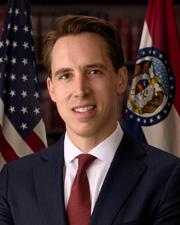
Those are all the things that are happening right now, which is why the most important bill that's getting no support is the breakup big medicine bill from Josh Hawley and Elizabeth Warren.

I think it's got to be a huge factor in how we got to this point, Mark, where one in five dollars in the U.S. economy, 20 percent of our economy is spent on health care.

I wanted to pivot a little bit and talk about just healthcare and markets and free markets.

And now that you've been in deep down in the US healthcare system with all the price asymmetry and all the issues, what do you think? What do you think about free markets and healthcare?
I mean, the biggest conglomerate has more than 3,000 subsidiaries, does $150 billion a year in intercompany transfers.
by paying more to the subsidiaries providing care that they own so that it looks like their MLR ratios are higher and meet the statutory requirements, but they're just keeping money somewhere else.
You know, they have companies that are copay maximizers, that do copay maximizers and accumulators, which go out and get copay cards from brand manufacturers and to cover the copay of an employer's member, but they don't tell them, A, that that copay card doesn't count against the deductible.
So all you've done is push paying the amount out of pocket to the end of the year instead of the beginning of the year.
And to make matters even worse, they don't tell the employer who they're charging 25% or more of the percentage of money that they've received in copay cards, they don't tell them that that's a subsidiary.
Or they don't tell them that they've outsourced Prius and Denials to a company that they say, oh, that's the bad guy.
Those are all the things that are happening right now, which is why the most important bill that's getting no support is the breakup big medicine bill from Josh Hawley and Elizabeth Warren.

I think it's got to be a huge factor in how we got to this point, Mark, where one in five dollars in the U.S. economy, 20 percent of our economy is spent on health care.
The rest of this transcript — segmented and speaker-labeled, so you land on the exact moment something was said
Search every transcript — by keyword, by phrase, or by meaning, across every show Radar indexes
Trends — what is surging across podcasts, measured against its own baseline
Alerts — when a name you follow appears in a newly indexed episode
No account is needed to search Radar.