Van T. RuddGuest[gentle music] [crowd chatter] The year is 1944, August 4th, 13 months before the end of the Second World War.
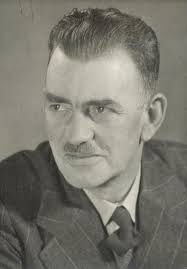
John Dedman steps up to the podium to make a speech for an on-campus labor club event.
He finds a baseball bat and helmet on the table where the water jug usually sits.
He's reported to jovially put the baseball mask over his head for several rounds of culinary bombardments by a group of medical students protesting his strict rationing regime and conscription.
[bat thudding] When he pauses to address the audience, someone shouts, "What is it, Dad?" He continues while wiping off splatters with his handkerchief.
[cloth scraping] The splatters consist of a truly delicious mix of apple cores, orange peels, pennies, and boiled eggs.
Between ducking, he makes his way through his speech, even as protesters sing Why Was He Born So Beautiful to drown him out.
Why was he born so beautiful? Why was he born at all?
The eggs were mercifully boiled first, so the mess was minimal, although I can't imagine the smell left him feeling grateful at the time.
Part of his extensive cutback of all industrialized indulgence, food, clothing, petrol, even Christmas advertisements.
In his obituary published in the Canberra Times in 1973, he was defined as "the man who cut the tails off Australia's shirts."
And, uh, for three years, 1941 to 1943 inclusive, I was, I think, the most unpopular man in Australia.
People remember me by such things as, uh, that I abolished or, or that I killed Father Christmas, that I, uh, abolished pink icing, uh, uh, that I, uh, introduced standardized dresses for women, uh, that I denied the public many of the things that they had been accustomed to enjoy.
Banning Christmas advertisements, multicolored icing, and fashion during the war, it pelted the nation's spirit.
How about the victory suit, Mr. Dedman? The victory suit? Well, here it is.
He's promoting it for a documentary distributed by British Empire Films back in 1941.
When he sits in his chair, his hands curl around the ends of the armrest delicately.
It looks just like any other suit.
[gentle music] [crowd chatter] The year is 1944, August 4th, 13 months before the end of the Second World War.
John Dedman steps up to the podium to make a speech for an on-campus labor club event.
He finds a baseball bat and helmet on the table where the water jug usually sits.
He's reported to jovially put the baseball mask over his head for several rounds of culinary bombardments by a group of medical students protesting his strict rationing regime and conscription.
[bat thudding] When he pauses to address the audience, someone shouts, "What is it, Dad?" He continues while wiping off splatters with his handkerchief.
[cloth scraping] The splatters consist of a truly delicious mix of apple cores, orange peels, pennies, and boiled eggs.
Between ducking, he makes his way through his speech, even as protesters sing Why Was He Born So Beautiful to drown him out.
Why was he born so beautiful? Why was he born at all?
The eggs were mercifully boiled first, so the mess was minimal, although I can't imagine the smell left him feeling grateful at the time.
Part of his extensive cutback of all industrialized indulgence, food, clothing, petrol, even Christmas advertisements.
In his obituary published in the Canberra Times in 1973, he was defined as "the man who cut the tails off Australia's shirts."
And, uh, for three years, 1941 to 1943 inclusive, I was, I think, the most unpopular man in Australia.
People remember me by such things as, uh, that I abolished or, or that I killed Father Christmas, that I, uh, abolished pink icing, uh, uh, that I, uh, introduced standardized dresses for women, uh, that I denied the public many of the things that they had been accustomed to enjoy.
Banning Christmas advertisements, multicolored icing, and fashion during the war, it pelted the nation's spirit.
How about the victory suit, Mr. Dedman? The victory suit? Well, here it is.
He's promoting it for a documentary distributed by British Empire Films back in 1941.
When he sits in his chair, his hands curl around the ends of the armrest delicately.
It looks just like any other suit.
The rest of this transcript — segmented and speaker-labeled, so you land on the exact moment something was said
Search every transcript — by keyword, by phrase, or by meaning, across every show Radar indexes
Trends — what is surging across podcasts, measured against its own baseline
Alerts — when a name you follow appears in a newly indexed episode
No account is needed to search Radar.