Aug 28, 2026 · 1 hr 4 min · 14 segments
!The Republican Professor The post…
Lucas J. MatherHost

you don't say tell us more about that dan by the way dan has a law degree from georgetown university law school let me double check oh sorry university of virginia university of virginia where my mentor my con law mentor dr michael uhlman went and he studied under the late great harry jaffa okay The Bible, especially the laws of Moses, exerted much influence on early American law.

Our ancestors revered the Bible and endeavored to enact their laws according in accordance with it, said Jeremiah Atwater, the president of Middlebury College in an early 19th century Vermont election sermon.

In an 1802 charge to a Massachusetts grand jury, Judge Nathaniel Freeman expressed the deference many in the new nation continued to accord biblical law.

"...the laws of that system must be respected as of high authority in all our courts, and it cannot be thought improper for the officers of our government to acknowledge their obligation to be governed by its rules." The New England Patriots, excuse me, the New England Puritans especially, looked to biblical sources for their laws because they feared that reliance on the mind of man to craft laws given man's fallen nature would unavoidably produce corrupted legal codes.

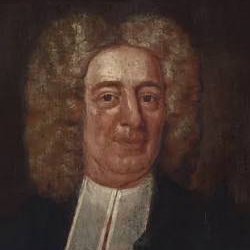
The Puritan divine John Cotton said, By the way, one of my ancestors, Cotton Mather, his first name comes from John Cotton because I think that was his mother's father, I think.

The Puritan divine John Cotton wrote in a precursor document to the Massachusetts Body of Liberties that, quote, the more any law smells of man, the more unprofitable, unquote.

Therefore, the only source of proper law free from the taint of fallen man was, quote, divine ordinances revealed in the pages of Holy Writ, quote, and administered according to deductions and rules gathered from the word of God." Moreover, the Bible was a unifying force in the law insofar as it commanded ultimate loyalty and juridical respect from a Bible-loving people.

To be sure, The colonists did not enact all aspects of biblical law, and the Bible was not the sole source of their laws, but it was a vital authoritative source of law in their new political communities.
The rest of this transcript — segmented and speaker-labeled, so you land on the exact moment something was said
Search every transcript — by keyword, by phrase, or by meaning, across every show Radar indexes
Trends — what is surging across podcasts, measured against its own baseline
Alerts — when a name you follow appears in a newly indexed episode
No account is needed to search Radar.