Aug 26, 2026 · 1 hr 5 min · 12 segments
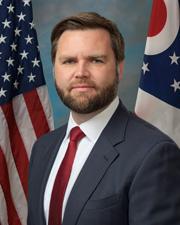
Why has JD Vance been on a crusade against the economics profession recently? Phil Magness joins the podcast to discuss why JD Vance thinks the concept of GDP is fake, why he's skeptical that…
Phil MagnessGuestJeremiah JohnsonHostFor listeners who may not be familiar, How would you describe the post-liberal right? Like, how are they different from just, you know, well, conservatives are not liberals, you know, so like, but if somebody who's kind of just walking by heard that, they might be like, aren't all Republicans post-liberals?

Well, this is a very distinctive strain of political philosophy that started to pop up around the early 2010s.

And it's basically a worldview that looks at modernity, looks at the great enrichment, the industrial revolution as basically a mistake.

That this is liberal philosophy reoriented mankind's direction and focus in life around worldly prosperity and consumption.

And we made ourselves better off, but we lost sight of community and morality and the position of the church in that community.

And they really look at things like basically from John Locke to the present as an aberration in human history.

And they view themselves as writing the course, returning us to our natural course, which looks a lot more like the Middle Ages, if anything.
They're anti-liberal in the sense of separation of church and state and liberal democracy and kind of the small liberalism that really undergirds the entire Western civilization, arguably.

Yeah, and I'll say it's a fundamentally anti-American project in the sense that these are people who think the Declaration of Independence was a mistake.

And they started putting out books, giving themselves this name, this title of a movement of a philosophy.

And one of the people that latched onto it pretty early on, again, around 2017 or 18, was J.D. Vance.

He encountered them somewhere along the conservative conference scene and really veered in that direction.

And you can kind of see how, on the one hand, you have this very high-minded, abstract, post-liberal philosophical world that wants to return us to the Middle Ages in culture, in governance, in our economy.

And then you have J.D. Vance, who's sitting here looking at something like middle America that he thinks is hollowed out and beset by all these economic problems.

The two merge together pretty closely and mapped right onto what Vance was articulating in some of his books.
For listeners who may not be familiar, How would you describe the post-liberal right? Like, how are they different from just, you know, well, conservatives are not liberals, you know, so like, but if somebody who's kind of just walking by heard that, they might be like, aren't all Republicans post-liberals?

Well, this is a very distinctive strain of political philosophy that started to pop up around the early 2010s.

And it's basically a worldview that looks at modernity, looks at the great enrichment, the industrial revolution as basically a mistake.

That this is liberal philosophy reoriented mankind's direction and focus in life around worldly prosperity and consumption.

And we made ourselves better off, but we lost sight of community and morality and the position of the church in that community.

And they really look at things like basically from John Locke to the present as an aberration in human history.

And they view themselves as writing the course, returning us to our natural course, which looks a lot more like the Middle Ages, if anything.
They're anti-liberal in the sense of separation of church and state and liberal democracy and kind of the small liberalism that really undergirds the entire Western civilization, arguably.

Yeah, and I'll say it's a fundamentally anti-American project in the sense that these are people who think the Declaration of Independence was a mistake.

And they started putting out books, giving themselves this name, this title of a movement of a philosophy.

And one of the people that latched onto it pretty early on, again, around 2017 or 18, was J.D. Vance.

He encountered them somewhere along the conservative conference scene and really veered in that direction.

And you can kind of see how, on the one hand, you have this very high-minded, abstract, post-liberal philosophical world that wants to return us to the Middle Ages in culture, in governance, in our economy.

And then you have J.D. Vance, who's sitting here looking at something like middle America that he thinks is hollowed out and beset by all these economic problems.

The two merge together pretty closely and mapped right onto what Vance was articulating in some of his books.
The rest of this transcript — segmented and speaker-labeled, so you land on the exact moment something was said
Search every transcript — by keyword, by phrase, or by meaning, across every show Radar indexes
Trends — what is surging across podcasts, measured against its own baseline
Alerts — when a name you follow appears in a newly indexed episode
No account is needed to search Radar.