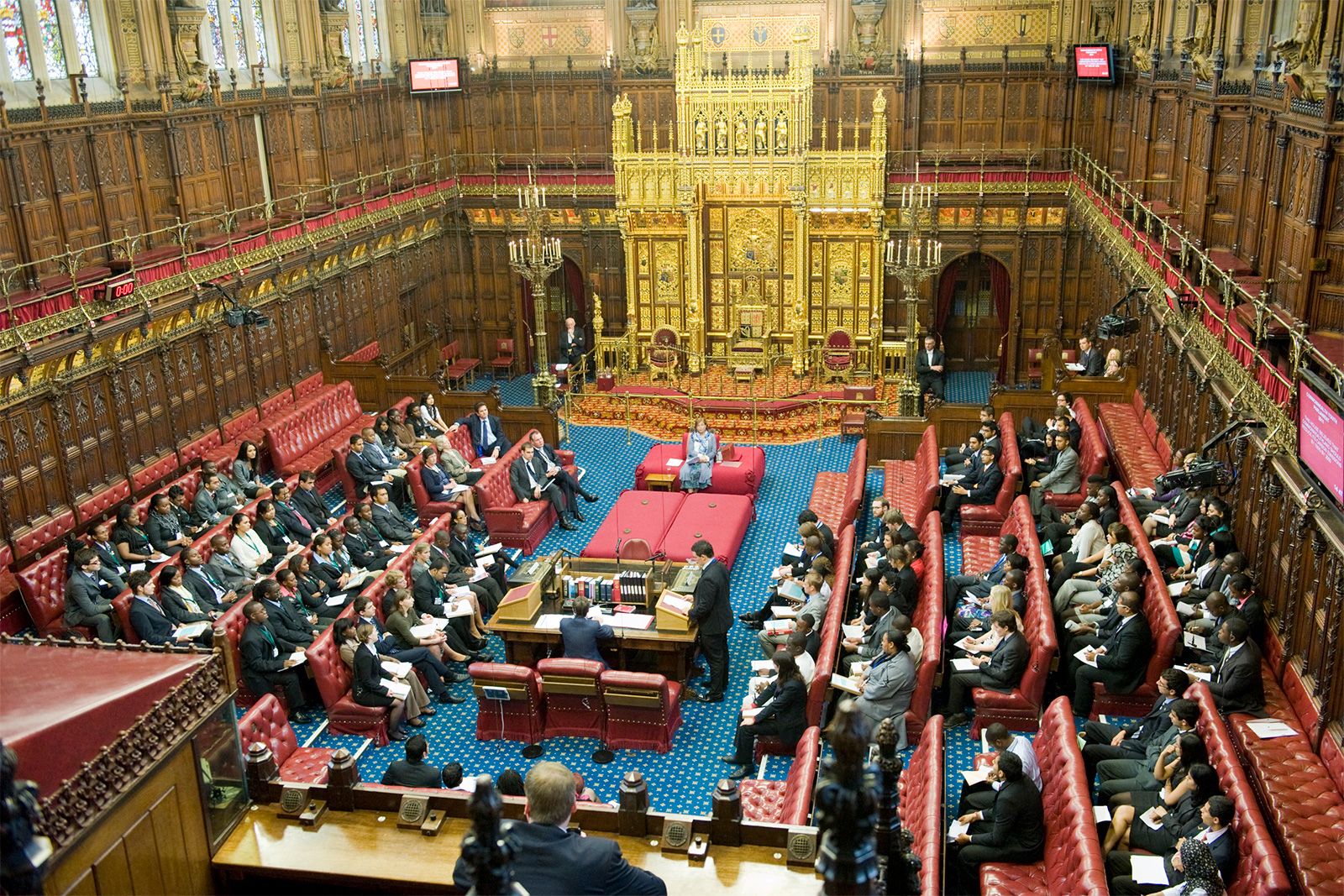
House of Lords of the United Kingdom
Law courtWikipedia
1.5k
MENTIONS
653
EPISODES
481
PODCASTS
Search complete. 1525 mentions across 653 episodes found for "House of Lords of the United Kingdom".
Oct 30, 2026

Judith HawleyGUEST
And then that is repeated as being a set of things that is on gin houses.
Judith HawleyGUEST
Well, actually, the phrase drunk for a penny was used in the House of Lords in one of the speeches against gin.
Judith HawleyGUEST
Just drunk for a penny.
Judith HawleyGUEST
And then you get this kind of inflation.

Nusrat GhaniGUEST
I'm just thinking about the process last year.
Nusrat GhaniGUEST
So we had the budget last year in November and it became the finance bill around December and then made its way over to the House of Lords I think around March the 17th and then March the 18th it became the Finance Act.
Nusrat GhaniGUEST
and got the Royal Ascent.
Nusrat GhaniGUEST
And this is the other unique piece of business that we do.
Nusrat GhaniGUEST
Because the independence of the Commons and our right and role over taxation, it's very rare that the House of Lords makes any changes.
Nusrat GhaniGUEST
So eventually, if last year started in November, ended up in March this year, we may become the Finance Act around February.
Nusrat GhaniGUEST
so it is a long process so what we see on yesterday on budget day is just the first day but the whole process takes a few months before it becomes the finance act and i'll be working with my my clerks and speakers team to make sure the process is managed

Beth RigbyHOST
Harriet, what's your favourite pickle?
Harriet HarmanHOST
Well, I think everybody's Christmas present this year has got to include, sorry to be so on brand here, but the House of Lords do amazing pickles and chutneys in there and you get a very red and gold label, like as if it's, you know.
Harriet HarmanHOST
It's
Beth RigbyHOST
fancy pickles.

Nadia SawalhaHOST
did.
Nadia SawalhaHOST
Well, they didn't fold under the pressure of the 50p from the House of Lords that wrote a letter saying you shouldn't be allowed in.
Mark AdderleyHOST
Yeah.
Mark AdderleyHOST
But someone else has been banned.

Ffinlo CostainHOST
I'm Ffinlo Costain, the editor of 8.9.com.
Ffinlo CostainHOST
In this program, I'm joined by Baroness Julia Agliambi, newly elevated to the House of Lords, where she's now sitting as a Liberal Democrat life peer.
Ffinlo CostainHOST
Julia will be known to many listeners for her long career working in the countryside, perhaps particularly for her 14 years as Executive Director of the Foundation for Common Land.
Ffinlo CostainHOST
Today, I'm asking Julia three questions.
Ffinlo CostainHOST
Why, how, and what? Why was she chosen for the House of Lords? How did the appointment happen? And what's she going to do now that she's there? Julia, welcome.
Ffinlo CostainHOST
Shall we start with the why you? And perhaps you could just tell us a little about your life before the Red Leather Benches.
Julia AglionbyGUEST
Well, thank you very much, Finlay, and it's lovely to be with you here today.
30 MINS LATER
Julia AglionbyGUEST
And inevitably, some of those people I helped are Liberal Democrats.

Josh WhiteHOST
For much of the 20th century, the House of Lords was synonymous with hereditary privilege and aristocratic power.
Josh WhiteHOST
But over recent decades, that has changed.
Josh WhiteHOST
Hereditary peers have been removed, life peerages have been expanded, and the chamber has become more diverse in both its membership and its political composition.
Josh WhiteHOST
Yet does this mean that the relationship between wealth and political power has really been broken? If the aristocracy has been displaced, who now occupies the upper reaches of the British political elite? How closely are wealth, asset ownership, corporate power and political influence still intertwined within the House of Lords? And what might the answers to these questions tell us more broadly about the changing structure of inequality and rentier capitalism within Britain? My name is Josh White, and you're listening to New Thinking in Political Economy from Sperry Presents, the podcast series where we speak to authors of new research and explore what their work tells us about power, governance, and inequality within contemporary capitalism.
Josh WhiteHOST
To discuss all of this today, I'm lucky enough to be joined by Dr. Hima Khatni, Associate Professor in Political Economy at the University of Birmingham.
Josh WhiteHOST
to discuss his new book, The Assetocracy, Wealth, Power and Elitism in the House of Lords.
Josh WhiteHOST
Hugh, thank you very much for taking the time to join us on New Thinking today.
Josh WhiteHOST
How are you doing? I'm doing well, Josh, thanks.

Carl TurnerGUEST
It is unworkable.
Carl TurnerGUEST
Turner and the rest of them, it's not just me, Chris, Tory MPs, a lot of good, respected MPs were opposing this across the House.
Christopher HopeHOST
And, Carl, the problem I had with it was... was it required judges to assess a case on whether there'd be likely to be a certain length of sentence and then tick or don't tick the box, mark jury.
Christopher HopeHOST
So essentially, the judges were being asked in each case to almost to try the case before they heard evidence from the defendant and then work out whether or not it goes towards the jury, which is all the wrong way around.
Carl TurnerGUEST
They sometimes have 50, 60... previous convictions, that defendant for the same offence would get the benefit of a jury tribe.
Carl TurnerGUEST
And I say that cannot be a consequence that any government, any rightful, decent government could ever put into position.
Carl TurnerGUEST
So I'm saying the House of Lords will improve the bill.
Carl TurnerGUEST
I'm hoping it comes back when the House of Lords have kicked it around to a state that I can support it.

Peter YearsleyNARRATOR
the construction of cesspools in eighteen ten there must have been two hundred thousand cesspools in london but in that year their increase was checked
Peter YearsleyNARRATOR
as some mitigation of the evil arising from those acts overflow drains from the cesspools were permitted but in the greater number of cases and in all the poorer parts of the metropolis cesspools without overflows were the rule and covered drains the exception the attention of drs arnott k and southwood smith was forcibly drawn to the evils resulting from this state of things when they were the medical officers employed by the poor law commissioners in eighteen thirty eight the house of lords took the first step in the matter in eighteen thirty nine by petitioning the crown for an inquiry and report to be made upon the physical causes of sickness and mortality to which the poor are peculiarly exposed the poor law commission made a report a commission to inquire into the state of large towns and populous districts was issued in eighteen forty three and the public health act was the result the case of the metropolis had so many features peculiarly its own that it was
Peter YearsleyNARRATOR
considered desirable to obtain further information before making it the subject of a new enactment and accordingly in eighteen forty eight the metropolitan sanitary commission was issued which reported
Peter YearsleyNARRATOR
at great length on the condition and defects in its administration the practical result was to supersede all the separate commissions westminster holborn and finsbury tower hamlets poplar marsh surrey and kent and greenwich and to consolidate them by issuing new commissions to the same individuals for all these separate jurisdictions these commissions became fused into one by the metropolitan sewers act of eighteen forty eight an important measure that did not make any alteration in the principle of the law but considerably extended the powers and authority of the commissioners who were however still crown appointed the area of jurisdiction was extended to a circle of twelve miles radius from st paul's excluding the square mile or thereabouts contained in the city proper all doubts as to the legal right to construct sewers were removed all sewers were vested in the commissioners and full power was given them over all private drainage their authority to make rates was defined and extended and in place of the old troublesome qualification of a rate-payer as one who received benefit or avoided damage the principle was established of levying the rate over a certain definite area or district

Cuán Ó FloinnHOST
And actually, I'm going to say something very important now.
Cuán Ó FloinnHOST
If Trump was in the House of Commons, or if he was in the House of Lords, or if the whole world in America knew that he was going to be a farmer, that he was going to be a manager, that he was going to be...
Cuán Ó FloinnHOST
And like, there's a real difference there.
Cuán Ó FloinnHOST
If Obama was in the Cheesecake Factory, everyone was going to say he's out of touch.

Natalie SedaccaGUEST
So I already mentioned that with the previous legislation, it was really watered down.
Natalie SedaccaGUEST
in terms of when the Employment Rights Act went through, again, you know, on other areas, it was in this area, it was not watered down from the original draft in relation to these provisions, but there was a real attempt to do so both by Conservatives, both in the House of Commons and the House of Lords.
Natalie SedaccaGUEST
And there was, you know, people raising an idea that this would interfere with free speech, trying to get particular sectors exempted from the provisions on third party harassment, for example, in hospitality and also higher education at some point was suggested as exemptions.
Natalie SedaccaGUEST
At one point, while it was going through the Lords, one of the tabloids, I think, even ran a kind of article saying, Angela Rayner wants to put banter police in your office at your water cooler.
643 more episodes mention House of Lords of the United Kingdom.
Create an account to see the whole feed, search across every transcript, and follow the entities you care about.