The Distribution by Juniper Square
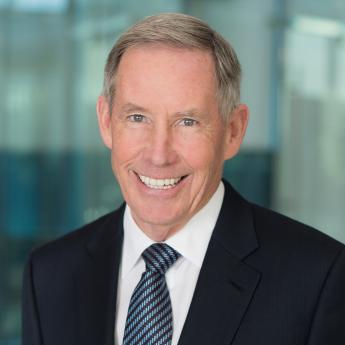
Still Early Innings: The Convergence of Asset Management and Private Wealth - Bill McMorrow - CEO of Kennedy Wilson
Aug 18, 2026 · 58 min · 10 segments
Brandon Sedloff and Bill McMorrow trace the evolution of Kennedy Wilson from a $57,000 real estate auction company in 1988 to a global investment firm managing nearly $38 billion in assets. McMorrow…
Brandon Sedloff and Bill McMorrow trace the evolution of Kennedy Wilson from a $57,000 real estate auction company in 1988 to a global investment firm managing nearly $38 billion in assets. McMorrow shares how a series of pivotal relationships, from early banking mentors to partnerships with George Graziadio and Fairfax Financial's Prem Watsa, shaped the firm's trajectory across four decades of real estate cycles. The conversation on The Distribution reveals how McMorrow identified opportunities in Japan during the 1990s, Ireland and the UK following the Great Recession, and multifamily housing markets when regional banks retreated in 2023. They discuss: \- Why McMorrow focuses exclusively on housing across the US, Ireland, and the UK after owning every asset type \- How a half-hour conversation at a Berkshire Hathaway meeting led to $20 billion in joint ventures over sixteen years \- The discipline of saying yes to start the journey, even when the path forward isn't clear \- Why narrowing focus and tuning out noise matters more than ever in today's information-saturated environment \- What McMorrow learned from working on commercial fishing boats, in a slaughterhouse, and growing up in a family of nine kids This episode offers insight for investors navigating uncertainty, building long-term institutional relationships, and recognizing contrarian opportunities when markets feel murky. Topics: (00:00:00) - Intro (00:02:43) - Bill McMorrow's early life and formative years (00:05:31) - Banking career and move to Philadelphia (00:08:43) - Acquiring Kennedy Wilson in 1988 (00:10:51) - Expanding to Japan in the 1990s (00:12:14) - The Great Recession and meeting Prem Watsa (00:15:06) - Kennedy Wilson's culture and growth to $38 billion (00:16:36) - Growing up in a family of nine (00:22:25) - Building relationships with foreign investors (00:24:25) - The Ireland opportunity and Bank of Ireland deal (00:30:55) - Kennedy Wilson's business model today (00:31:24) - Focus on housing and recent acquisitions (00:39:11) - Staying focused and tuning out the noise (00:44:22) - The importance of starting the journey (00:45:39) - Taking chances and betting against the crowd (00:47:45) - Looking ahead: opportunities and strategy (00:54:34) - Closing thoughts Links: Kennedy Wilson - https://www.kennedywilson.com/ Juniper Square - https://www.junipersquare.com/ Brandon on LinkedIn - https://www.linkedin.com/in/brandonsedloff/
Brandon Sedloff and Bill McMorrow trace the evolution of Kennedy Wilson from a $57,000 real estate auction company in 1988 to a global investment firm managing nearly $38 billion in assets. McMorrow…