Oct 16, 2026 · 1 hr 5 min · 11 segments
For decades, atheists have used one move to dismantle the case for God: swap in an evil one and show that the arguments work just as well. Philosopher Jack Symes was convinced by it, and was 50,000…
I think there are three fundamental questions in philosophy: the question of where the universe came from, i.e., why is there something rather than nothing? The question of how the fundamental laws of nature came to be finely tuned, i.e., the problem of fine-tuning, and the problem of consciousness.
How is it that our physical brains give rise to subjective experience? Why does the world smell, taste, or feel like anything? Those are the questions we typically associate with philosophy, but philosophy best put is how it all hangs together.
It's trying to piece together all the things that exist and are true and rule out the things that couldn't possibly come into being.
It's about understanding the world and the words that we use, and that's fundamentally where philosophy sort of has its origin.
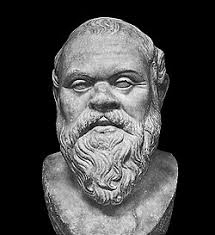
In understanding Socrates' thought, what is justice? What is love? What is beauty? And trying to make sure we know what philosophers call the necessary and sufficient conditions of things.
Conservatives always want to ask us, "Well, what is it that makes a woman?" Right? Or we wanna know what it makes a gene selfish.
Uh, so those sorts of words and clarifying what they mean is a part of the philosophical task as well.
Another prominent one, what is, what is a fact? What grounds a fact in a post-truth era? Those are the sorts of things that s- philosophers are interested in.
And so I think those questions are completely untouchable by science for various different reasons.
Science can explain what's going on in your brain, but science can't explain how consciousness arises.
If you, if you think that, you don't understand what science is as a methodology.
Galileo takes consciousness out of the picture, takes the subjective out of the picture in order for us to get on with objective science.
The question is, how did they become like that? One of the least appealing answers that it was merely chance.
And finally, the origin of the universe, right? Science looks at past events and tries to explain future events in the light of those past events.
So how could science reach beyond before the Big Bang? That sort of thinking is, uh, I think, is scientism if you think you can explain those questions merely by science alone.
People typically think this because of the amazing advances that science has made.
The rest of this transcript — segmented and speaker-labeled, so you land on the exact moment something was said
Search every transcript — by keyword, by phrase, or by meaning, across every show Radar indexes
Trends — what is surging across podcasts, measured against its own baseline
Alerts — when a name you follow appears in a newly indexed episode
No account is needed to search Radar.