Oct 14, 2026 · 38 min · 11 segments
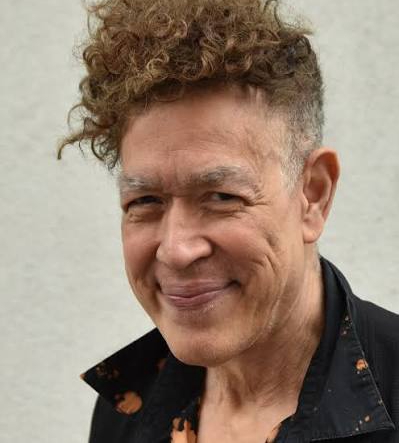
Today, we're joined by cultural historian Isaac Butler, author of The Perfect Moment, an eye-opening new chronicle of the birth of America's culture wars in the 1980s. We talk about some of the most…
Gavin WhiteheadHost
At the beginning of The Perfect Moment, you write about a culture war that broke out in Kanawha County, West Virginia in 1974.
And, um, she gets elected as the kind of evangelical voice on the Kanawha County School Board.
She's, like, the one, uh, in West Virginia, which at that point is a Democratic stronghold state, right, um, with lots of union members, lots of miners, you know, et cetera, et cetera, and so forth.
And so she's sort of the [laughs] the lone evangelical voice on that school board.
She defeats the incumbent due to an anti-sex education platform, actually, 'cause, um, sex education was a big, big, big issue for evangelical voters.
And in 1974, Kanawha County decides to redo its curriculum to bring it in line with a state-level regulation, which basically says your, your books have to be diverse, right? [laughs] It's like the curriculum has to reflect the diversity of America and have a kind of multi-POV idea of, of how you teach, right? So you have an issue, you have lots of different points of view on that issue.
The student is being taught how to make sense of those points of view and find their own way within it, which is kind of textbook progressive humanist education, which is a project that Moore and evangelical Christians are entirely against.
And part of what's useful about this story is that Moore is very open about this in ways that the religious right would then not be for a while.
Meanwhile, she's like, "I don't even want my kids to know what secular humanism is.
It's not enough that they not be taught it, I don't want them to know what it is.
I am completely doctrinaire when it comes to my child's education, and I want to have complete control over their information environment."

Can you say a little bit more about what specifically Alice Moore objected to in the books?
There's lots of evidence that not necessarily Moore in particular, but many of her fellow travelers were offended by the racial progressivism of the, of the books.
I mean, she would talk about that they didn't teach good grammar because they taught dialect, is how she would talk about it, which just means there is stuff, th- there are texts that the students would read that was in African American Vernacular English.
But she was more upset about what they called invasion of student privacy, which is getting students to write about their own beliefs.
She was very upset about anything that, that struck her as too secular, anti-Christian, unpatriotic, stuff like that.
You know, when you see, like, a, a movie set in the '50s and they're at school, like, what that school was like, that's what she wanted.
Patriotic, nominal, you know, pretty Christian, um, uh, not talking about different belief systems, not talking about different worldviews, not humanist.
The rest of this transcript — segmented and speaker-labeled, so you land on the exact moment something was said
Search every transcript — by keyword, by phrase, or by meaning, across every show Radar indexes
Trends — what is surging across podcasts, measured against its own baseline
Alerts — when a name you follow appears in a newly indexed episode
No account is needed to search Radar.