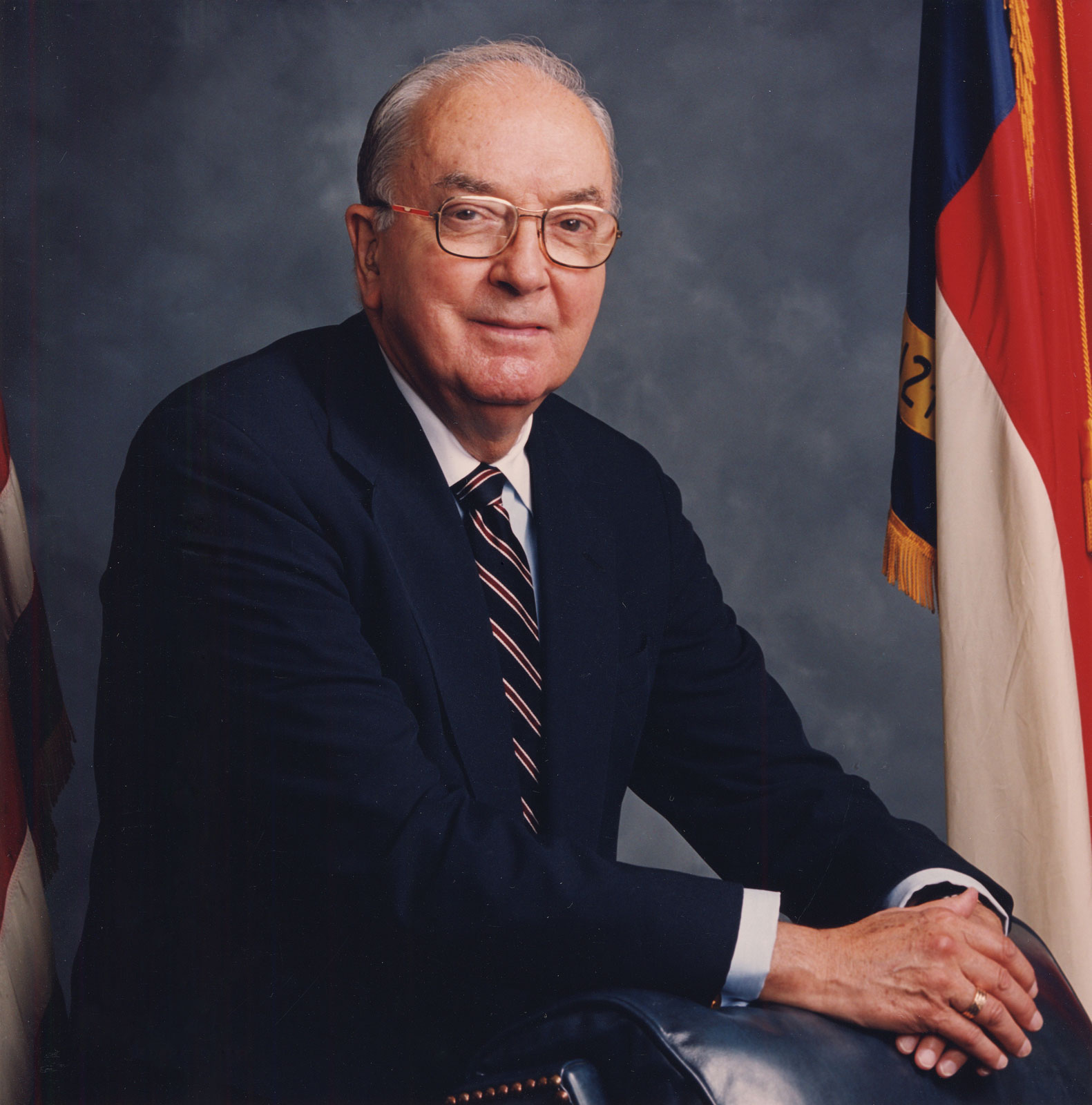
Jesse Helms
Journalist and former United States SenatorWikipedia
128
MENTIONS
47
EPISODES
41
PODCASTS
Search complete. 128 mentions across 47 episodes found for "Jesse Helms".
Nov 3, 2026

Steve SchmidtGUEST
And she couldn't answer the question, what changed? What changed? And not for nothing.
Steve SchmidtGUEST
I believe the candidate, and I think the year was 1990 in North Carolina, it was Jesse Helms versus Harvey Gant.
Steve SchmidtGUEST
Very famous ad of black hands or white hands crumbling up an employment application with the inference being that it was affirmative action that did it.
Steve SchmidtGUEST
And there's been some racist ads, particularly during the Trump era.

Steve SchmidtGUEST
And she couldn't answer the question, what changed? What changed? And not for nothing.
Steve SchmidtGUEST
I believe the candidate, and I think the year was 1990 in North Carolina, it was Jesse Helms versus Harvey Gant.
Steve SchmidtGUEST
Very famous ad of black hands or white hands crumbling up an employment application with the inference being that it was affirmative action that did it.
Steve SchmidtGUEST
And there's been some racist ads, particularly during the Trump era.

Rick WilsonGUEST
Sad to say, it's embarrassing.
Molly Jong-FastHOST
And these are Jesse Helms.
Molly Jong-FastHOST
Can you explain that?
Rick WilsonGUEST
Yeah, these are people who you could draw their political lineage all the way back to the 1948 Dixiecrat secessionists.

Mike CollinsHOST
So we're witnessing a national battle of ideologies.
Mike CollinsHOST
about what this country should be north carolina also it seems to be at the epicenter of this it may play a pivotal role in control of the senate because we have this context contest between former governor democratic governor roy cooper who has never lost an election and former gop chair michael whatley who has never been in an election because he's never held elected office But you covered in your time at The Observer another consequential Senate race in North Carolina between Republican Jesse Helms and former Democratic Mayor of Charlotte Harvey Gantt.
Mike CollinsHOST
This, too, was a battle of ideologies.
Mike CollinsHOST
Old versus New South, civil rights icon versus openly former open segregationists, black progressive against white conservative.
Rick ThamesGUEST
There are a lot of similarities.
Rick ThamesGUEST
That race was, at least for me, the earliest where I could see that there were some pretty unseemly things being done on the campaigns.
Rick ThamesGUEST
And this campaign in particular, I felt like Jesse Helms was taking advantage of race and other issues.
Rick ThamesGUEST
But it's interesting that we tried very hard to keep people focused on issues, and we did, I think, to a large extent.

Bo ThompsonHOST
I was still a kid.
Bo ThompsonHOST
But this is back in 1984 when Jesse Helms was running against Jim Hunt.
Bo ThompsonHOST
And Jesse Helms had this ad, and basically the tagline was, where do you stand, Jim? And he had all these people in the commercial, and they were talking about the stances on things, and they go, where do you stand, Jim? And I've never forgotten that.
Bo ThompsonHOST
And they even had, like the Helms campaign had some bumper stickers that said the same thing they used to pass out.
Bo ThompsonHOST
It said, where do you stand, Jim? But I remember that in 1984.

Isaac ButlerGUEST
the country there were things about that consensus that were very good um for example i'm a great fan of state arts funding right and there's things about that consensus that were very bad um uh there were specific minority groups particularly lgbtq americans who were completely left out of the public sphere by that consensus so One of the things that is happening in the 70s is as the religious right gets better organized, it is starting to fight back in all sorts of ways, one of which is cultural.
Andrew KeenHOST
So let me, I want to get to, it's the heart of your book, the religious right, characters like Jesse Helms, Pat Buchanan, and of course another Pat, Pat Robertson.
Andrew KeenHOST
We'll come to those in a few minutes, but is there a danger that, Isaac, of looking at this period with rose-tinted glasses in the sense, you mentioned Nixon, and I take your point, and he often comes up now.
Andrew KeenHOST
Some people would suggest if he was around these days, we might kick him around, but he'd probably be a member of the Democratic Party.
Isaac ButlerGUEST
They did
Andrew KeenHOST
everything secretly.
Andrew KeenHOST
And I'm guessing that our friend Jesse Helms, not Jesse Helms, J. Edgar Hoover would have been very much involved in this on the FBI front, too.
Isaac ButlerGUEST
The hilarious thing, one of the hilarious ironies about what's called the Cultural Cold War, which is the CIA's covert efforts to fight the Cold War using art, is that the CIA is often funding and smoothing the wheels for and helping out artists that the FBI is actually investigating.

Michael LevyHOST
And even just the few on the Vivek ad, which I think is one of the most disgusting ads I have ever seen in my entire life.
Michael LevyHOST
And that is saying something because there's been some bad ads like and I'll sort of like do a deep cut from the past of Jesse Helms's ad and a white hands crumpling up a piece of paper because a black man had to get the job because of affirmative action.
Michael LevyHOST
But like this is to me one of the most disgusting ads.
Michael LevyHOST
And yes, there were a few peeps, but then there was kind of like a knee jerk.

A. Elizabeth JonesGUEST
well, no, you're not going anywhere.
A. Elizabeth JonesGUEST
Jesse Helms refused to give me a hearing.
A. Elizabeth JonesGUEST
He was head of the Senate Foreign Relations Committee because he said, no, no, there's going to be an election in a year.
A. Elizabeth JonesGUEST
And I said, let me go for a year.

Paul FryHOST
You probably noticed that one text is referring to another at one point in your reading, and so let's go there.
Paul FryHOST
Page 1712, the right-hand margin, The context for this, of course, is Butler talking about Jesse Helms having deplored male homosexuality in attacking the photography of Robert Mapplethorpe and, by implication, Butler argues, simply erasing female homosexuality because his diatribe pays no attention to it.
Paul FryHOST
Butler then complains that there's a certain injustice in that because in a way it's even worse, she says, to be declared nonexistent than it is to be declared deviant.
Paul FryHOST
At least the male homosexual gets to be declared deviant.

Dane StrotherGUEST
I actually wrote, well, I actually at the time wrote for the newspaper that wrote those stories, the Lawrence Eagle Tribune, long, long ago, far, far away.
Dane StrotherGUEST
No, that was, remember the Jesse Helms ad where the black hand came and took the white resume away, right? That was kind of the beginning of this.
Dane StrotherGUEST
But now it's just game on, right? They didn't see Willie Horton has gone too far.
Dane StrotherGUEST
It was a complicated issue.
37 more episodes mention Jesse Helms.
Create an account to see the whole feed, search across every transcript, and follow the entities you care about.