Sep 5, 2025 · 36 min · 19 segments
<p>What will dating look like in the age of AI? Whitney Wolfe Herd is the founder and CEO of Bumble, the popular dating app that has helped millions of people meet their match. In this episode…
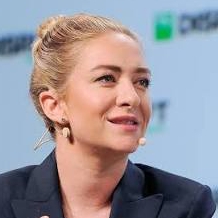
Whitney Wolfe HerdGuest
I think we can do better in this next era, right? That was the mobile era.

Welcome back to Rethinking, my podcast with TED on the science of what makes us tick.
I'm an organizational psychologist, and I'm taking you inside the minds of fascinating people to explore new thoughts and new ways of thinking.
She co-founded Tinder and then became the founder and CEO of Bumble, which has more than 50 million active users.
At a time when many people are fatigued with dating apps, Whitney has a new vision for the company she launched.

You know, my whole goal is like, "Let's get you online to get you offline so you can have that real human magic take place."
I wanted to talk with her about the future of dating, but there was something else I had to ask about first.
You stepped down from Bumble, and now you're back as CEO, so I want to hear the backstory.

Well, I, you know, I had been in this building founder mode era since I was 22 years old, and I think it just became a part of who I was, and I had never really taken a break, ever.

And if you think about the decade that we all lived through, you know, I went from Tinder, to a lawsuit, to starting Bumble, to building Bumble, to selling Bumble, then taking Bumble public, pandemics in the middle, two babies in the middle, all the, all the things life throws at you, and I was super burnt out.

I was exhausted, and I think, you know, I woke up one morning and just didn't really feel alive anymore inside, and just felt like I had lost my joy, and I love Bumble, I've always loved Bumble.

Um, but I needed to find who I was outside of Bumble so I took a breather, and I actually had no intention of going back, Adam.

But I realized, you know, with all the twists and the turns, Bumble and I, we weren't done.

So when I was leading the company beforehand, all I had in my mind, everything that existed on Planet Earth was Bumble.
The rest of this transcript — segmented and speaker-labeled, so you land on the exact moment something was said
Search every transcript — by keyword, by phrase, or by meaning, across every show Radar indexes
Trends — what is surging across podcasts, measured against its own baseline
Alerts — when a name you follow appears in a newly indexed episode
No account is needed to search Radar.