We should pause right there because the timeline matters here and it matters a lot.
Ask most casual observers of Israeli politics and they will tell you that the mass protests started right after and as a direct result of the judicial reform announced in January of 2023.
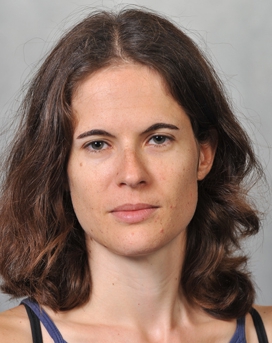
Bressler's movement got off the ground three years earlier, calling itself the Black Flag Protests.
Their early demands were a bit fuzzy and had to do mainly with the chaos sweeping Israeli politics in those years.
With the Knesset convening and dissolving at an alarming rate, they were worried that Israeli parliamentary democracy was teetering on the verge of something dark and terrible.
But it wasn't just sensitivity to procedure that made Bressler and her colleagues take to the streets.
It was a far more primordial fear, as many of them described it, that the country was being taken in a direction that, to them, felt strikingly similar to an earlier period of Israeli radicalism.
There were people who formed a couple of months earlier what they called the Black Flag Group.
They went against the decision of who was back there, the Minister of Education, Rav Raffi Peretz, who joined forces with Ben-Gvir for the first time, bringing Qahanism idea into Israeli Ministry of Education, which was awful.
So they formed like Black Flag Groups.
And when we asked people to join us with Black Flags to the parliament, they joined us.
Kahanism is a word you hear often when you talk to members of the protest movement.
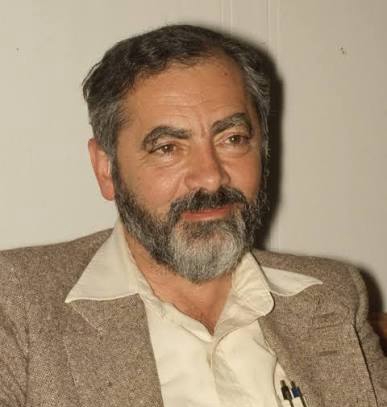
It refers to the ideology of the late Rabbi Meir Kahana, a Brooklyn-born rabbi who moved to Israel in the 1980s and formed a right-wing party named Kach.
You could easily get lost discussing the intricate points of Kahane's belief system, his prognostications, and whether or not contemporary Israeli politicians on the right hold his exact set of radical views.
But you don't need to engage in any of these complex conversations to understand something much more profound and, depending on who you ask, much harder to ignore.
Bressler and her fellow protesters took to the streets because Israel was changing in front of their very eyes, becoming a country they no longer recognized and governed by elected officials whose ideas they could not stomach.
But if you're trying to understand what's going on, consider the following number.
Four, that's the percentage of Haredi Jews out of the total Israeli population in 1980.
The rest of this transcript — segmented and speaker-labeled, so you land on the exact moment something was said
Search every transcript — by keyword, by phrase, or by meaning, across every show Radar indexes
Trends — what is surging across podcasts, measured against its own baseline
Alerts — when a name you follow appears in a newly indexed episode
No account is needed to search Radar.