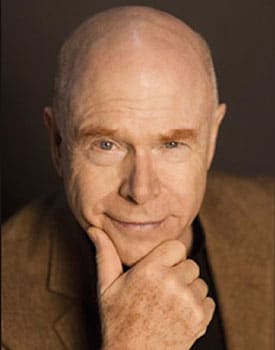
JP CastlinGuest
Andi JarvisHost
This definition of the world being ordered or this understanding that the world is ordered.

It's kind of deep rooted, isn't it? There are lots of people in lots of places and we're kind of taught this at school that everything has a structure and we decide these things.

So in the Western philosophical tradition, you can go back probably to the ancient Greeks at least.

But for the sake of the argument, let's say that we go back at least to the late 1700s.

So you had ideas, well, coming out of Newton originally, which was the 1600s, but then into classical, neoclassical economic theory.

Those ideas have helped humanity a very great deal, right? And we took massive leaps forward as a civilization as a result.

Having said that, there are limitations to these theories, which we've seen with Einstein and so on and so forth.

And if we do this one thing, regardless of the context, then we're going to get this result over here.

Or sometimes now with effectiveness in context, it's, you know, 60 or 70-30 if you happen to be a brand working in quote-unquote finance, whatever it might be, right? Those kinds of rules.

And unfortunately, as I think most people realize in practice, in reality, is that that's not really how the world works.

So from our perspective as humans, we love this certainty that rules and order can give us, don't we? It helps us through our day because we cling to this certainty that, well, economic theory says that we behave in this way and these rules of marketing tell us to behave like this.
The rest of this transcript — segmented and speaker-labeled, so you land on the exact moment something was said
Search every transcript — by keyword, by phrase, or by meaning, across every show Radar indexes
Trends — what is surging across podcasts, measured against its own baseline
Alerts — when a name you follow appears in a newly indexed episode
No account is needed to search Radar.