Sep 23, 2026 · 2 hr 13 min · 11 segments
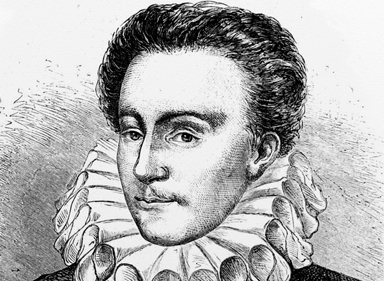
In the quiet stillness before sleep, this calm philosophy episode explores Michel de Montaigne and making peace with imperfection. When Montaigne sat down to write, he did something almost no one had…
There is a lightness to his self-regard that has nothing to do with superficiality and everything to do with proportion.
He understood, in a way that many of us struggle to understand, that being imperfect is not a catastrophe.
It is not even particularly noteworthy.
It is simply the starting condition, the baseline, the unremarkable ground on which every human life is built.
Human beings, he observed across the sprawling pages of the Essays, are diverse and undulating things.
We are inconsistent by nature.
We do not hold a single shape.
We are not the smooth, unified, coherent selves that philosophy and religion had long demanded we become.
We are mixtures—of wisdom and foolishness, courage and cowardice, generosity and selfishness—and these mixtures do not resolve into a clean final product.
They remain mixtures.
They remain messy.
And Montaigne counted himself squarely among the messiest of the lot, not as a confession of failure, but as a simple acknowledgment of what he found when he looked honestly at himself.
He did not claim to be worse than other people.
He did not claim to be better.
He claimed only to be typical and to have looked at his typicality with more attention than most people bother to give it.
This is the quiet claim that opens the entire project of the Essays, and it is more radical than it first appears: that to be flawed and inconsistent is not a personal failure, not a sign of weak character or insufficient discipline, but simply what it is to be human.
It is the condition, not the exception.
It is the rule, not the aberration.
And if that is so—if imperfection is not something that sets you apart from the rest of humanity but something that binds you to it—then the whole enterprise of harsh self-judgment begins to look like a misunderstanding, a category error, a war fought against the wrong enemy.
We have been spending our energy fighting our own nature and calling the fight virtue, when in fact the fight is the problem and the nature is simply the truth.
Many of us feel the opposite, especially in the quiet hours.
The day’s events replay themselves with a merciless editorial eye.
We remember the thing we said that landed wrong, the opportunity we missed, the moment we were less than we wanted to be.
We measure ourselves against an ideal—an image of who we think we should be, how we think we should have handled that conversation, what kind of person we believe we ought to be by now—and we find ourselves wanting.
The gap between the ideal and the actual becomes a source of shame, a nightly accounting in which the balance always comes up short.
There is a lightness to his self-regard that has nothing to do with superficiality and everything to do with proportion.
He understood, in a way that many of us struggle to understand, that being imperfect is not a catastrophe.
It is not even particularly noteworthy.
It is simply the starting condition, the baseline, the unremarkable ground on which every human life is built.
Human beings, he observed across the sprawling pages of the Essays, are diverse and undulating things.
We are inconsistent by nature.
We do not hold a single shape.
We are not the smooth, unified, coherent selves that philosophy and religion had long demanded we become.
We are mixtures—of wisdom and foolishness, courage and cowardice, generosity and selfishness—and these mixtures do not resolve into a clean final product.
They remain mixtures.
They remain messy.
And Montaigne counted himself squarely among the messiest of the lot, not as a confession of failure, but as a simple acknowledgment of what he found when he looked honestly at himself.
He did not claim to be worse than other people.
He did not claim to be better.
He claimed only to be typical and to have looked at his typicality with more attention than most people bother to give it.
This is the quiet claim that opens the entire project of the Essays, and it is more radical than it first appears: that to be flawed and inconsistent is not a personal failure, not a sign of weak character or insufficient discipline, but simply what it is to be human.
It is the condition, not the exception.
It is the rule, not the aberration.
And if that is so—if imperfection is not something that sets you apart from the rest of humanity but something that binds you to it—then the whole enterprise of harsh self-judgment begins to look like a misunderstanding, a category error, a war fought against the wrong enemy.
We have been spending our energy fighting our own nature and calling the fight virtue, when in fact the fight is the problem and the nature is simply the truth.
Many of us feel the opposite, especially in the quiet hours.
The day’s events replay themselves with a merciless editorial eye.
We remember the thing we said that landed wrong, the opportunity we missed, the moment we were less than we wanted to be.
We measure ourselves against an ideal—an image of who we think we should be, how we think we should have handled that conversation, what kind of person we believe we ought to be by now—and we find ourselves wanting.
The gap between the ideal and the actual becomes a source of shame, a nightly accounting in which the balance always comes up short.
The rest of this transcript — segmented and speaker-labeled, so you land on the exact moment something was said
Search every transcript — by keyword, by phrase, or by meaning, across every show Radar indexes
Trends — what is surging across podcasts, measured against its own baseline
Alerts — when a name you follow appears in a newly indexed episode
No account is needed to search Radar.