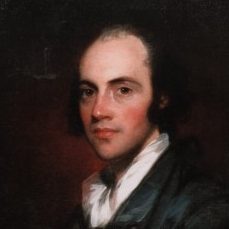
To follow George Washington would have been difficult for anyone, but it was especially so for John Adams, who was by his own admission stubborn, disagreeable, and unlikable.
Adams's administration managed to debilitate the Federalist Party and give the Jeffersonian Democratic Republicans a 40-year reign.
Like his political opponent, Thomas Jefferson, many of Adams's greatest contributions to the United States occurred before he became president.
He first gained fame in 1765 as a fierce opponent of the Stamp Act, the tax on all paper that had been marked with a royal stamp, one of the flashpoints of the Revolution.
Adams wrote that the act violated two fundamental tenets of British law, the right to be tried in a jury of one's peers and the right to be taxed only by consent.
Five years later, a crowd of Bostonians taunted a group of British soldiers, who then fired into the crowd, killing five colonialists.
The soldiers found it difficult to get legal representation, but Adams agreed to try their case, believing that everyone was entitled to legal representation, even though it was an extremely unpopular decision.
In his arguments, Adams famously said, "Facts are stubborn things; and whatever may be our wishes, our inclinations, or the dictates of our passion, they cannot alter the state of facts and evidence." Adams won an acquittal for six of the soldiers, while just two were convicted of manslaughter.
To follow George Washington would have been difficult for anyone, but it was especially so for John Adams, who was by his own admission stubborn, disagreeable, and unlikable.
Adams's administration managed to debilitate the Federalist Party and give the Jeffersonian Democratic Republicans a 40-year reign.
Like his political opponent, Thomas Jefferson, many of Adams's greatest contributions to the United States occurred before he became president.
He first gained fame in 1765 as a fierce opponent of the Stamp Act, the tax on all paper that had been marked with a royal stamp, one of the flashpoints of the Revolution.
Adams wrote that the act violated two fundamental tenets of British law, the right to be tried in a jury of one's peers and the right to be taxed only by consent.
Five years later, a crowd of Bostonians taunted a group of British soldiers, who then fired into the crowd, killing five colonialists.
The soldiers found it difficult to get legal representation, but Adams agreed to try their case, believing that everyone was entitled to legal representation, even though it was an extremely unpopular decision.
In his arguments, Adams famously said, "Facts are stubborn things; and whatever may be our wishes, our inclinations, or the dictates of our passion, they cannot alter the state of facts and evidence." Adams won an acquittal for six of the soldiers, while just two were convicted of manslaughter.
The rest of this transcript — segmented and speaker-labeled, so you land on the exact moment something was said
Search every transcript — by keyword, by phrase, or by meaning, across every show Radar indexes
Trends — what is surging across podcasts, measured against its own baseline
Alerts — when a name you follow appears in a newly indexed episode
No account is needed to search Radar.