Okay, so my invention is shipping containers, which I think are pretty important because before shipping containers, ships had to be packed with every object and item individually, so sacks, barrels, crates, all fitting together, sort of like big Tetris idea.
And then so the docks, at the docks it took days, weeks to load the ships, and it cost a lot of money as well because you had to have longshoremen who... took ages and had to be paid to load up the cargo.
So it cost about £5.80 per tonne.
And that's back then, which is about the 1950s, which we've got £141 now per tonne.
So, you know, it was slow, expensive.
And a lot of the longshoremen used to steal stuff as well because it wasn't locked.
It was just in the Saxon crates.
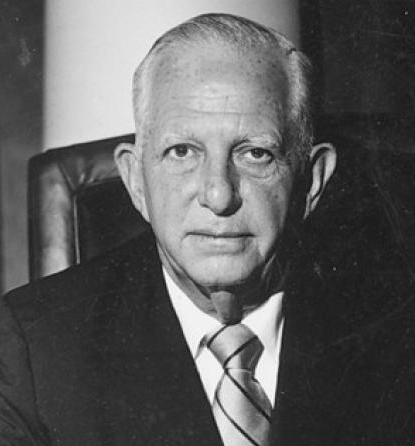
So in 1956, there was a trucking businessman in America, Malcolm McLean, and he was in traffic and he just had a bit of a, I don't know, revelation and he was sort of like why are we unloading trucks putting on a ship and then putting it on another truck in the in europe so he just thought why don't we have a standardized steel box which goes on the truck goes on the ship goes on trains goes on everything so yeah he designed it and um there's 20 foot versions of 40 foot versions which he designed then and are still used today there was a maiden voyage and on the first voyage he carried 58 containers and even on that first voyage it reduced the cost from 5.80 a ton to only 16p a ton which is 1970 97 reduction like straight away so i guess that's the importance of the invention like practically but in terms of the influence like global supply chains like the fact that we have like phones that have components made in china some components made in africa made in south america made in europe and then They all come together to make an iPhone to make whatever object, I guess.
That relies completely on shipping containers and the speed with which cargo can be transported around the world.
Do you think that without the event...
Also, just to clarify, when you're saying shipping containers, because I'm not mega on top of the...
Yeah, yeah, yeah.
What's going on in Dockyard...
Big steel containers.
They're often blue or grey.
Then they go on the back of trains and lorries as well.
And that went from boxed wooden boxes? Yeah, I
think like Madagascar when they're all in separate sized boxes.
Do you think that we could have had globalisation as we do now without the shipping containers?
I genuinely think no.
I mean, you think when the Suez Canal got blocked in 2021, think of the impact of that that had on global trade.
And I think it was £9 billion of trade every day was held up.
The impact of that, and that's all the fact that shipping containers were held up.
So the efficiency of global shipping cargo trading is so crucial to a globalised world, I guess.
Yeah, I think that's
Okay, so my invention is shipping containers, which I think are pretty important because before shipping containers, ships had to be packed with every object and item individually, so sacks, barrels, crates, all fitting together, sort of like big Tetris idea.
And then so the docks, at the docks it took days, weeks to load the ships, and it cost a lot of money as well because you had to have longshoremen who... took ages and had to be paid to load up the cargo.
So it cost about £5.80 per tonne.
And that's back then, which is about the 1950s, which we've got £141 now per tonne.
So, you know, it was slow, expensive.
And a lot of the longshoremen used to steal stuff as well because it wasn't locked.
It was just in the Saxon crates.
So in 1956, there was a trucking businessman in America, Malcolm McLean, and he was in traffic and he just had a bit of a, I don't know, revelation and he was sort of like why are we unloading trucks putting on a ship and then putting it on another truck in the in europe so he just thought why don't we have a standardized steel box which goes on the truck goes on the ship goes on trains goes on everything so yeah he designed it and um there's 20 foot versions of 40 foot versions which he designed then and are still used today there was a maiden voyage and on the first voyage he carried 58 containers and even on that first voyage it reduced the cost from 5.80 a ton to only 16p a ton which is 1970 97 reduction like straight away so i guess that's the importance of the invention like practically but in terms of the influence like global supply chains like the fact that we have like phones that have components made in china some components made in africa made in south america made in europe and then They all come together to make an iPhone to make whatever object, I guess.
That relies completely on shipping containers and the speed with which cargo can be transported around the world.
Do you think that without the event...
Also, just to clarify, when you're saying shipping containers, because I'm not mega on top of the...
Yeah, yeah, yeah.
What's going on in Dockyard...
Big steel containers.
They're often blue or grey.
Then they go on the back of trains and lorries as well.
And that went from boxed wooden boxes? Yeah, I
think like Madagascar when they're all in separate sized boxes.
Do you think that we could have had globalisation as we do now without the shipping containers?
I genuinely think no.
I mean, you think when the Suez Canal got blocked in 2021, think of the impact of that that had on global trade.
And I think it was £9 billion of trade every day was held up.
The impact of that, and that's all the fact that shipping containers were held up.
So the efficiency of global shipping cargo trading is so crucial to a globalised world, I guess.
Yeah, I think that's
The rest of this transcript — segmented and speaker-labeled, so you land on the exact moment something was said
Search every transcript — by keyword, by phrase, or by meaning, across every show Radar indexes
Trends — what is surging across podcasts, measured against its own baseline
Alerts — when a name you follow appears in a newly indexed episode
No account is needed to search Radar.