Sep 21, 2026 · 25 min · 9 segments
In this episode of the Commercial Disco podcast, Rux Energy founder and CEO Jehan Kanga discusses the 10x improvements in hydrogen transport and storage technologies, and the future of hydrogen in the…
Jehan KangaGuest
James RileyHost
Today we're going to be talking a lot about hydrogen and how far off a hydrogen powered world we might be.

But first, RUX has been around for five years, made a lot of progress in that time.

My understanding with RUX, its initial problem trying to solve was around trucks, shipping hydrogen as the energy source for storing and driving that sort of transport and logistics industry.

But talk us through what were you trying to solve when you founded RUX and what are we looking at now when we look at RUX Energy? Yeah, when I

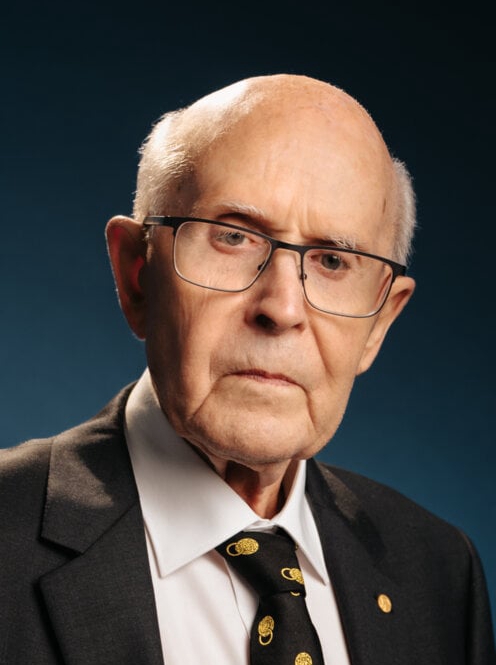
first created the company, I had the discoveries a while back in 2015 in this field of storage materials called metal organic frameworks, which an Australian, Richard Robson, was one of three Nobel Prize recipients last year.

So everyone in the Australian MOF community was thrilled, and we've got a number of MOF researchers who've worked with Richard over the years.

But then I didn't see the world moving much on decarbonizing aviation trucks, shipping.

You know, we were really early TRL, you know, we made a couple of grams of this material.

It's like going from doing that to getting to 20 kilos a day, which we've now done is like pretty superhuman feed for the whole team.

And there's very, very few morph groups in the world that have scaled to that level and also maintain the performance and actually improve the performance over time.

And we're at this point now where the whole world is starting to recognize the value of hydrogen as a way of extending the electrification one step further beyond batteries to where you really have an off-grid world.

If you cannot connect to a grid, big ships, for example, you can't run an extension cable attached to a ship, and battery-powered ships can work in a harbor, but as soon as you go deep sea it's very very challenging you need a molecule so in these contexts where you need that range extension this is where we come in and play an important role what's exciting i think is also in seeing the learning curves and it's not just learning curves for solar and wind but the learning curves and hydrogen technologies is exceptional then we see it's still too early to be able to forecast the future and we had a couple years of of understanding the cost of everything from the electrolyzers and the storage systems and the fuel cells, but it's looking very exciting and that's partly this kind of coordinated multi-country effort working together on absolutely slashing the cost of every single component all the way across the value chain.
The rest of this transcript — segmented and speaker-labeled, so you land on the exact moment something was said
Search every transcript — by keyword, by phrase, or by meaning, across every show Radar indexes
Trends — what is surging across podcasts, measured against its own baseline
Alerts — when a name you follow appears in a newly indexed episode
No account is needed to search Radar.