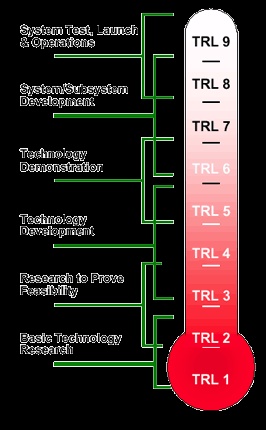
Technology readiness level
55
MENTIONS
23
EPISODES
23
PODCASTS
Search complete. 55 mentions across 23 episodes found for "Technology readiness level".
Oct 29, 2026

David BorysHOST
Now, how does three Canadian space divisions see this vehicle meeting operational requirements?
Christopher HornerGUEST
So we are at very early stages of TRL development.
Christopher HornerGUEST
Part of the launch the North process was small amount.
Christopher HornerGUEST
Well, I mean, it's close to $9 million of funding for different companies to help them accelerate through their capital, uh, I'm trying to find the right words.
Christopher HornerGUEST
We're trying to move them through the development phase faster than they would if they didn't have an extra $9 million to do that.
Christopher HornerGUEST
There is not a winner or a loser at this point.
Christopher HornerGUEST
There are three companies that were... a high enough TRL and a high enough sort of strategic return for this country for us to champion three of those capabilities.
Christopher HornerGUEST
They were all very different and a board of very talented and highly educated people, you know, rocket scientists, that's my favorite part of that, looked at some of the strategic lens of not only the capability of the lift vehicle itself, but also what are these companies introducing to the Canadian market, to the workforce, to the ecosystem.

Dawn WellmanGUEST
But nonetheless, all of the same types of things that we are now looking for from an energy perspective and openly from a security perspective, rare earths, a lot of the different critical minerals, are things that they've got a long and deep history in terms of how do you process those.
Dawn WellmanGUEST
One of the unique things about Savannah River National Laboratory, which really was one of the things that drew me to that laboratory, particularly in the critical mineral space, is is that as you look across the portfolio of national laboratories and the type of work that they do, it's very common to find a lot of work being done in the labs that is in sort of the earlier TRL space, so characterizing different types of feedstocks, understanding the geologic processes, developing technologies from a conceptual phase up to kind of a mid-technology readiness level.
Dawn WellmanGUEST
That's where a lot of the labs really, that's kind of their sweet spot.
Dawn WellmanGUEST
But from an industry perspective, I spent a lot of time working with the national labs when I was at Rio Tinto.
Dawn WellmanGUEST
And that's where I saw the opportunity for Savannah River National Laboratory, because if you look across the spectrum, they are the most applied laboratory.
Dawn WellmanGUEST
Actually, DOE has kind of the rainbow of national labs, as we all refer to it.
Dawn WellmanGUEST
And it starts at the TRL zero and it goes over to TRL nine.
Dawn WellmanGUEST
And the lab at the end of the scale is Savannah River National Lab.

Noemie AllielGUEST
So Astra is a commercialization program.
Noemie AllielGUEST
So it's more for TRL 2 to 3.
Noemie AllielGUEST
So TRL, for people that don't know, is technological readiness level, which is how you measure the maturity of the technology.
Noemie AllielGUEST
And specifically in Astra, the design partner on this program is IEI.
Noemie AllielGUEST
And the main goal is to fast track the commercialization.
28 MINS LATER
Noemie AllielGUEST
The website is innovate.me. And the second is Astra.
Noemie AllielGUEST
Astra is a commercialization.
Noemie AllielGUEST
So these are specifically for startups, TRL 3 to 4, that are looking to explore a potential proof of concept of pilots with Israel aerospace industry.

Terry CroninGUEST
And at a lot of the events, you know, we talk about this stuff like it's today.
Terry CroninGUEST
But the reality is that on most of the networks that are running in North America today, we're evaluating products that are at TRL two to TRL four or five level maximum.
Terry CroninGUEST
And so those need a lot of handholding.
Terry CroninGUEST
They need a lot of quantum physicists and others to use it.
Terry CroninGUEST
What we've done with Quantum Corridor is a commercial network that lets actual customers move customer workloads across these networks securely because there's a lot of work that outside of the industry, the business industry, the government, the agencies, and all of those need to do to update their systems, their software.
Terry CroninGUEST
get familiar with it, make sure it's compatible with the rest of their network stack.
Terry CroninGUEST
And so products like QKD today that are at TRL nine level type products and commercially available, let actual end users that don't have a quantum physics team as part of their R&D start to get familiar with how the equipment works and how it's going to interface and some of the challenges they may take as they start thinking about who their repeat, you know, who they're using for routers and encryption and firewall and the rest of it.
Terry CroninGUEST
And so there's been a lot of work in the industry to make sure we have that compatibility with the classic network so that we can start doing this.

Leonardo FaedoGUEST
Like, how do you incorporate all these things? These are answers that have been developed now, really.
Leonardo FaedoGUEST
To me, it's always like this, you know, in agriculture, there's this thing called TRLs, which are technology readiness level.
Leonardo FaedoGUEST
So any product intervention that we're trying to develop as applied research, it kind of goes these little houses of how ready it is to be used.
Leonardo FaedoGUEST
And the use of the homeopathic remedies are advancing that.

Bhaskar MajumdarGUEST
Nobody understands this.
Bhaskar MajumdarGUEST
So now we are starting to explain to them that TRL is the way to value businesses.
Bhaskar MajumdarGUEST
last round of sky route before the launch was at 1.1 billion now they are raising money at 4 supposedly at 4.6 billion so just one launch is an activity same in semiconductor you have the tape out your thing changes So as a whole nation we are having to learn that.
Bhaskar MajumdarGUEST
Our auditors don't know and I don't blame them.
33 MINS LATER
Natarajan MalupillaiGUEST
So that's our responsibility now with all the funds that we are now raising, saying that build right.
Natarajan MalupillaiGUEST
designed right right so you when you go there when you have a big customer so that you can trust is a two-way street while we certainly are asking enterprises to bet on us i am now also saying because we control the startups and we can help mentor them how would you build right how do you get certification how do you get data privacy for you to play in europe so that's the other part of the story that we're continuing to push so if you're asking why it's not happening it's both of these things
V. KamakotiGUEST
yeah so As Nat says to continue on some of this answer, we have to take it to a higher TRL level so that they start believing in us because they don't want to take any risk.
V. KamakotiGUEST
They are right.

Mike SmithGUEST
Right.
Mike SmithGUEST
So the risk posture of our organization is, you know, we're a mid TRL kind of, you know, four ish to six ish TRLs budget activity code six three with regard to where the nuclear portfolio sits specifically within the office.
Mike SmithGUEST
So, you know, every single investment we make is not necessarily supposed to succeed.
Mike SmithGUEST
And what that means, like when we say succeed, it may say that there's a promising capability that may benefit through the nuclear lens, some advanced aspect of a microreactor.

Troy WarkeGUEST
I think it's a good point Kendi makes because a quantum computer is one thing but quantum sensing is something that exists now and those things are starting to come out of the lab and those could have really profound effects in the way sensors or what sensors can do and how they can detect things that weren't detected or weren't being able to previously be detected.
Grant McHerronHOST
And that does segue nicely into the question you've mentioned coming out of the lab, advancing up TRLs, for example.
Grant McHerronHOST
You've got defense leaders going, okay, that's great, but what should they be looking for to indicate that these technologies are becoming operationally relevant? They're out of the lab.
Grant McHerronHOST
Now they're happening so that they can either be ready to defend against them or apply them.

Zach ShoreGUEST
Marine, Marine here talking, right? And that creates choke points.
Zach ShoreGUEST
When you have a high payload- unmanned aircraft, I can take way more risk to accelerate integrating weapons and fig- figuring out, hey, can this work, the store separation, all the things to take that weapon from TRL three to seven, to then more quickly, more stably put it on a manned airfor- a- aircraft.
Zach ShoreGUEST
At the same time, the platform then becomes the de facto spinning wheel of its integrated everything.
Zach ShoreGUEST
So you've got unmanned fight- or manned fighters.

Chris KieferHOST
We want to go to
Taylor RycroftGUEST
TRL4, which is a lab-scale prototype of this.
Taylor RycroftGUEST
So to get there, what we need to do is computational fluid dynamics modeling, like what's called a hydrocode, that can test different use cases and scenarios of what know what would an underwater explosion look like based on different size munitions different depths different pressures that kind of thing different currents and how big does the blanket need to be what does it need to be made out of or how many layers do we need in order to really withstand that blast pressure How much air do we need to bring into the system? So the modeling will help us hone in kind of like what does our design need to look like exactly? How heavy do the magnets need to be? What kind of like strength do they need to have to hold everything together? So the modeling helps us do that.
Taylor RycroftGUEST
And then we build... kind of units of the prototype and we unit test each one.
13 more episodes mention Technology readiness level.
Create an account to see the whole feed, search across every transcript, and follow the entities you care about.