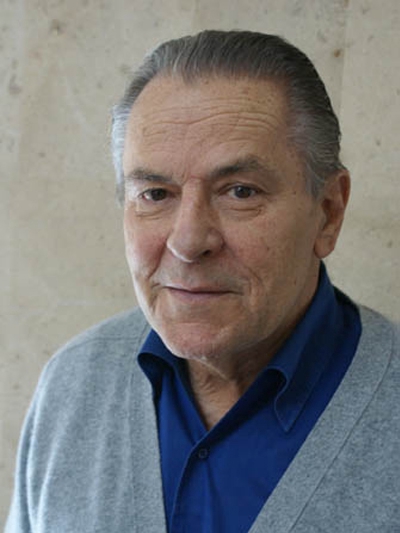
Inner Insights with Dr. Darragh Stewart
Jun 17, 2026 · 1 hr 4 min · 12 segments
This week on Inner Insights, I sit down with Dr Kathryn Ledden, psychiatrist-in-training, co-founder of PsychCare Ireland, festival welfare advocate, researcher and DJ.We explore:✨ Harm reduction and…
Catherine LettonGuest
Dara StewartHost
Yeah, I'd love to hear a little bit about something I'm quite interested in, you know, my background as a scientist and I found it very, you know, it was a very rigid world when I started to step more into the holistic world.

How do you see those two worlds kind of merging over the last while? Because I feel like there's definitely a little bit more leeway from science into more holistic practices and, you know, the ideas of trauma being stored in the body and emotional release and all this kind of stuff.

I see them merging with, I think, some of the paradigms that exist within Western scientific thinking and particularly in medicine and psychiatry.

There is perhaps a risk that we gloss over some of the some of the, I suppose, some of the important principles of like, you know, indigenous practices.

I also see sometimes like even just on Friday, I was delivering a presentation to my colleagues kind of on this topic.

Like I'm thinking particularly in the realm of like psychedelic science here, because I guess that is where people are, where the two worlds are merging quite, quite strongly.

But the presentation I delivered was all about people's altered metaphysical beliefs, like beliefs about the nature of reality, the nature of their experience, the boundaries between themselves and others and other things that exist within the universe.

And I was kind of monitoring the room as I was delivering my presentation to be like, okay, have I lost anybody? I was talking with one of my colleagues about it afterwards and was getting some really positive feedback, which was really lovely to hear.

And I remember saying to them, we all know what it's like to need to feel the ground under our feet and to be held by the sky above us, you know, and like, I just think that so many mental health conditions that, you know, we can look at them through a very medicalised lens, but ultimately there are existential questions at their core as well.

So I think for that reason, even Western medical practice and other kind of scientific based Yeah, disciplines could really benefit from widening their lens, but it's just if we don't have enough support within those systems to support people who might be going through stuff like that, we just need to be very, very careful.

So as you mentioned in my intro and I didn't really touch on it there myself, but I'm a member of the TCD Trinity College Dublin Psychedelic Research Group.

So after I did my internship, so I graduated in COVID, I was a COVID baby doctor.

It was like absolutely like Yeah, some of the stuff that we saw that year was just so horrendous and I just really needed a break.

I really needed a break after that experience and also having gone through that journey myself of just like, okay, I've gotten into medical school and then suddenly it was like, oh, oh, right, this is also going on and starting to even...

I suppose, just observe and question some of the structures of how people were working with patients, you know, just in terms of it being a very hierarchical, as I said.


And Yeah, I saw some very, very interesting things there, like having just come out of my medical training and then to be in a place like in field where there were people who I knew that if they had presented to an emergency department, they could have been perhaps detained against their will so that they could receive treatment and seeing them being looked after in a very different way.

Yeah, I'd love to hear a little bit about something I'm quite interested in, you know, my background as a scientist and I found it very, you know, it was a very rigid world when I started to step more into the holistic world.

How do you see those two worlds kind of merging over the last while? Because I feel like there's definitely a little bit more leeway from science into more holistic practices and, you know, the ideas of trauma being stored in the body and emotional release and all this kind of stuff.

I see them merging with, I think, some of the paradigms that exist within Western scientific thinking and particularly in medicine and psychiatry.

There is perhaps a risk that we gloss over some of the some of the, I suppose, some of the important principles of like, you know, indigenous practices.

I also see sometimes like even just on Friday, I was delivering a presentation to my colleagues kind of on this topic.

Like I'm thinking particularly in the realm of like psychedelic science here, because I guess that is where people are, where the two worlds are merging quite, quite strongly.

But the presentation I delivered was all about people's altered metaphysical beliefs, like beliefs about the nature of reality, the nature of their experience, the boundaries between themselves and others and other things that exist within the universe.

And I was kind of monitoring the room as I was delivering my presentation to be like, okay, have I lost anybody? I was talking with one of my colleagues about it afterwards and was getting some really positive feedback, which was really lovely to hear.

And I remember saying to them, we all know what it's like to need to feel the ground under our feet and to be held by the sky above us, you know, and like, I just think that so many mental health conditions that, you know, we can look at them through a very medicalised lens, but ultimately there are existential questions at their core as well.

So I think for that reason, even Western medical practice and other kind of scientific based Yeah, disciplines could really benefit from widening their lens, but it's just if we don't have enough support within those systems to support people who might be going through stuff like that, we just need to be very, very careful.

So as you mentioned in my intro and I didn't really touch on it there myself, but I'm a member of the TCD Trinity College Dublin Psychedelic Research Group.

So after I did my internship, so I graduated in COVID, I was a COVID baby doctor.

It was like absolutely like Yeah, some of the stuff that we saw that year was just so horrendous and I just really needed a break.

I really needed a break after that experience and also having gone through that journey myself of just like, okay, I've gotten into medical school and then suddenly it was like, oh, oh, right, this is also going on and starting to even...

I suppose, just observe and question some of the structures of how people were working with patients, you know, just in terms of it being a very hierarchical, as I said.


And Yeah, I saw some very, very interesting things there, like having just come out of my medical training and then to be in a place like in field where there were people who I knew that if they had presented to an emergency department, they could have been perhaps detained against their will so that they could receive treatment and seeing them being looked after in a very different way.
The rest of this transcript — segmented and speaker-labeled, so you land on the exact moment something was said
Search every transcript — by keyword, by phrase, or by meaning, across every show Radar indexes
Trends — what is surging across podcasts, measured against its own baseline
Alerts — when a name you follow appears in a newly indexed episode
No account is needed to search Radar.