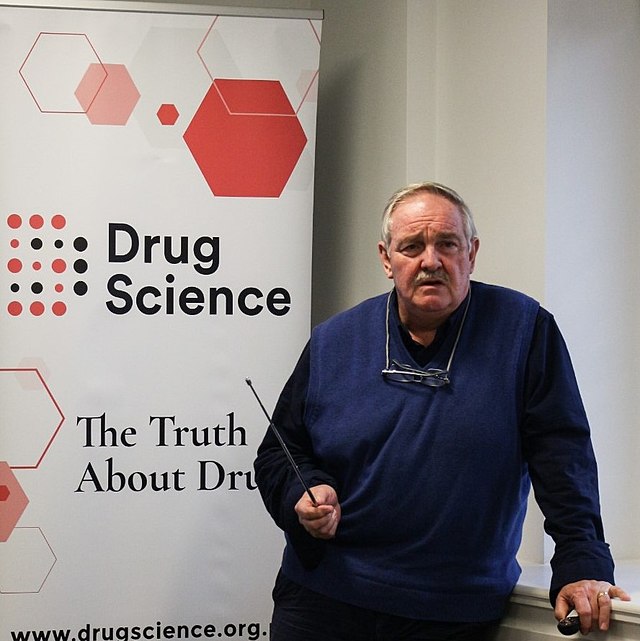
David Nutt
ResearcherWikipedia
37
MENTIONS
14
EPISODES
12
PODCASTS
Search complete. 37 mentions across 14 episodes found for "David Nutt".
Sep 14, 2026

SmeePANELIST
Yay.
BillyPANELIST
Um, we're talking about Professor David Nutt today.
SmeePANELIST
Oh, God.
BillyPANELIST
So the former chair of the Advisory Council on the Misuse of Drugs, and the founder of Drug Science, Professor David Nutt.
BillyPANELIST
He will discuss the future of medical cannabis research at the Cannabis Health Symposium in London later this year, which is quite soon.
BillyPANELIST
The CBD accredited Cannabis Health Symposium returns to London for a full day, basically the evidence led across the policy regulation, access to clinical practice, bringing together the healthcare professionals, industry, and patient advocates, and obviously Professor David Nu- uh, neuropsychopharmacology at Imperial College London.
MackieHOST
Hmm
BillyPANELIST
... patients r- registry, the T21 Drug Science has collected real world data on around 5,000 medical cannabis patients in the UK, linking the treatment to be a reduced symptoms and improvements in quality of life across a range of conditions, including anxiety, chronic pain, and PTSD, as well as being linked to considerable reduction in the use of prescribed opioids, among other, um, chronic pain patients.

David WilsonHOST
And did it help you as well? Because, like, for me, I'm quite science-based, and I love exploring how the brain works and the nervous system and stuff like that.
David WilsonHOST
And when I started researching it with Professor David Nutt, with his book, Drink, and that, it, it's like, God, it's so fascinating to know how I actually work.
David WilsonHOST
And then I started looking at internal family systems, where we've all got parts of our personality that comes from childhood experiences, where we exile our pain, and that helped me really understand how I worked as well.
David WilsonHOST
But it also helped me to, like, form my identity as a non-drinker as well.
7 MINS LATER
David WilsonHOST
It's the dopamine, isn't it?
Millie GoochGUEST
Mm.
David WilsonHOST
Um, so you spoke to, uh, Professor David Nutt, who I've had on my podcast.
David WilsonHOST
And to be fair, I was really nervous interviewing him, and when he came on, he just put me at ease straight away.

Robert DickensGUEST
Yeah, they definitely have, yeah.
Stephen CoatesHOST
Some people have had maybe disastrous times and David Nutt's vision of let's judge these things by the harm they cause and let's compare them with alcohol and nicotine and all the other sort of psychoactive substances.
Stephen CoatesHOST
What's your take on that?
Robert DickensGUEST
I'm not really a big fan of the harm thing.

David NuttHOST
Thank you.
David NuttHOST
Hello and welcome to the Drug Science Podcast with me, David Nutt.
David NuttHOST
Here we're bringing together experts and activists for a rational, honest and informed conversation
Rod FlowerGUEST
about drugs.

Rachel RalphHOST
The process involves designing and optimizing chemical compounds that interact precisely with biological targets to cure and manage diseases.
Rachel RalphHOST
Here's Chris Smith with neuropsychopharmacologist, and a friend of the program, David Nutt.
Chris SmithCORRESPONDENT
So David, when I pop a pill, it's a paracetamol, how does it know where the pain is?
David NuttSOUNDBITE_SPEAKER
The molecular constituents, i.e., the active ingredient in paracetamol, flows through the body until it finds something to stick to, and actually, [laughs] we don't really know what paracetamol does stick to.
5 MINS LATER
David NuttSOUNDBITE_SPEAKER
There's one other target, which is, uh, which are ion channels which conduct sodium, potassium, and calcium ions, and there are some medicines at work there.
David NuttSOUNDBITE_SPEAKER
But identifying the target protein allowed people then to develop bench assays, test tube assays, against which they could screen millions, literally millions of compounds to find ones that did what they wanted, and then they could patent them.
Rachel RalphHOST
That was David Nutt at Imperial College London.
Rachel RalphHOST
Now finally, we're going to examine what the future of chemistry and healthcare might look like.

Millie GoochGUEST
And just because one approach doesn't work doesn't mean you're like doomed forever or because there's so many different ways that I think you can approach this.
RichardHOST
So let's talk about Professor David Nutt.
RichardHOST
Yes.
RichardHOST
You know, who talks about alcohol.

Tania De JongGUEST
And we had invited...
Tania De JongGUEST
So David Nutt was in Australia at the time.
Tania De JongGUEST
He was speaking at events for us around Australia, and so he came to this meeting with us.
Tania De JongGUEST
But I think our first speaker was, was a woman called Vanessa, and you can see her story online.
Tania De JongGUEST
And then she came to the meeting, and she spoke first, and she spoke about her husband and, and the terrible loss and what they'd experienced in the mental health system and, and that this was the only option that was left to them, and they couldn't- You know, take it on because of course it wasn't rescheduled at the time, and they'd lost him.
Tania De JongGUEST
And there wasn't a dry in the room after that.
Tania De JongGUEST
And then of course David Nutt came on and then, and then we spoke, you know, of more of the evidence and the, and the trials and the research.
Tania De JongGUEST
And I think that that meeting was pivotal, um, in terms of really helping people to understand the human pain and suffering, and also then the scientific data and evidence.
Sarah RusbatchGUEST
You and I have spoken about this, the, the onus is always put on the person.
Sarah RusbatchGUEST
So we know from Professor David Nutt, he says alcohol is the fifth most addictive substance in the world.
Sarah RusbatchGUEST
And yet every single label says, "Drink responsibly.
Sarah RusbatchGUEST
Drink in moderation," as if it's that person, it's their responsibility-

David LukeGUEST
Um, so that model should equally apply.
David LukeGUEST
And in fact, you know, David Nutt, uh, who was the, uh, drug tsar in this country, was, was basically sacked by the government for not, uh, giving them the answers they wanted.
David LukeGUEST
Uh, and when he came out and said that actually ecstasy, MDMA, is, uh, more... is less dangerous than, uh, equusy, which is what he referred to as, uh, horse riding.
David LukeGUEST
Uh, so statistically, you know, the hours spent horse riding is, is more dangerous than, than hours spent taking MDMA, and yet we don't make horse riding illegal, right? [laughs] Uh, so the, the- there's a certain amount of hy- hypocrisy and, um, nonsensicality around drugs because the, the, the, the...

Anneka ReeceHOST
And as I say, I look at that with you in your coaching.
Anneka ReeceHOST
If that's something that you would like to read about or learn about yourself, then I do recommend a book called Drink by Professor David Nutt and also another book called Alcohol Explained by William Porter.
Anneka ReeceHOST
really, really helpful foundational texts.
Anneka ReeceHOST
Can you tell I was an English teacher once? That really, really help to give you that understanding that will help you move forward and override and understand some of those cravings that you get at the beginning.
4 more episodes mention David Nutt.
Create an account to see the whole feed, search across every transcript, and follow the entities you care about.