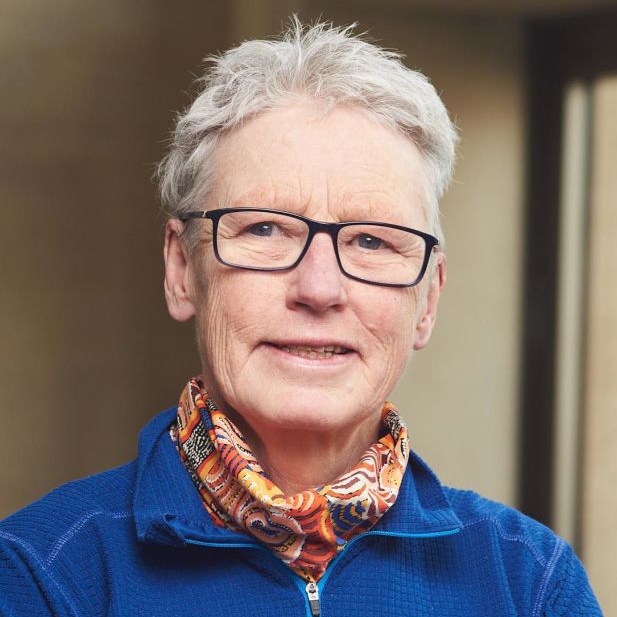
PJ HarnettGuest
Edel McDaidHost
Um, and I suppose you've mentioned the integrated care program for older persons, um, and your role within that and, and I suppose trying to implement it, trying to roll it out nationally.

Um, I suppose, where, what did you take from that role? I presume it was a huge undertaking.

Yeah, so, so, so there was, um, an opportunity to sort of do the PhD and build the road as we traveled-

... because, um, so when Áine Carroll and Michael Fitzgerald proposed the integrated care program for older persons, really there was no blueprint as to what that looked like.

You know, we just simply didn't have, uh, an example that we could draw upon internationally, even though the idea of integrated care was ubiquitous, and it was talked about for a number of decades.

But, you know, one of the most alarming things I came across at the beginning was the fact that it had 175 definitions, and, [laughs] uh-

Um, and obviously working with Siobhán Kennelly, who, you know, f- tremendous experience working across hospital and community, particularly in, in, uh, nursing home outreach.

Um, the, doing the PhD allowed me to kind of s- you know, look at the literature, understand exemplars, of which there was no single, um, holistic model that we could apply.

Uh, so therefore, we kinda had to build a framework, um, that was translatable but that had, um, the ingredients of integrated care as well as the ingredients of change in health systems.

So a lot of the, uh, a lot of the early, um, [lips smack] research that I was doing into the, into the literature looked at, uh, examples of systemic change in healthcare, so not just discrete quality improvement initiatives, but also more, more systems-wide change.

And, um, so, so there was a, there was a number of things then that were influential in that regard that, that, um, informed our thinking about the framework, and we were able to marry up, uh, a methodology, if you like, for-
The rest of this transcript — segmented and speaker-labeled, so you land on the exact moment something was said
Search every transcript — by keyword, by phrase, or by meaning, across every show Radar indexes
Trends — what is surging across podcasts, measured against its own baseline
Alerts — when a name you follow appears in a newly indexed episode
No account is needed to search Radar.