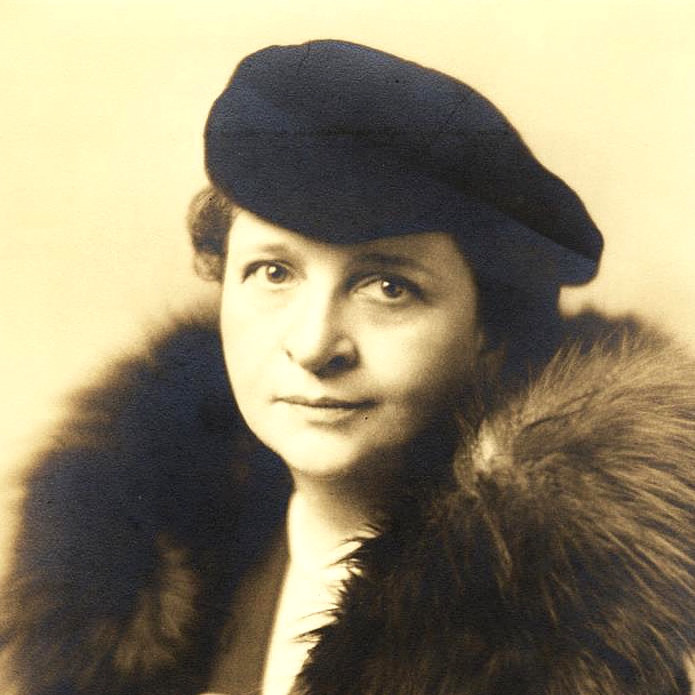
Her family lived in the state of Maine, and they were solidly middle-class New Englanders.
Fanny went to the public high school, a rather new concept, and then on to Mount Holyoke for college.
One lesson Fanny learned from her upbringing was that poor people were poor because they were lazy and immoral.
If they would just work hard and behave well, they wouldn't be poor anymore.
This was not an uncommon attitude at the time, and nor is it gone now, but Mount Holyoke taught Fanny differently.
Though she majored in physics and chemistry, Fanny also took a course in economic history.
Her teacher assigned them to visit various places of employment and interviewed the workers.
The author, Jacob Rees, had entered the New York tenements and photographed what he found.
Among his comments are such stunners as these.
Quote, a little girl who received $2 a week made cash sales amounting to $167 in a single day.
Those fines, by the way, were the personal money of the foreman, so of course he had reason to be looking for any possible offenses.
Here's another quote in reference to some girls who had taken refuge in a charity home.
Quote, I feel so much healthier since I got three square meals a day, said a lodger in one of the girls' homes.
What a thought, adequate food helps.
All of that is from just one chapter of the book, and Reese wrote 25 chapters documenting 16-hour workdays, overcrowded and unsanitary housing, suicides, abandonment of babies because the mothers couldn't afford to keep them, lack of access to medical care, far too much access to alcohol as the only possible comfort for an impossible situation, and on and on.
I'm not sure how this affected your average well-dressed and self-satisfied Mount Holyoke girl, but Fanny was electrified.
Perhaps the poor were not poor because they were immoral, as she had been taught.
Quite possibly, it might be the other way around.
Fanny graduated in 1902, and she tried to get a job doing social work, but that didn't materialize, so she took a job teaching.
The rest of this transcript — segmented and speaker-labeled, so you land on the exact moment something was said
Search every transcript — by keyword, by phrase, or by meaning, across every show Radar indexes
Trends — what is surging across podcasts, measured against its own baseline
Alerts — when a name you follow appears in a newly indexed episode
No account is needed to search Radar.