First Draft: A Dialogue on Writing
Aug 24, 2026 · 58 min · 23 segments
Jess Row is the author of the novels *The New Earth* and *Your Face in Mine* as well as a collection of essays, *White Flights: Race, Fiction, and the American…
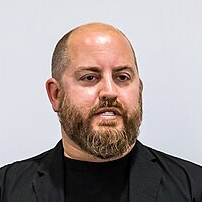
Jess RowGuest
Mitzi RapkinHost
They're a lot about the artifice of storytelling and exposing some of that and questioning storytelling.

I'm curious what was really on your mind when you started these, and maybe they were written over a long period of time.

So I started writing the first stories in Story Knife all the way back in like 2009, 2010, 2011.

And then of course, you know, in my own era, people like Dave Eggers and David Foster Wallace and the sort of postmodern American writers of the 90s.

and very sort of conventional and realist in its technique, my early short stories.

Then having done that for a while, I got a little impatient and I also got a little cynical having been through the sort of publishing pipeline a couple of times and also realizing that short stories are such a tiny part of the literary marketplace and that they're so devalued compared to the novel.

So I sort of started thinking, you know what, if there isn't an audience for my work, I'm just going to do whatever the hell I want.

And I'm going to write stuff that is a little incisive, a little inflammatory, a little cynical, and that is very much in keeping with the energy of the avant-garde tradition, which isn't really avant-garde anymore because it's been around for so long.
The rest of this transcript — segmented and speaker-labeled, so you land on the exact moment something was said
Search every transcript — by keyword, by phrase, or by meaning, across every show Radar indexes
Trends — what is surging across podcasts, measured against its own baseline
Alerts — when a name you follow appears in a newly indexed episode
No account is needed to search Radar.