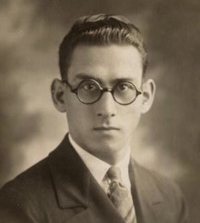
The Harvard professor turned psychedelic prophet who told a generation to turn on, tune in, and drop out.
That popular image obscures how seriously he took his actual work, the study of personality and consciousness.
From early in his career as a psychologist, Leary had been wrestling with the same question.
How do you map human consciousness precisely enough to change it? Psychedelics were just one tool among many he used to get there.
His 1957 book, The Interpersonal Diagnosis of Personality, was a rigorous attempt to map the patterns of interpersonal behavior that govern how people relate to each other.
The automated responses, the conditioned transactions, the roles people play without awareness.
He called these games, years before Eric Byrne popularized the concept in transactional analysis.
Identify the programming, make it visible, and create conditions for changing it.
Psychedelics were interesting to Leary because he believed they could produce a temporary suspension of the existing programming.
What happened during the experience depended heavily on what framework the person brought to it.
Which is another way of saying that the beliefs you arrive with and the environment you trip in shapes what the experience delivers.
In fact, much of his terminology was 20th century restatements of concepts that Giordano Bruno would have recognized.
That is, the deliberate engineering of your environment and mindset, the two things that determined the quality of your acid trip.
This described the initiatory path in terms succinct enough to fit on a bumper sticker and be mocked on the cover of Mad Magazine.
This stands for Space Migration, Intelligence Increase, and Life Extension.
The Harvard professor turned psychedelic prophet who told a generation to turn on, tune in, and drop out.
That popular image obscures how seriously he took his actual work, the study of personality and consciousness.
From early in his career as a psychologist, Leary had been wrestling with the same question.
How do you map human consciousness precisely enough to change it? Psychedelics were just one tool among many he used to get there.
His 1957 book, The Interpersonal Diagnosis of Personality, was a rigorous attempt to map the patterns of interpersonal behavior that govern how people relate to each other.
The automated responses, the conditioned transactions, the roles people play without awareness.
He called these games, years before Eric Byrne popularized the concept in transactional analysis.
Identify the programming, make it visible, and create conditions for changing it.
Psychedelics were interesting to Leary because he believed they could produce a temporary suspension of the existing programming.
What happened during the experience depended heavily on what framework the person brought to it.
Which is another way of saying that the beliefs you arrive with and the environment you trip in shapes what the experience delivers.
In fact, much of his terminology was 20th century restatements of concepts that Giordano Bruno would have recognized.
That is, the deliberate engineering of your environment and mindset, the two things that determined the quality of your acid trip.
This described the initiatory path in terms succinct enough to fit on a bumper sticker and be mocked on the cover of Mad Magazine.
This stands for Space Migration, Intelligence Increase, and Life Extension.
The rest of this transcript — segmented and speaker-labeled, so you land on the exact moment something was said
Search every transcript — by keyword, by phrase, or by meaning, across every show Radar indexes
Trends — what is surging across podcasts, measured against its own baseline
Alerts — when a name you follow appears in a newly indexed episode
No account is needed to search Radar.