Exhibitionistas: Notes on Contemporary Art and Life
Sep 14, 2026 · 34 min · 10 segments
Contemporary art writer and curator, Joana P. R. Neves, makes a case for the existence of pockets of creativity in our everyday life. The secret is asking the question, inspired by our last episode…
Joana P. R. NevesHostFor years we've had these proto multiverses which are books with little short forms that blew us away.
Someone wrote them by hand with their quill and boom suddenly they were in everyone's houses everywhere in a way.
and although I love them, books detached us from the materiality of the technical act of writing.
A Finnish artwork, in general, not only the book or the poem or writing in any form, might be the crystallization of a happening into an act of communion or at least of communication.
If we take them as rules and stable definitions, we imagine them as writing a sort of a linear history, especially when we're talking about etymology.
But look at the words... painting the indo-european origin of this word peg so indo-european being a sort of an artificial language close to what we think would have been the language of those regions which are very far apart it's a wide territory so it is a sort of a speculative language it is based in real concrete findings and therefore we can say and we know that the word peg, while painting has become a nasal version of the word, meant to mark by incision.
So when we talk about something that's very graphic, it's something that is detailed like a drawing.
and writing and so graphene the origin of the word didn't segregate between drawing and writing which we now take to be very different art forms but overlaps sometimes occur and that's what i'm making a case for today.
If I dig deep into the origin of my artistic overlaps, I quickly find a knot between different artistic languages tied up by the action of reading aloud.
so my first love was writing and reading this led to literature of all kinds from murder mysteries to poetry still today but an interest in literature may lead to other art forms and so it did for me maybe also the times my generation maybe also my inclination to theory and to speculation but somehow i ended up being fascinated by the whole realm of experimental poetry, dance, cinema, you name it, which made me aware of something that has stayed with me ever since, structure.
This made me appreciate creatives that stick to the traditional form of their discipline, of their artistic language, but make us feel as if we're experimenting it for the very first time.
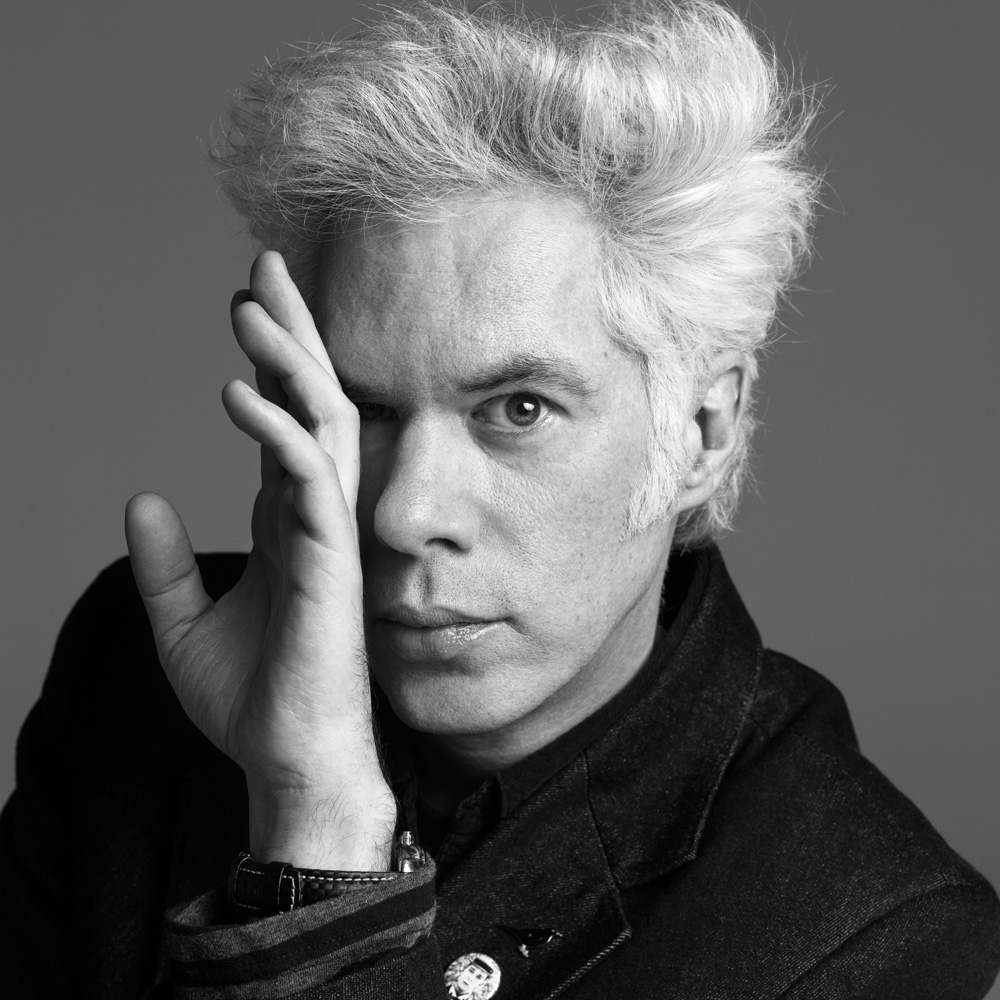
People like Gerhard Richter, I would say, T.S. Eliot's poetry or Jim Jarmusch's cinema.
It also made me aware of those who challenge it, who reinvent it, who even break it, such as Anthony McCall's cinema, for example, without really projecting a narrative image on a screen.
Rebecca Horne's performance drawings, for example, that's another really great and really formative artist for me in relation to the potential overlap of disciplines that will almost break them and create something else but without wanting to state it as a discipline or a genre of any kind.
There's a little bit of freedom in there and also the creation of a territory where we don't know quite how to behave because there are no established rules.
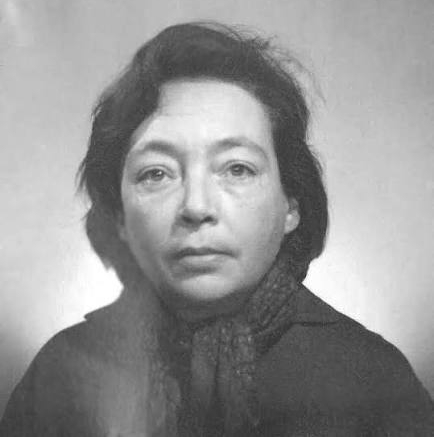
Marguerite Duras's film Baxter, Vera Baxter, that's something that also broke me completely.
I also must say that I watched it a 1am during some holiday in Portugal where I went to rest after a whole year of studying abroad and I was mesmerized but also fell asleep to it.
Another thing that I discovered in my work as a curator is that artists do not compartmentalize.
Like me, they are stimulated by different art languages and even spaces where they talk to each other.
For years we've had these proto multiverses which are books with little short forms that blew us away.
Someone wrote them by hand with their quill and boom suddenly they were in everyone's houses everywhere in a way.
and although I love them, books detached us from the materiality of the technical act of writing.
A Finnish artwork, in general, not only the book or the poem or writing in any form, might be the crystallization of a happening into an act of communion or at least of communication.
If we take them as rules and stable definitions, we imagine them as writing a sort of a linear history, especially when we're talking about etymology.
But look at the words... painting the indo-european origin of this word peg so indo-european being a sort of an artificial language close to what we think would have been the language of those regions which are very far apart it's a wide territory so it is a sort of a speculative language it is based in real concrete findings and therefore we can say and we know that the word peg, while painting has become a nasal version of the word, meant to mark by incision.
So when we talk about something that's very graphic, it's something that is detailed like a drawing.
and writing and so graphene the origin of the word didn't segregate between drawing and writing which we now take to be very different art forms but overlaps sometimes occur and that's what i'm making a case for today.
If I dig deep into the origin of my artistic overlaps, I quickly find a knot between different artistic languages tied up by the action of reading aloud.
so my first love was writing and reading this led to literature of all kinds from murder mysteries to poetry still today but an interest in literature may lead to other art forms and so it did for me maybe also the times my generation maybe also my inclination to theory and to speculation but somehow i ended up being fascinated by the whole realm of experimental poetry, dance, cinema, you name it, which made me aware of something that has stayed with me ever since, structure.
This made me appreciate creatives that stick to the traditional form of their discipline, of their artistic language, but make us feel as if we're experimenting it for the very first time.
People like Gerhard Richter, I would say, T.S. Eliot's poetry or Jim Jarmusch's cinema.
It also made me aware of those who challenge it, who reinvent it, who even break it, such as Anthony McCall's cinema, for example, without really projecting a narrative image on a screen.
Rebecca Horne's performance drawings, for example, that's another really great and really formative artist for me in relation to the potential overlap of disciplines that will almost break them and create something else but without wanting to state it as a discipline or a genre of any kind.
There's a little bit of freedom in there and also the creation of a territory where we don't know quite how to behave because there are no established rules.
Marguerite Duras's film Baxter, Vera Baxter, that's something that also broke me completely.
I also must say that I watched it a 1am during some holiday in Portugal where I went to rest after a whole year of studying abroad and I was mesmerized but also fell asleep to it.
Another thing that I discovered in my work as a curator is that artists do not compartmentalize.
Like me, they are stimulated by different art languages and even spaces where they talk to each other.
The rest of this transcript — segmented and speaker-labeled, so you land on the exact moment something was said
Search every transcript — by keyword, by phrase, or by meaning, across every show Radar indexes
Trends — what is surging across podcasts, measured against its own baseline
Alerts — when a name you follow appears in a newly indexed episode
No account is needed to search Radar.