[typewriter clacking] "Dear friend, I am chairman of a small committee out here which is trying to do something to help the non-Aryan Christians and others who do not come within the scope of the work of the Jewish Committee."
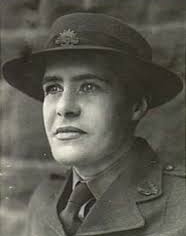
This is a letter from Camilla Wedgwood writing to a woman named Evelyn Harvey in England.
Camilla and Evelyn are both trying to help refugees fleeing Nazi persecution in Germany.
Fuchs lives in Berlin with his wife and two young children, and he wants to know whether he and his family can escape to Australia.
[somber music] "Theoretically, all that is necessary is that the would-be immigrant should have a sufficient amount of landing money and satisfy the authorities at Canberra that he is likely to be able to make a livelihood here.
Actually, because there is a very large number of people trying to get out here now from Germany and Austria, the powers that be are picking and choosing whom they will admit."
By the time Camilla was writing her letter in late 1938, the Nazi regime had been in power in Germany for five years and had just annexed Austria and occupied Czechoslovakia.
More than 100,000 Jews and other persecuted minorities had fled, and many more were now trying to flee.
Finding refuge was precarious.
[typewriter clacking] "There are two ways of getting a permit, or rather, of applying for one.
A, the would-be immigrant applies direct to Canberra, sending with the application form two photographs, police certificate, and health certificate, and if he has them, such testimonial as will show the type and quality of work which he has done.
He must also have at least 200 pound Australian, which he can show to the immigration authorities on arrival."
In the 1930s, Australia prioritized British migration under the White Australia Policy.
For everyone else, it was difficult.
A system of landing permits was used to refuse or limit entry to anyone deemed undesirable, a euphemism for not being white Anglo-Saxon.
"The second way to try to get a permit is to find some Australian who will nominate the would-be immigrant.
This is usually a slow process, and it is very hard to find someone who will do this for a complete stranger."
By the time she's writing this letter, Camilla Wedgwood has tried to get Australian landing permits for hundreds of people fleeing Europe.
Her success rate has been pitifully low.
"In general, Canberra does not smile on the applications of people over the age of 45, and it definitely prefers people under 35, particularly if they have young children."
Unemployment was still high, and as another war loomed, anti-immigrant sentiment was intensifying.
"Also, there is practically no hope for anyone whose profession is law, medicine, or anything academic.
[typewriter clacking] "Dear friend, I am chairman of a small committee out here which is trying to do something to help the non-Aryan Christians and others who do not come within the scope of the work of the Jewish Committee."
This is a letter from Camilla Wedgwood writing to a woman named Evelyn Harvey in England.
Camilla and Evelyn are both trying to help refugees fleeing Nazi persecution in Germany.
Fuchs lives in Berlin with his wife and two young children, and he wants to know whether he and his family can escape to Australia.
[somber music] "Theoretically, all that is necessary is that the would-be immigrant should have a sufficient amount of landing money and satisfy the authorities at Canberra that he is likely to be able to make a livelihood here.
Actually, because there is a very large number of people trying to get out here now from Germany and Austria, the powers that be are picking and choosing whom they will admit."
By the time Camilla was writing her letter in late 1938, the Nazi regime had been in power in Germany for five years and had just annexed Austria and occupied Czechoslovakia.
More than 100,000 Jews and other persecuted minorities had fled, and many more were now trying to flee.
Finding refuge was precarious.
[typewriter clacking] "There are two ways of getting a permit, or rather, of applying for one.
A, the would-be immigrant applies direct to Canberra, sending with the application form two photographs, police certificate, and health certificate, and if he has them, such testimonial as will show the type and quality of work which he has done.
He must also have at least 200 pound Australian, which he can show to the immigration authorities on arrival."
In the 1930s, Australia prioritized British migration under the White Australia Policy.
For everyone else, it was difficult.
A system of landing permits was used to refuse or limit entry to anyone deemed undesirable, a euphemism for not being white Anglo-Saxon.
"The second way to try to get a permit is to find some Australian who will nominate the would-be immigrant.
This is usually a slow process, and it is very hard to find someone who will do this for a complete stranger."
By the time she's writing this letter, Camilla Wedgwood has tried to get Australian landing permits for hundreds of people fleeing Europe.
Her success rate has been pitifully low.
"In general, Canberra does not smile on the applications of people over the age of 45, and it definitely prefers people under 35, particularly if they have young children."
Unemployment was still high, and as another war loomed, anti-immigrant sentiment was intensifying.
"Also, there is practically no hope for anyone whose profession is law, medicine, or anything academic.
The rest of this transcript — segmented and speaker-labeled, so you land on the exact moment something was said
Search every transcript — by keyword, by phrase, or by meaning, across every show Radar indexes
Trends — what is surging across podcasts, measured against its own baseline
Alerts — when a name you follow appears in a newly indexed episode
No account is needed to search Radar.