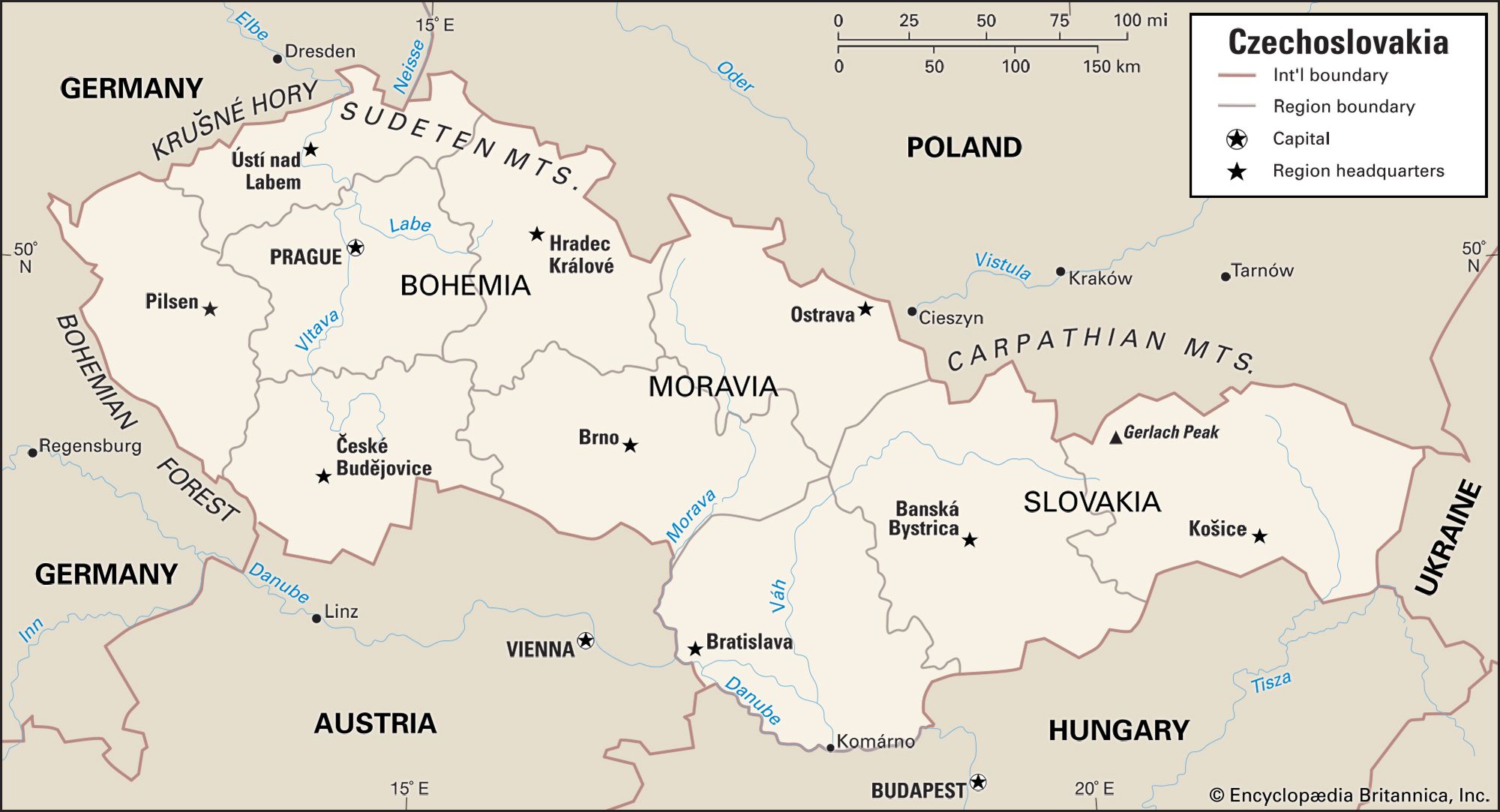
Czechoslovakia
CountryWikipedia
1.4k
MENTIONS
729
EPISODES
556
PODCASTS
Search complete. 1372 mentions across 729 episodes found for "Czechoslovakia".
Sep 17, 2026

Harrison PlattsGUEST
This is one of my favorite cars here.
Harrison PlattsGUEST
These were made in Czechoslovakia.
Harrison PlattsGUEST
It has a rear V8
Greg StanleyHOST
in it.

Math PickupPANELIST
Yeah, he's the one that wants armoured divisions and basically taking back over, well, trying to take over Europe.
Math PickupPANELIST
In Czechoslovakia?
David MeyerSOUNDBITE_SPEAKER
Yeah, yeah.
David MeyerSOUNDBITE_SPEAKER
General Gogol is presumptuous.
David MeyerSOUNDBITE_SPEAKER
Must I remind you, the committee, of our overwhelming superiority over NATO forces before we
Julian GloverSOUNDBITE_SPEAKER
give it away?
David MeyerSOUNDBITE_SPEAKER
We have played out a variety of attack strategies on the new Kulcov computer and find that a lightning thrust by ten armoured divisions from the north and by five more through Czechoslovakia lead to total victory in five days against any possible defence scenario.
David MeyerSOUNDBITE_SPEAKER
This is absolute madness.

Andrew CollingwoodHOST
They had come from this background in the late 60s through to the mid-70s when there was a lot of that floating around in academia.
Andrew CollingwoodHOST
But this group had, you know, after the Soviet invasion of Czechoslovakia in 1968, they'd become... really disenchanted with Stalinism and it started kind of looking around for a new way to further the leftist revolution and settled on something like Gramsci and Euro communism and as they got older they'd filtered up through all of the institutions in Britain the civil service education the police and ultimately politics as well and you had this government that that led people both within the parliamentary party and also within the civil service and the other institutions of the British state.
Andrew CollingwoodHOST
And they also saw an opportunity within American unipolarity, I think, where they understood the way the world was going.
Andrew CollingwoodHOST
It was going to be globalized.

Michael SallaHOST
Nevertheless, he did a good job in digging up a lot of information about Hans Kammler and the unsuccessful weaponization program that the Nazis and the Italians had set up for flying saucer programs.
Michael SallaHOST
Now, in my 2018 book i covered hans kamla and his efforts to weaponize these flying sources and what i wrote was quote the nazi ss advanced weapons projects under cumulus authority had failed in its last ditch effort to weaponize flying sources in time to turn the tide of the war Kammler moved whatever infrastructure and operational flying saucer craft he could before the advancing Allied armies reached the top secret SS production centers in Pilsen, Czechoslovakia, Poland, and elsewhere.
Michael SallaHOST
So that's on page 89 in my book.
Michael SallaHOST
So the Nazi SS failed in their reverse engineering program and towards the end of the Second World War, we're talking 1944, 1945, the Nazi SS tried to move as much as it could to these... areas in South America and in neutral countries and even Antarctica.

KrautGUEST
Y-M-O-V. That's the place where I researched a lot when I was still a student.
KrautGUEST
Yakimov was a gulag in Czechoslovakia.
KrautGUEST
When Czechoslovakia became a communist regime in 1948, so the first things the Soviet did as part of their partnership was they sent in NKVD agents who helped the communist regime build a gulag in the uranium mine.
KrautGUEST
where people had to mine uranium without protective gear.
KrautGUEST
And it was basically, being sent to that Gulag was basically being sentenced to death by cancer.
KrautGUEST
The Soviet Union didn't have the uranium to build its own nuclear weapons.
KrautGUEST
It was of too low a grade to be used in the building of nuclear weapons.
KrautGUEST
It would have required an enormously expensive enrichment process that the Soviets didn't know how to do and didn't have the resources to do, but the uranium in Czechoslovakia was high grade.

CliveGUEST
not just goalkeepers, but outfield players also.
CliveGUEST
He paved the way for a lot of...
CliveGUEST
Czechoslovakian people
Zdenek LukasHOST
to
CliveGUEST
achieve their goals in whatever field they were in.

Daniela LazarovaHOST
There are many more places across the country that require investigation or clean-up.
Daniela LazarovaHOST
During the communist era in particular, hazardous substances were stored or disposed of at numerous locations across former Czechoslovakia.
Daniela LazarovaHOST
They came from the chemical industry, military facilities and landfills, as well as from fuel storage sites and mining operations.
Daniela LazarovaHOST
Even after these activities ended, pollutants remained in the soil as well as in groundwater and surface water.
19 MINS LATER
ScottSOUNDBITE_SPEAKER
And The whole wine experience here is the reason why you would come here and it's something special and definitely worth experiencing.
Pavla HorakovaCORRESPONDENT
With a population of just some 7,000, the town of Mikulov is now a heavyweight when it comes to tourism as well as its impact on the Czech cultural scene.
Pavla HorakovaCORRESPONDENT
Once a closely guarded border crossing between communist Czechoslovakia and Austria, drab and neglected by the authorities, over the past three decades Mikulov has flourished into a prosperous, open and cosmopolitan community, respectful of its multicultural heritage and proud of its generous hospitality.
Daniela LazarovaHOST
And that trip to Mikulov is all that we have for you today.

speaker_1GUEST
Oh, and then, oh, they're arguing about Casablanca before they go into the diner.
speaker_1GUEST
And she's like, I would rather go to Czechoslovakia and be the first lady than stay on Casablanca with Humphrey Bogart.
JasperHOST
Movie Corner, very quickly.
JasperHOST
This is not a thing on my list, but we're going to do Movie Corner as well when other movies come up.
28 MINS LATER
JasperHOST
yeah.
JasperHOST
beautiful talk about it
speaker_1GUEST
yeah so they're in the museum they're doing this little accent he does a weird Czechoslovakian accent or something I have decided I can't do it proper cash proper cash pecan pie pecan pie it's so funny to go have pecan pie
JasperHOST
it's so funny and it's one of the more common facts of this movie is people know that Meg Ryan had no clue Billy Crystal was about to do this and in the scene you can see her looking at Rob Ryder be like what the fuck what is happening please to repeat please to repeat yeah no repeat to answer To answer.

speaker_0NARRATOR
Among them is Helena Citronova.
speaker_0NARRATOR
Helena Citronova, one of four children of Jewish parents, was born on the 26th of August 1922 in Humena, then part of Czechoslovakia.
speaker_0NARRATOR
Her father was a cantor, and because Helena liked not only to sing, but also dance, her older brother joked that one day he would take her to Prague to exercise her talent.
speaker_0NARRATOR
In 1934, Helena's sister Rosika, together with her husband, emigrated to Palestine.
speaker_0NARRATOR
However, because he could not find work there, in 1939, the two decided to return to Czechoslovakia together with their daughter, though the Jews in Palestine had warned them by saying, ''What? Are you crazy? There's a war brewing.'' By the time the family realized their mistake, it was too late.
speaker_0NARRATOR
The Second World War began on the 1st of September 1939, when Nazi Germany invaded Poland.
speaker_0NARRATOR
In April 1940, the first Aryanization law was passed in Slovakia, which meant the seizure of Jewish-owned property and exclusion of Jews from the economy.

Atul SharmaNARRATOR
Fifty marks, she said.
Atul SharmaNARRATOR
demands a real tip at mannheim a porter carried my bags from one track to another in the station when i asked him how much he demanded a thousand marks the last porter i had seen had been the girl in baden so i protested a bottle of beer costs fifteen hundred marks here he replied a glass of schnapps twelve hundred that is the way the prices fluctuate all over germany it all depends on whether the prices went up to the top when the mark had its terrific fall last winter to around seventy thousand to the dollar if the prices went up they never come down in the big cities of course they went up a full meal in the country cost two thousand marks on the train a ham sandwich cost three thousand marks last week investigating the actual living conditions i talked to among others a small factory owner several workmen a hotel keeper and a high school professor the factory owner said we have enough coal and coke for a few weeks longer but are short on all raw materials we cannot pay the prices they ask now we sold to exporters they got the dollar prices we didn't We can buy coal from Czechoslovakia, where they have German mines they got under the peace treaty, but they want pay in Czech money, which is at par and we can't afford to pay.
Atul SharmaNARRATOR
We are starting to lay off workmen, and as they have nothing saved, there is libel to be trouble.
Atul SharmaNARRATOR
How a Workman Fares A workman said, I cannot keep my family on the money that I am making now.
719 more episodes mention Czechoslovakia.
Create an account to see the whole feed, search across every transcript, and follow the entities you care about.