Decisive Point Podcast – Ep 7-6 – Thomas Bruscino – “War Fighting: The Case of Ulysses S. Grant”
Oct 7, 2026 · 27 min · 10 segments
In this episode, Thomas Bruscino argues that American military professionals must focus on war fighting in publishing about military history to bring their unique military perspectives to the study of…
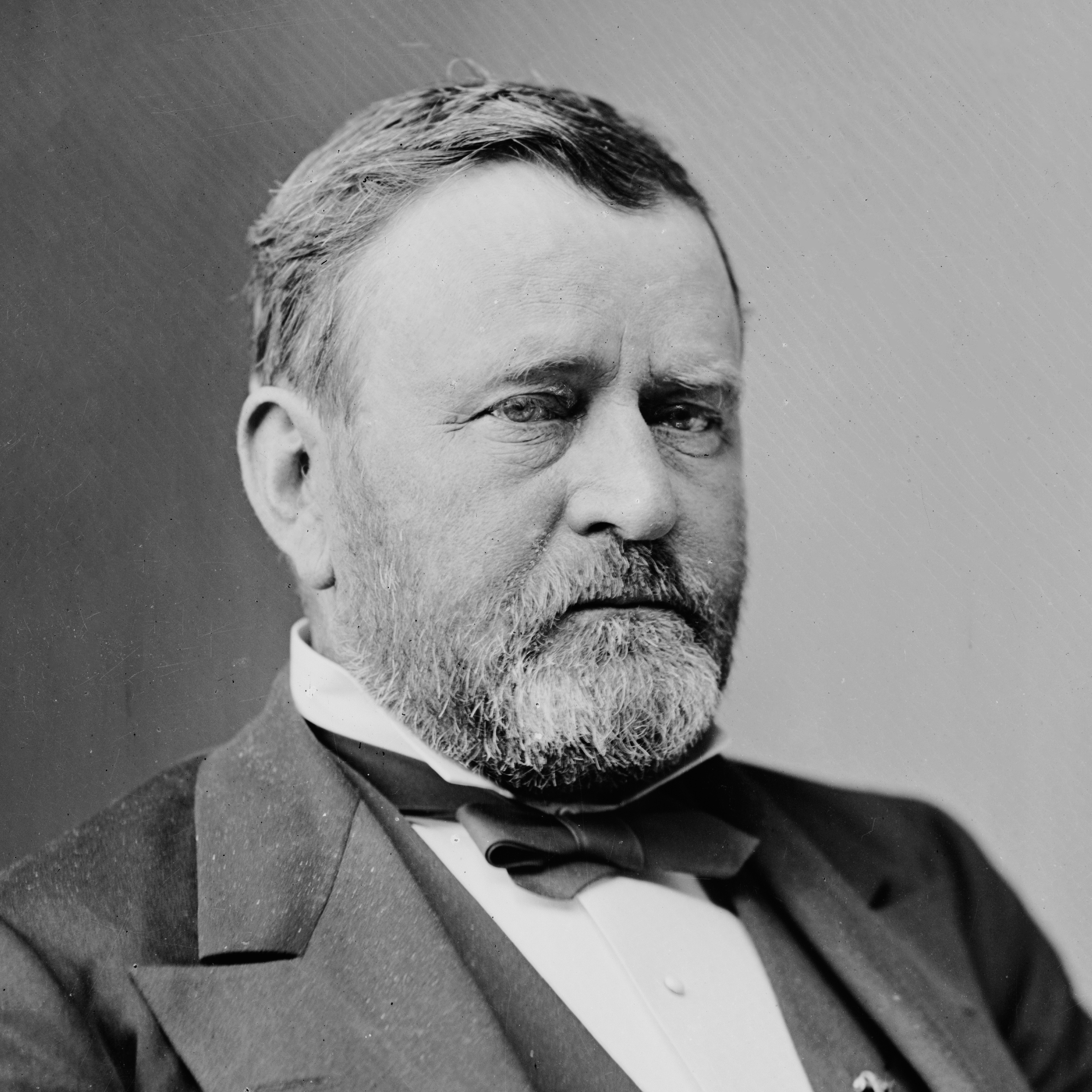
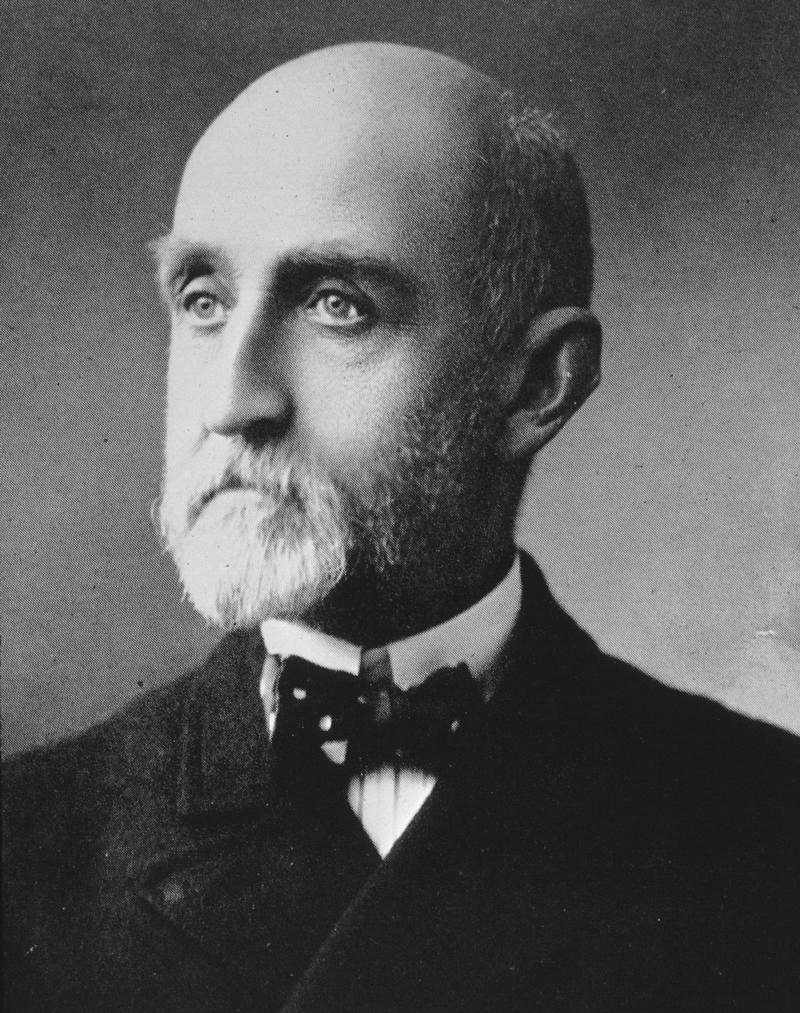
In this episode, Thomas Bruscino argues that American military professionals must focus on war fighting in publishing about military history to bring their unique military perspectives to the study of war. Bruscino uses the historical example of American professional military writing and teaching from the American Civil War to World War II about General Ulysses S. Grant to demonstrate the value of analyses focusing on war fighting, especially relative to popular and academic histories of Grant’s military leadership. Keywords: military publishing, professional military education, Ulysses S. Grant, military leadership, military strategy Stephanie Crider (Host) Welcome to Decisive Point. The views and opinions expressed in this podcast are those of the guests and are not necessarily those of the Department of the Army, the US Army War College, or any other agency of the US government. Joining me today is Dr. Thomas Bruscino, a historian and professor in the Department of Military Strategy, Planning, and Operations at the US Army War College and author of “War Fighting: The Case of Ulysses Grant,” which you can find in the Autumn 2025 issue of Parameters. Welcome to Decisive Point. Dr. Thomas Bruscino Thank you. Glad to be here. Host So, today we’re looking through the lens of your research to discuss how military leaders can lead the revitalization of professional military writing and institutional memory. You note that after World War II, professional military writing largely lost its influence outside the US Army, and schoolhouses then turned toward broader policy issues. Today, for a senior officer who sits at the intersection of policy and execution, how can they use professional publishing to project unique military perspectives back into broader academic and popular strategic discourse? Bruscino What I was noticing, doing research on World War I and World War II, areas that I do a lot of work on (and I’m a big fan of Ulysses S. Grant—particularly the 1864 campaigns and the strategy for the last year of the \[Civil] War) is that the folks writing before studying in the military schoolhouses prior to World War I, and in the interwar period prior to World War II, did a really good job of understanding Grant \[and] the way that he approached the campaigns. And, the reason I think they were good at doing that is because they were able to put themselves into the positions. They didn’t think so much in terms of levels of war the way we do now, where we talk about strategy and operational art and tactics, and they focused more on what it would mean to be a field army commander or a theater commander. And in doing that, in focusing on positions, as opposed to saying, “I’m a strategic leader, I’m a field army commander, or in a field army staff,” or “I’m on a” what we now call a “Joint Task Force or a theater command.” And, since they did that, they were able to put themselves into the shoes of Grant. And in doing that, they were able to really bring that unique perspective that only military officers and military professionals really have because they’re putting themselves in that position. So, when they write from that perspective, they bring something unique and valuable to the wider discussions that are academic, popular, \[and] that are out there because we have a tendency to boil it down in popular (and even a lot of academic writing) just to big arrows on maps, sort of hand-wave versions of this. But, by putting themselves in those positions, they really empathized with the subject because they have that view that they’re going to be that person someday and that they needed to understand it that way. And, I think in doing that, they bring this perspective that is missing in a lot of the stuff out there. And so, this has been a longtime thing of teaching military professionals and thinking about these issues. I’m always in this \[mode] and preparing, trying to prepare, \[and] help them prepare themselves for those positions. That’s always this gap when I’m looking for writings that are useful for soon-to-be senior officers or current senior officers. And, I really do think it funnels through them, that \[as] these ideas funnel through them, that’ll make a huge difference in what they’re doing. Host So, when we’re looking at leaders who are thinking about strategic-level issues, how can they write candidly without violating operational security? Bruscino If they lead with the lessons learned, it will usually manifest in the form of some kind of principles, these are not to say laws. We’re good Clausewitzians here \[at the US Army War college] so we don’t think of warfare as being dictated by laws but by principles, principles that, generally, when applied, are effective in helping commanders and staff sort through these types of problems at their appropriate level. If you’re leading with principles, and you’re writing to understand and to describe principles, the ones that are the most important that you found to be—senior leaders have found to be—the most important in their roles as, like I said, field army commanders, Joint Task Force commanders and staffs, theater-levels commanders and staff—then you’re pretty safe. When it comes to the specifics, like how those are applied, I think that probably the best way is to stick with—I’m a historian, so I’ll have my bias here, but I think it’s useful—the historical examples, if it’s for an open audience. In a TS, in a top-secret environment, maybe you can get into the specifics of how they apply. But, we’re talking about wider writing right now. In that case, I think you can go back and say, “Hey, this is a lot like what Grant had to deal with. It’s a lot like what (General Douglas) MacArthur had to deal with, or (Fleet Admiral Chester W.) Nimitz or (General Creighton W.) Abrams or (General H. Norman) Schwarzkopf, (David H.) Petraeus.” It doesn’t matter, any of those people. And, you can say, “Here are these principles playing out in this historical example,” and then let your audience make the connections to their current issues. Host You highlighted that Grant and General George G. Meade didn’t just maneuver armies. They orchestrated the physical arrangement of a joint supply system and established successive waterborne bases like City Point, Virginia. So, given today’s contested logistics environments in theaters like the Indo-Pacific, how can senior leaders use these kinds of historical insights to build real physical resiliency into modern theater sustainment plans? Bruscino So, the theory that they studied in the past, the principles that they were talking about, the original military theory that a lot of these folks studied, some of this is (Henri, baron de) Jomini some of its (Carl von) Clausewitz, and then there’s a whole range of other people—that’s another discussion/article to work on to help explain that stuff— really tended to break up strategies. The concept of strategy tended to be focused on large units—so, those things that we’re talking about, theaters, field army to army groups, that sort of idea of it—or what we now call Joint Task Forces, which is very similar in the past to now. So, that would be the kind of focus of strategy. They had another category, and I don’t know that this was exactly right, but they also would separate out logistics and would say that warfare really consisted of strategy, tactics, logistics, engineering (they’d often put into there, too). I don’t know that that’s necessarily the best way to look at it as we move forward, but the focus on and the linking of logistics to strategy was sort of how they thought, and logistics was kept as a thing, and it was very well-understood by those guys that that’s commander’s business. Logistics is commander’s business. So, we have a tendency, now, to talk in terms of sustainment as a function, and even logistics as a function. And, that is owned by either a G-4 or a J-4, the assistant or deputy chief of staff for logistics, or it’s part of a sustainment function, which is supposed to be everyone’s business in the way that we talk about it but then tends to just get pushed to the fore. It gets pushed to the main sustainment officer. I think that when somebody like Grant, who was a quartermaster in his background (so he had a very good understanding of what was necessary for that), he had a long experience with moving large bodies of troops, with the Navy, with boats in the Western theaters of the Civil War. For him, it was all the same thing. You had to always account for your logistics. That was a massive portion of what you did, and that was his business. So, he’s the one who was doing the arranging of that with the support of quartermasters, what we now call G-4s or J-4s, that would be doing that for him. So, it really is that sort of commander’s focus on logistics. That is commander’s business. Host In Grant’s time, jointness meant the Army and Navy securing supply ports. What does that historical joint baseline teach us about the friction we face today in multidomain command and control? Bruscino When it comes to command and control, we have the ability to communicate very broadly and almost instantaneously about all kinds of matters. So, when I say they should be focused on logistics, that doesn’t mean that they should be doing some sort of version of over control, putting themselves into the execution of this, the exec...
In this episode, Thomas Bruscino argues that American military professionals must focus on war fighting in publishing about military history to bring their unique military perspectives to the study of…