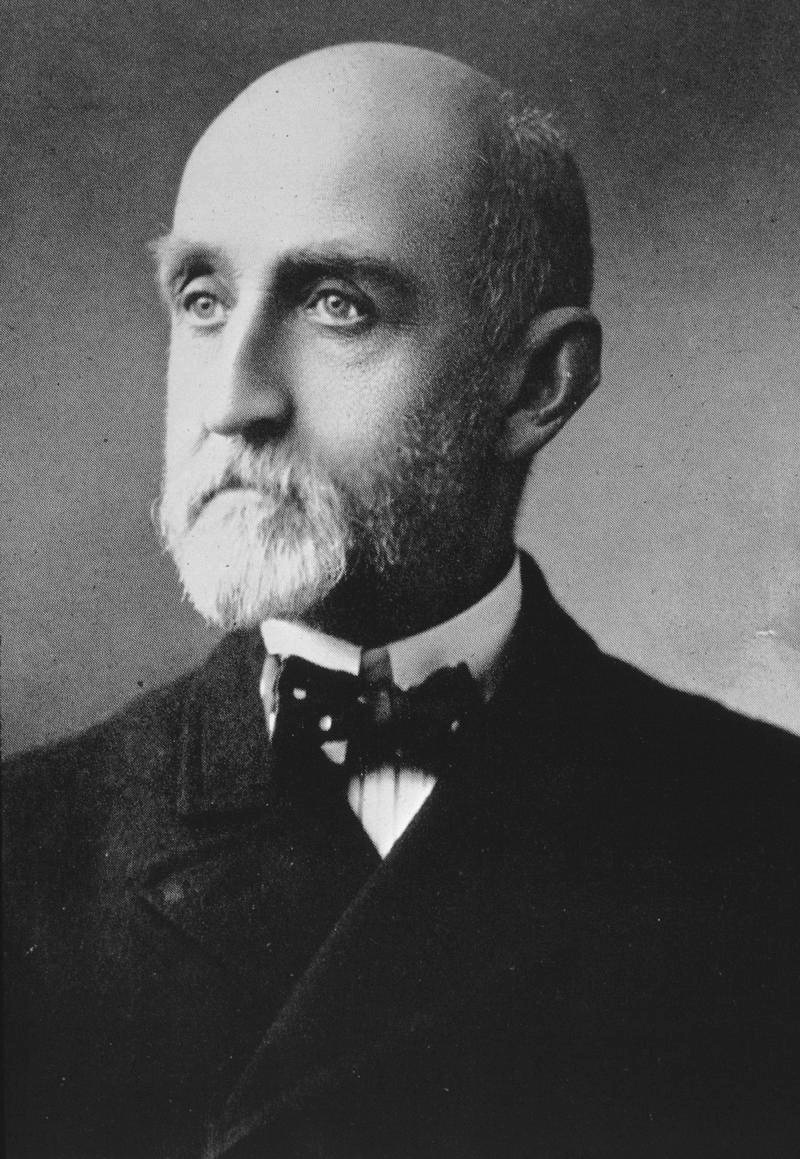
Alfred Thayer Mahan
Navy officer and historianWikipedia
18
MENTIONS
15
EPISODES
15
PODCASTS
Search complete. 18 mentions across 15 episodes found for "Alfred Thayer Mahan".
Oct 19, 2026

Larry ArnnGUEST
Churchill addresses himself as a former naval person to FDR.
Larry ArnnGUEST
And FDR knew Alfred Thayer Mahan, who is to this day, he's a late 19th, early 20th century writer.
Larry ArnnGUEST
The Influence of Sea Power on History is his big book.
Larry ArnnGUEST
And naval people, probably your offspring who are in the Navy, they have all read that book.

Larry ArnnGUEST
Churchill addresses himself as a former naval person to FDR.
Larry ArnnGUEST
And FDR knew Alfred Thayer Mahan, who is to this day, he's a late 19th, early 20th century writer.
Larry ArnnGUEST
The Influence of Sea Power on History is his big book.
Larry ArnnGUEST
And naval people, probably your offspring who are in the Navy, they have all read that book.

David SmithGUEST
And his dad studied, you know, fortifications and field armies and stuff like that.
David SmithGUEST
And Alfred Thayer Mahan went the other direction.
David SmithGUEST
He went into the Navy, and he became enamored with the British and the way that the British controlled the waves through maritime power.
David SmithGUEST
And you get this interesting dichotomy that comes out of Mahan between a maritime power on the one hand and a continental power on the other hand.

Audrey RogersHOST
As we discussed in our Yorktown episode, fighting did continue elsewhere, but Britain's effort to reconquer the 13 colonies was effectively finished at this point.
Audrey RogersHOST
Military historian Alfred Thayer Mahan, one of history's greatest writers on naval strategy, later argued that the Battle of the Chesapeake was, quote, the decisive naval battle of the war, end quote.
Audrey RogersHOST
And many historians have gone even further.
Audrey RogersHOST
Some regard it as the most strategically important naval battle ever fought in the Western Hemisphere.
16 MINS LATER
James EarlyHOST
And most importantly, Admiral de Grasse's victory at the Battle of the Chesapeake isolated Cornwallis' army and made the victory at Yorktown possible.
James EarlyHOST
Without French sea power, the American Revolution might have dragged on for many more years, or perhaps even ended differently.
James EarlyHOST
As military historian Alfred Thayer Mahan later concluded, control of the sea often determines the outcome of wars long before armies meet on the battlefield.
James EarlyHOST
Few conflicts illustrate that principle more clearly than the American Revolution.

Stephanie CriderHOST
Okay.
Thomas BruscinoGUEST
Uh, of, of Alfred Thayer Mahan.
Thomas BruscinoGUEST
Uh, so we talk about, uh, Alfred Thayer Mahan, and we have a tendency to talk about the influence of sea power upon history, and we focus on what sea power has to do with national power for various states, and it's more of a what we now call a grand strategic discussion.
Thomas BruscinoGUEST
Mahan didn't just write about that.
Thomas BruscinoGUEST
He also wrote about naval strategy.
Thomas BruscinoGUEST
How do I relate the naval fight to the ground fight and back and forth? It's sort of a myth that he didn't really think about projecting force on land.

Bobby JonesGUEST
First of all, a ship is a fool to fight a fort.
Bobby JonesGUEST
That was said by Alfred Mahan back in the day, in the 1800s.
Bobby JonesGUEST
You can't win this by naval power.
Bobby JonesGUEST
Full stop.

speaker_0HOST
It means preventing an adversary from using the C without necessarily being able to fully control it yourself.
speaker_0HOST
The distinction goes back to the classical maritime theories of Alfred Thayer Mahan and Sir Julian Corbett.
speaker_0HOST
Mahan writing in The Influence of Sea Power Upon History in 1890 emphasized the importance of achieving command of the sea through decisive fleet engagements.
speaker_0HOST
Corbett, writing some principles of maritime strategy some 20 years later, was more circumspect.

Daniel BessnerGUEST
...
Daniel BessnerGUEST
And that's an idea that goes back to, like, this high imperial moment in the late 19th century when Alfred Thayer Mahan was writing a series of books and articles that really emphasized the importance of shipping lanes, which was one of, like, basically to smote- promote the construction of battleships and the Great White Fleet, as it, as it was called, right? So even something like that, which is like-
Courtney RawlingsHOST
Interesting
Daniel BessnerGUEST
... as restraint as we get is to, like, the United States needs to protect the shipping lanes, right? So even, like, the restrainer position, I would argue, as articulated, has this imperialist realist, imperial realist element to it.

Clayton SwopeGUEST
And this goes back to kind of a...
Clayton SwopeGUEST
You know, like the sea power theorist of 1890s, Alfred Thayer Mahan, U.S. naval officer who essentially kind of wrote the book on what it means to be a sea power, a maritime power.
Clayton SwopeGUEST
And underlying that power is economic strength.
Clayton SwopeGUEST
And that economic strength is not just domestic.
5 more episodes mention Alfred Thayer Mahan.
Create an account to see the whole feed, search across every transcript, and follow the entities you care about.