Aug 12, 2026 · 45 min · 9 segments
We’re all telling stories in the context of a bigger story that surrounds us. Often we’re not aware of that story, we just accept it as how things are. But what is that story? And how is it forming…
Pepper SweeneyHost
So what, why does anthrop- what does anthropology have to do with, um, our s- our present story?
Fir- first of all, it, it's, uh, t- so that our audience is aware, is we're, you know, we're not just trying to sling fancy schmancy scientific terms around.
Like, what, w- what, when we understand, like, what is a human being, and how do we come to understand that? The reason it's important for us to explore that and to have some sense of it is because a lot of us are living taking for granted who we are and what we do and how we operate and so forth and so on, without recognizing that the whole notion of studying anything, but particularly studying what it means to be human, is always something that takes place within a particular community context.
In other words, this notion of science, what it tells us about the world, whether it's chemistry or biology or anthropology or psychology, whatever those things are, that science, that study always takes place within a particular community of people, a c- a particular human tradition.
So for instance, there was a time when, uh, most people, most scientists, if you will, although they weren't called that at the time, if they were t- if you would've asked them about the, uh, geography and the geology of the world, they would've said that the world is generally flat.
Well, that notion that the world was flat didn't just spring up just all by itself out of nowhere.
You know, people were told this by other people, and those people believed it, and then they'd pass that information on to other people, and that was a particular community lens through which they understood the data that they were looking at, right? You look out on a flat horizon, and it looked like the world just ended.
And of course, you could sail your boat out there and the horizon would keep going, but, like, we knew that at somewhere the end of the world would be reached.
But somewhere along the line, somebody starts to s- you know, learn something else or study something.
They've got some questions about this tradition, some questions within the context of the community.
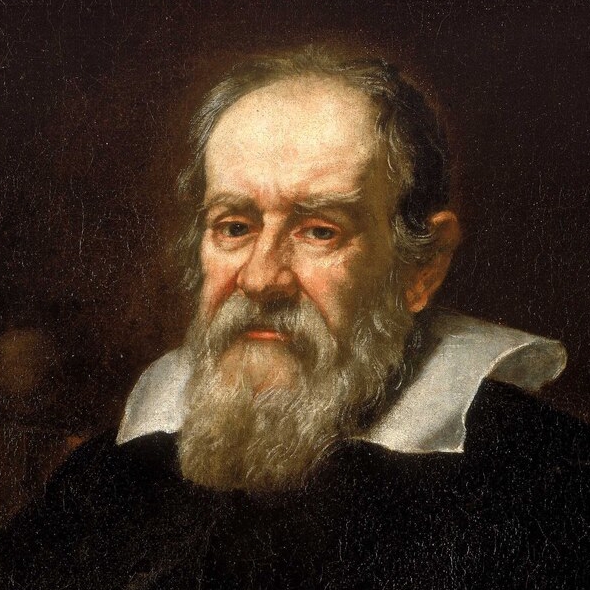
And those scientific changes over time take a long time to happen because the communities are really resistant to this kind of change, and so everybody from Copernicus to Galileo and so forth and so on, this notion that the world is actually not flat but round is something that took a lot of time.
So it takes place in the context of a community that's telling a story even about the science that we're learning.
And when it comes to anthropology, that particular kind of science, we have to recognize that even when it comes to the neuroscience that we're talking about on our podcast, how the brain works and what its purpose is and meaning and so forth, what's really important is that we're not understanding that science in a vacuum.
And we've come to learn that that's the case, that there's a separation between the science that we learn that tells us the truth about the material world and our religion, so to speak.
There's a famous philosopher of science by the name of Michael Polanyi, and he once famously said, "There's no such thing as science.

So what, why does anthrop- what does anthropology have to do with, um, our s- our present story?
Fir- first of all, it, it's, uh, t- so that our audience is aware, is we're, you know, we're not just trying to sling fancy schmancy scientific terms around.
Like, what, w- what, when we understand, like, what is a human being, and how do we come to understand that? The reason it's important for us to explore that and to have some sense of it is because a lot of us are living taking for granted who we are and what we do and how we operate and so forth and so on, without recognizing that the whole notion of studying anything, but particularly studying what it means to be human, is always something that takes place within a particular community context.
In other words, this notion of science, what it tells us about the world, whether it's chemistry or biology or anthropology or psychology, whatever those things are, that science, that study always takes place within a particular community of people, a c- a particular human tradition.
So for instance, there was a time when, uh, most people, most scientists, if you will, although they weren't called that at the time, if they were t- if you would've asked them about the, uh, geography and the geology of the world, they would've said that the world is generally flat.
Well, that notion that the world was flat didn't just spring up just all by itself out of nowhere.
You know, people were told this by other people, and those people believed it, and then they'd pass that information on to other people, and that was a particular community lens through which they understood the data that they were looking at, right? You look out on a flat horizon, and it looked like the world just ended.
And of course, you could sail your boat out there and the horizon would keep going, but, like, we knew that at somewhere the end of the world would be reached.
But somewhere along the line, somebody starts to s- you know, learn something else or study something.
They've got some questions about this tradition, some questions within the context of the community.
And those scientific changes over time take a long time to happen because the communities are really resistant to this kind of change, and so everybody from Copernicus to Galileo and so forth and so on, this notion that the world is actually not flat but round is something that took a lot of time.
So it takes place in the context of a community that's telling a story even about the science that we're learning.
And when it comes to anthropology, that particular kind of science, we have to recognize that even when it comes to the neuroscience that we're talking about on our podcast, how the brain works and what its purpose is and meaning and so forth, what's really important is that we're not understanding that science in a vacuum.
And we've come to learn that that's the case, that there's a separation between the science that we learn that tells us the truth about the material world and our religion, so to speak.
There's a famous philosopher of science by the name of Michael Polanyi, and he once famously said, "There's no such thing as science.
The rest of this transcript — segmented and speaker-labeled, so you land on the exact moment something was said
Search every transcript — by keyword, by phrase, or by meaning, across every show Radar indexes
Trends — what is surging across podcasts, measured against its own baseline
Alerts — when a name you follow appears in a newly indexed episode
No account is needed to search Radar.