Jun 23, 2026 · 47 min · 11 segments
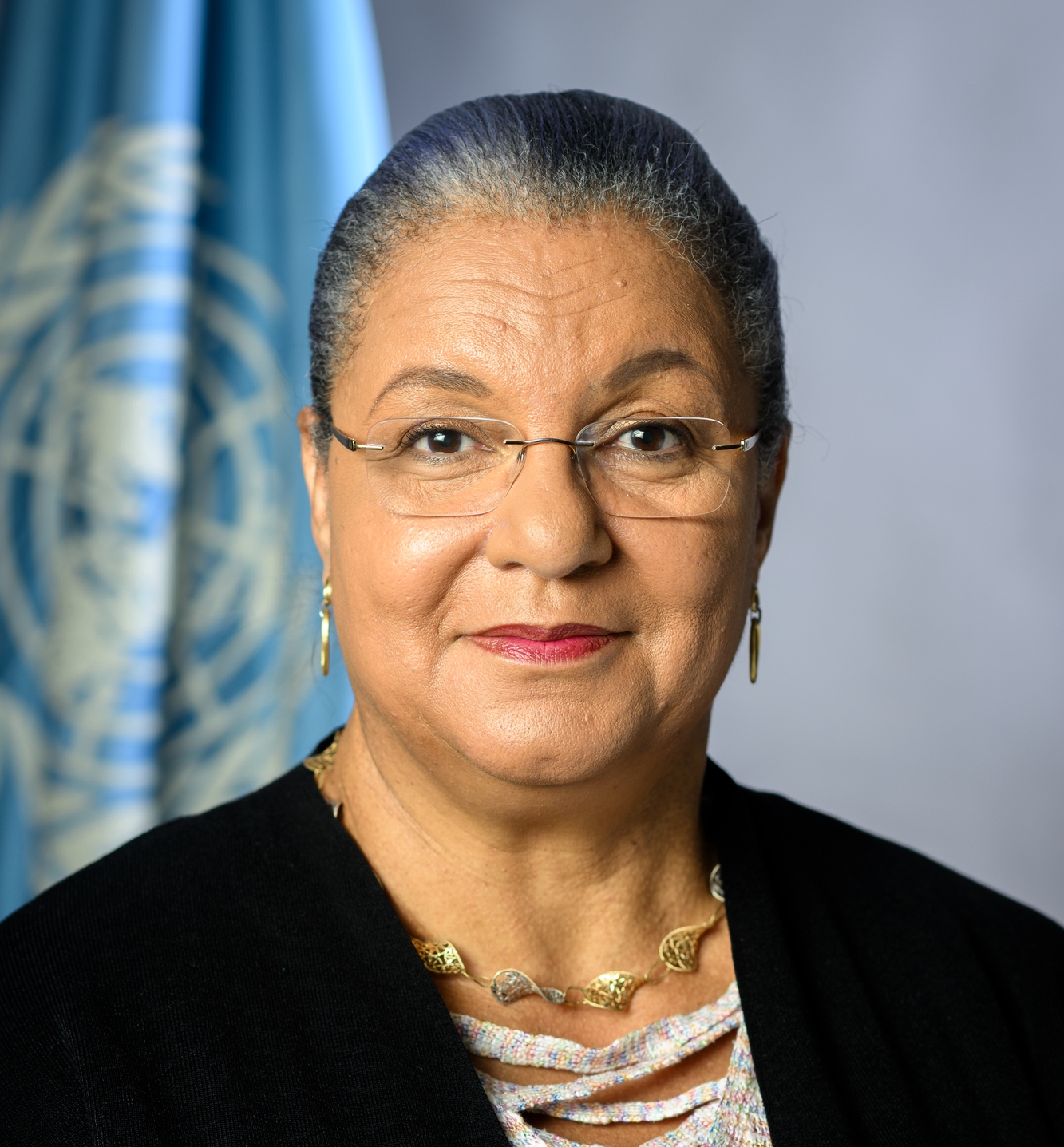
Former Ghanian Foreign Minister Hanna Tetteh knows first hand the responsibility that comes from being an elected politician. Now head of the United Nations Support Mission in Libya, she draws on that…
Hanna TettehGuest
Melissa FlemingHost
You've had an extraordinary career as a lawyer, as a government minister in Ghana, and with the United Nations, and we're gonna get to all of that soon.

But you are working in one of the most challenging countries in the world right now, Libya.


And I come from a coastal West African state, and I know that we have been impacted in different ways, some more subtle than others.


To some extent, it, uh, also has a Chapter VII mandate, which means that we have some direct influence over the Libyan political process.

But of course, as is the case with every UN initiative, we try as much as possible to make sure that it is the country and the citizens themselves who are given leadership and agency.

And we use the tools at our disposal only when we have to, when it seems that the situation is deadlocked and there's no other way of proceeding other than engaging the Security Council and then letting them support us to take some actions to move the conversations along.

So what we've been doing over the last 15 years, we've been trying to support democratic consolidation in Libya.

After the overthrow of President Gaddafi, there was initially the anticipation that this might be a relatively smooth transition to a democracy that, you know, had popular support from its people.

What I think was not clearly understood at the time were the internal fractures within the society itself, which broke out in conflict between cities and municipalities and different parts of the country.

And the, the unstable security situation also created fertile grounds for terrorism activities to also gain some roots within the country.

So moving out of that, having first a political process that brought into being an initial legislative body, and then later on the House of Representatives after substantive elections had been held, and the Libyan political agreement that finally essentially agreed to have two legislative chambers, and putting in place a government that was initially in control of the entirety of Libya, was a step towards facilitating that political consolidation.

But because of the internal fractures, and also because of the political ambitions of some of the actors, what we've seen over time is that there has been, in the east, the strengthened influence of the Libyan National Army under Marshal Haftar, and in the west you have what we call the internationally recognized government of the GNU.

Now, this current situation, which is where you have the GNU and you have the LNA with significant control in the east, was also a result of a UN-facilitated process, the Libyan Political Dialogue Forum, that established a new government after the conflict that took place in 2020.

Unfortunately, it was called off at the last minute because of force majeure, and after that Marshal Haftar withdrew recognition for the Government of National Unity.

You've had an extraordinary career as a lawyer, as a government minister in Ghana, and with the United Nations, and we're gonna get to all of that soon.

But you are working in one of the most challenging countries in the world right now, Libya.


And I come from a coastal West African state, and I know that we have been impacted in different ways, some more subtle than others.


To some extent, it, uh, also has a Chapter VII mandate, which means that we have some direct influence over the Libyan political process.

But of course, as is the case with every UN initiative, we try as much as possible to make sure that it is the country and the citizens themselves who are given leadership and agency.

And we use the tools at our disposal only when we have to, when it seems that the situation is deadlocked and there's no other way of proceeding other than engaging the Security Council and then letting them support us to take some actions to move the conversations along.

So what we've been doing over the last 15 years, we've been trying to support democratic consolidation in Libya.

After the overthrow of President Gaddafi, there was initially the anticipation that this might be a relatively smooth transition to a democracy that, you know, had popular support from its people.

What I think was not clearly understood at the time were the internal fractures within the society itself, which broke out in conflict between cities and municipalities and different parts of the country.

And the, the unstable security situation also created fertile grounds for terrorism activities to also gain some roots within the country.

So moving out of that, having first a political process that brought into being an initial legislative body, and then later on the House of Representatives after substantive elections had been held, and the Libyan political agreement that finally essentially agreed to have two legislative chambers, and putting in place a government that was initially in control of the entirety of Libya, was a step towards facilitating that political consolidation.

But because of the internal fractures, and also because of the political ambitions of some of the actors, what we've seen over time is that there has been, in the east, the strengthened influence of the Libyan National Army under Marshal Haftar, and in the west you have what we call the internationally recognized government of the GNU.

Now, this current situation, which is where you have the GNU and you have the LNA with significant control in the east, was also a result of a UN-facilitated process, the Libyan Political Dialogue Forum, that established a new government after the conflict that took place in 2020.

Unfortunately, it was called off at the last minute because of force majeure, and after that Marshal Haftar withdrew recognition for the Government of National Unity.
The rest of this transcript — segmented and speaker-labeled, so you land on the exact moment something was said
Search every transcript — by keyword, by phrase, or by meaning, across every show Radar indexes
Trends — what is surging across podcasts, measured against its own baseline
Alerts — when a name you follow appears in a newly indexed episode
No account is needed to search Radar.