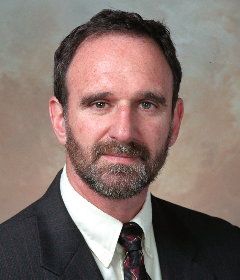
Leslie Lamport on the Science of Distributed Systems
Jun 25, 2026 · 36 min · 17 segments
Before blockchains could reach consensus, Leslie Lamport had to define what agreement even meant when computers fail, lie, or disappear. In this episode of First Principles: The Scientific Roots of…
Before blockchains could reach consensus, Leslie Lamport had to define what agreement even meant when computers fail, lie, or disappear. In this episode of First Principles: The Scientific Roots of Blockchain Technology, Turing Award-winning computer scientist Leslie Lamport joins Tim Roughgarden Head of Research at a16z crypto and Professor of Computer Science at Columbia University, and a16z crypto Research Partner Ittai Abraham to trace the ideas that helped define modern distributed computing. Lamport’s work formalized some of the field’s deepest questions: how to reason about concurrent systems, how distributed systems can agree despite failures, and how to prove that protocols do what they are supposed to do. His work on logical clocks, state machine replication, the Byzantine Generals problem, and Paxos has shaped everything from cloud infrastructure to the consensus protocols underlying modern blockchains. The conversation begins with Lamport’s early work on concurrency and the origins of the Byzantine Generals Problem, and then turns to fault tolerance: what happens when machines crash, behave unpredictably, or even act maliciously? We also cover the feedback loop between theory and practice, the long arc of fundamental research, and how blockchains are inheriting and extending decades of distributed systems work. Highlights 00:00 – Intro: The problem every blockchain is built to solve 02:52 – Why concurrent systems are surprisingly tricky 04:40 – The origins of the bakery algorithm 07:37 – What does it mean for a protocol to be “correct”? 12:03 – The origins of the Byzantine Generals problem — and what happens when some computers fail 17:49 – How Paxos emerged from an attempted impossibility proof 23:47 – Why theory and practice need each other 33:48 – Government funding, DARPA, and the long arc of foundational research About First Principles First Principles is a special limited series from a16z crypto about the scientific roots of modern computing — especially blockchains — told through rare conversations with the pioneers who helped shape the foundational ideas behind distributed systems, consensus protocols, economics, mechanism design, cryptography, zero knowledge, and more. People often tell the story of the Bitcoin whitepaper as if it appeared out of nowhere. But the ideas behind Bitcoin — and blockchains more broadly — come from decades of computer science, economics, mathematics, and cryptography. First Principles is a guide to that lineage, as told by the people who helped build it. Hear more from: Tim Roughgarden: https://twitter.com/Tim\_Roughgarden Ittai Abraham: https://twitter.com/ittaia Follow a16z crypto: X: https://twitter.com/a16zcrypto LinkedIn: https://www.linkedin.com/showcase/a16zcrypto/posts/ YouTube: https://www.youtube.com/@a16zcrypto Substack: https://a16zcrypto.substack.com/subscribe/ \*\** As always, none of the following should be taken as investment, business, legal, or tax advice. Please see a16z.com/disclosures for more important information, including a link to a list of our investments. Hosted by Simplecast, an AdsWizz company. See pcm.adswizz.com for information about our collection and use of personal data for advertising.
Before blockchains could reach consensus, Leslie Lamport had to define what agreement even meant when computers fail, lie, or disappear. In this episode of First Principles: The Scientific Roots of…