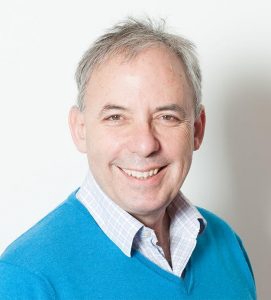
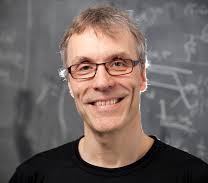
The Atomic Physics Behind Neutral Atom Computers | Mark Saffman
Jun 30, 2026 · 1 hr 23 min · 10 segments
Why are so many companies betting on neutral atoms to build the first useful quantum computers? In this episode, we speak with Mark Saffman, professor at the University of Wisconsin–Madison and one…
Why are so many companies betting on neutral atoms to build the first useful quantum computers? In this episode, we speak with Mark Saffman, professor at the University of Wisconsin–Madison and one of the pioneers of neutral atom quantum computing. Over the past two decades, Saffman has helped transform Rydberg atoms from a theoretical idea into one of the leading architectures for scalable, fault-tolerant quantum computing. We explore the physics of optical tweezers and Rydberg blockade, how neutral atoms perform quantum logic and create entanglement, and why this platform offers unique advantages in connectivity and scalability. Saffman also discusses the engineering challenges of improving gate fidelity, implementing quantum error correction, and scaling from small laboratory experiments to processors containing millions of qubits. We also discuss the origins of companies like Infleqtion, the rapid growth of the neutral atom ecosystem, and what it will take for quantum computers to solve meaningful scientific and industrial problems. Whether you're interested in quantum computing, atomic physics, quantum error correction, computer architecture, or the future of information processing, this episode provides a deep technical look at one of the most promising paths toward practical quantum computers. Follow us for more technical interviews with the world’s greatest scientists: Twitter: https://x.com/632nmPodcast Instagram: https://www.instagram.com/632nmpodcast?utm\_source=ig\_web\_button\_share\_sheet&igsh=ZDNlZDc0MzIxNw== LinkedIn: https://www.linkedin.com/company/632nm/about/ Substack: https://632nmpodcast.substack.com/ Follow our hosts! Mikhail Shalaginov: https://www.linkedin.com/in/mikhail-shalaginov/ Michael Dubrovsky: https://www.linkedin.com/in/michael-dubrovsky/ Xinghui Yin: https://www.linkedin.com/in/xinghui-yin/ Subscribe: Apple Podcasts: https://podcasts.apple.com/us/podcast/632nm/id1751170269 Spotify: https://open.spotify.com/show/4aVH9vT5qp5UUUvQ6Uf6OR Website: https://www.632nm.com Timestamps: 00:00 - Intro and Reads 02:45 - Neutral Atoms vs Superconductors and Ions 07:30 - Rydberg Atoms 12:49 - Practical Considerations for Rydberg Atoms 19:04 - From Atomic Physics to Quantum Gates 29:49 - Increasing Trap Loading 38:27 - Evolution of Rydberg Gates 45:05 - Limits of Rydberg Fidelity 49:49 - Scaling Neutral Atom Arrays 53:47 - Atomic Species and QEC 1:03:38 - History of Infleqtion 1:10:27 - Mark’s Outlook on the Future 1:15:08 - Caltech and Peter Shor 1:20:00 - Advice for Young Scientists #quantumphysics #quantumcomputing #physics #computerscience
Why are so many companies betting on neutral atoms to build the first useful quantum computers? In this episode, we speak with Mark Saffman, professor at the University of Wisconsin–Madison and one…