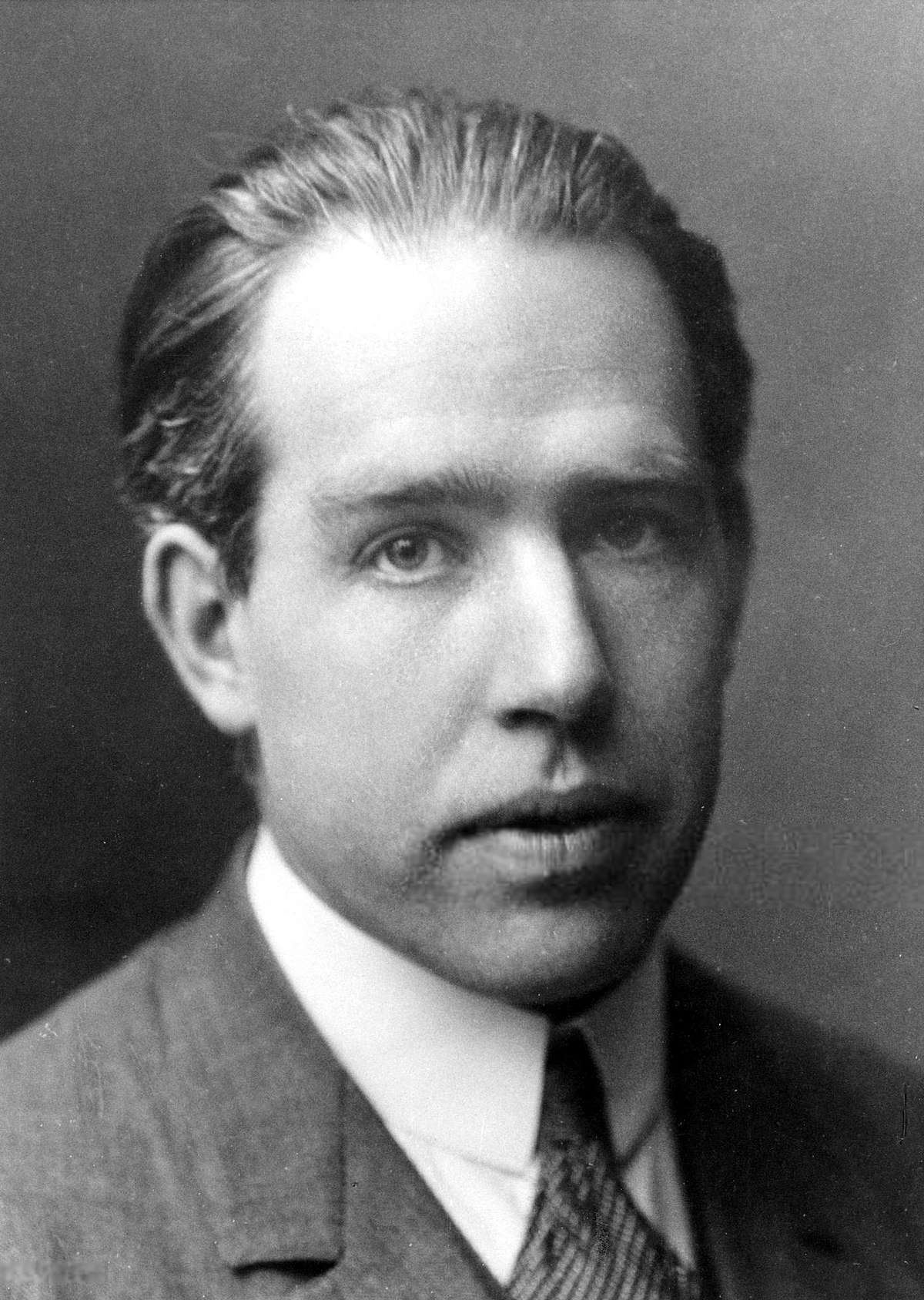
Niels Bohr
Danish physicistWikipedia
370
MENTIONS
134
EPISODES
108
PODCASTS
Search complete. 370 mentions across 134 episodes found for "Niels Bohr".
Oct 27, 2026

Philip BallGUEST
Yeah, it is very different for different people.
Philip BallGUEST
I mean, as I said, I've just written about Niels Bohr, and I think I was very struck by how Bohr seemed to work to some degree in that way, or he worked very intuitively.
Philip BallGUEST
He wouldn't work through the maths.
Philip BallGUEST
Werner Heisenberg, who he worked with, wanted to write down the maths and sort it out, and Wolfgang Pauli probably even more so.
Philip BallGUEST
So there are people who want to do things that way.
Philip BallGUEST
Paul Dirac was another who, of course, Graham has written this fabulous biography of, you know, really wanted things to be rigorous and mathematical and to work it out.
Philip BallGUEST
Whereas Niels Bohr did it intuitively.
Philip BallGUEST
And the extraordinary thing about Bohr is how much his intuition seemed to work out to be right.

Rolf SattlerGUEST
from quantum physics because as you know in quantum physics in the 19th century there was the debate whether light or an electron essentially is a particle or a wave.
Rolf SattlerGUEST
And then Niels Bohr in the beginning of the 20th century suggested that it can be both, depending on how you look at it, so that the particle and the wave view are complementary.
Rolf SattlerGUEST
They are not contradictory.
Rolf SattlerGUEST
They don't exclude each other.

Theral TimpsonHOST
Years ago, we had a philosopher of biology on the program who was questioning genes in the way you are, saying that this is a model that we have.
Theral TimpsonHOST
Gene is a model, right? Just like there's the Bohr model of the atom, the gene is a model.
Theral TimpsonHOST
But there are very specific genes that code for very specific proteins that we have discovered.
Theral TimpsonHOST
Absolutely.

Sean NeubauerGUEST
We calculated Louis de Brie... got a Nobel Prize, he won a Nobel Prize for coming up with a formula that turned the wavelength into a function of momentum.
Sean NeubauerGUEST
And then Niels Bohr went off and then Schrodinger came up with this other equation.
Sean NeubauerGUEST
And so we kind of took a path down this other road where we're using probabilities and stuff.
Sean NeubauerGUEST
And so without getting into the weeds, I'm trying to bridge the gap on that.

Winston WebberGUEST
And that was actually a phrase, it was the title of a book by Jeremy Bernstein, a physicist.
Winston WebberGUEST
And this physicist had worked at the Institute for Advanced Study where he rubbed shoulders with Einstein and Bohr and Pauli and Oppenheimer, all these guys, the guys that Richard Feynman called giant minds.
Winston WebberGUEST
And he wrote this book called The Life It Brings, which was basically about how grateful he was just to be there at that time and that place to get to know these astonishing people.
Winston WebberGUEST
And it's the same way with music.

Ken SpiroHOST
And a lot of those Jews who are involved in physics and mathematics will flee to America.
Ken SpiroHOST
Again, the Manhattan Project, Oppenheimer, Niels Bohr, Lise Meiter, Max Planck, Albert Einstein.
Ken SpiroHOST
It goes on and on and on how many of these people, including Enrico Fermi, he was not Jewish, but his wife was, so they fled Italy because the fascists were persecuting Jews.
Ken SpiroHOST
It's amazing how many of these Jews, but the point is, no matter where we look, We always see this as a reality.

Tom StoppardGUEST
I mean, and because it means, you know.
Charlie RoseHOST
And I assume when Copenhagen opened, the same thing happened to stories about Niels Bohr and ideas coming out of that kind of play.
Tom StoppardGUEST
I used Niels Bohr's story, which I didn't have to invent, in a play of mine.
Tom StoppardGUEST
I'll tell you, it might fill a little corner.
Tom StoppardGUEST
If I can remember it right.

Christopher McFaddenHOST
Without giving away anything confidential, what should people be watching for over the coming months, and how do those developments fit into your longer-term vision? Vision?
Peter CabauyGUEST
Well, we're launching Bohr.
Peter CabauyGUEST
That's an incredible thing.
Peter CabauyGUEST
I studied quantum computing and quantum information, so I love Niels Bohr.
Peter CabauyGUEST
I think he was great.
Peter CabauyGUEST
And we decided to call this Satellite 4, but it also doubles up as an acronym for Beta Voltaic Orbital High Reliability.

ParzivalHOST
In 1900, Max Planck figured out that energy comes in tiny chunks, and Einstein rewrote space and time in 1905, and then again in 1915.
ParzivalHOST
Niels Bohr cracked the atom in 1913, quantum mechanics showed up in the mid-20s, and in 1928, Paul Dirac wrote down an equation for the electron that ended up predicting antimatter.
ParzivalHOST
Most of these were confirmed within a few years, and the decades after stitched them together into the standard model.
ParzivalHOST
17 particles.

Dave FarinaHOST
This is when it's finally cool enough for electrons to couple to atomic nuclei.
Dave FarinaHOST
And once they do so, if you remember your Bohr model from 10th grade chemistry, The electron can inhabit different energy levels, and when it relaxes down to the ground state, it emits photons.
Dave FarinaHOST
So this is actually the first time, 380,000 years into the history of the universe, that the universe becomes transparent.
Dave FarinaHOST
The electromagnetic radiation... can travel freely through the universe and that is actually what the cosmic microwave background radiation is.
124 more episodes mention Niels Bohr.
Create an account to see the whole feed, search across every transcript, and follow the entities you care about.