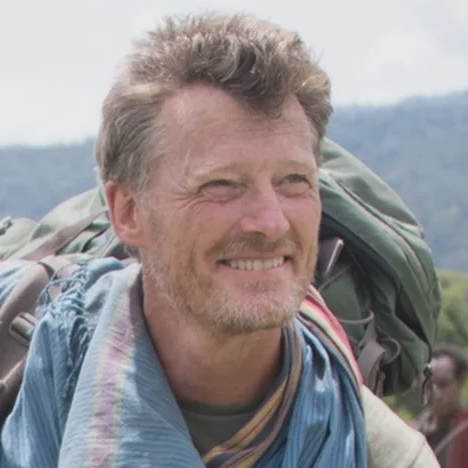
**After surviving malaria, starvation and near death in the Amazon, Benedict Allen was left with a question he couldn't shake: why had he survived? His search for an answer would take him deep into Papua New Guinea and into a brutal initiation ceremony designed to transform young men into “crocodile men.”**
In Part 3 of *Lost in the Amazon*, Benedict explains why simply returning home wasn't enough. Surviving had changed him, and he felt compelled to understand what it meant to be tested, transformed and pushed to the limits of human endurance.
That search took him to live among tribal people in Papua New Guinea, where he underwent the dangerous initiation ceremony traditionally undertaken by young men as part of their passage into manhood.
Benedict also takes Jack through more extraordinary moments from a lifetime spent exploring some of the world's most hostile environments — including an Arctic expedition where he lost his dog team and once again found himself facing the possibility that he might not survive.
From the Amazon rainforest to Papua New Guinea and the Arctic, Benedict's story becomes about something much bigger than one expedition: **why did surviving once leave him with the need to keep putting himself back on the edge?**
This is Part 3 of Benedict Allen's story on *What I Survived*.
* * *
Hosted on Acast. See acast.com/privacy for more information.

 Benedict AllenGuestJack LaurenceHost