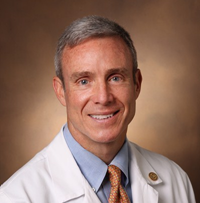
Episode 219: Rethinking ICU Sedation with Dr. Wes Ely
Oct 4, 2026 · 41 min · 11 segments
Dr. Wes Ely, critical care professor at Vanderbilt University and the VA, sits down with Kali and Heidi Engel, DPT for a deep dive into the history and evolution of the ABCDEF bundle — the ICU care…
Dr. Wes Ely, critical care professor at Vanderbilt University and the VA, sits down with Kali and Heidi Engel, DPT for a deep dive into the history and evolution of the ABCDEF bundle — the ICU care protocol that transformed how we treat critically ill patients. In this conversation, Dr. Ely traces the origins of spontaneous breathing trials (SBTs) and spontaneous awakening trials (SATs) back to the 1990s, when every ICU patient was placed on benzodiazepine and opioid drips as a matter of course. He explains how standardizing the weaning process cut ventilator days by two, halved complication rates, and saved $5,000 per patient — and how the landmark ABC trial, published in \*The Lancet\*, became the first study to demonstrate a life-saving benefit from stopping sedatives entirely. \*\*Key topics:\** \- The "malignant normality" of 40 years of deep sedation and prolonged immobilization in ICUs \- Why "sedation vacation" is the wrong term — and why sedation should be shut off completely, not weaned \- The number needed to treat of seven: one in every seven patients survived at one year thanks to the ABC protocol \- How CAM-ICU and ICDSC gave clinicians the tools to measure delirium starting in 2001 \- Janet Keith's remarkable story: walking on a ventilator after 50% facial removal from necrotizing fasciitis \- A COVID-era story of a postpartum ARDS patient whose survival hinged on waking up to see her husband \- Why the full bundle must be implemented together — not "one letter at a time" \- The "holy trinity" of ICU recovery: remove sedation, mobilize the patient, and engage family \- Practical implementation advice using PDSA cycles: start with one bed, one nurse, one patient, and expand from there \- The ethical imperative of \*primum non nocere* and the difference between benevolence and beneficence Tidewater AACN Chapter Awake and Walking ICU Symposium: https://tidewateraacn.nursingnetwork.com/nursing-events/152356-tidewater-aacn-presents-all-hands-on-deck-2027-critical-care-symposium#!info www.DaytonICUConsulting.com
Dr. Wes Ely, critical care professor at Vanderbilt University and the VA, sits down with Kali and Heidi Engel, DPT for a deep dive into the history and evolution of the ABCDEF bundle — the ICU care…