acute respiratory distress syndrome
InflammationWikipedia
197
MENTIONS
42
EPISODES
30
PODCASTS
Search complete. 197 mentions across 42 episodes found for "acute respiratory distress syndrome".
Sep 25, 2026

Sachi LordHOST
You'll see tidal volumes in a range of about 4 to 8 mLs per kilogram of predicted body weight.
Sachi LordHOST
In ARDS, 6 mLs per kilogram is a common starting point.
Sachi LordHOST
But from there, we look at the delivered tidal volume, airway pressures, gas exchange, synchrony, and the patient's response.
Sachi LordHOST
That number just gives us a starting point.
Sachi LordHOST
At the bedside, we might find thick secretion, bronchospasm, a kink in the circuit, or a patient biting the tube, or a change in inspiratory flow.
Sachi LordHOST
If peak pressure and plateau pressure both rise, the respiratory system is taking more pressure to expand.
Sachi LordHOST
So that can happen with things like ARDS, pulmonary edema, pneumothorax, abdominal pressure, chest wall stiffness, or patient effort during the measurement.
Sachi LordHOST
Peak and Plateau don't hand us the diagnosis exactly.

Lance WheelerHOST
The lung also forms colloid osmotic gradients that help remove transidated fluids.
Lance WheelerHOST
But those protections are easier to overwhelm when there's pulmonary inflammation, glycocalyx injury, sepsis, ARDS, trauma, or contusion.
Lance WheelerHOST
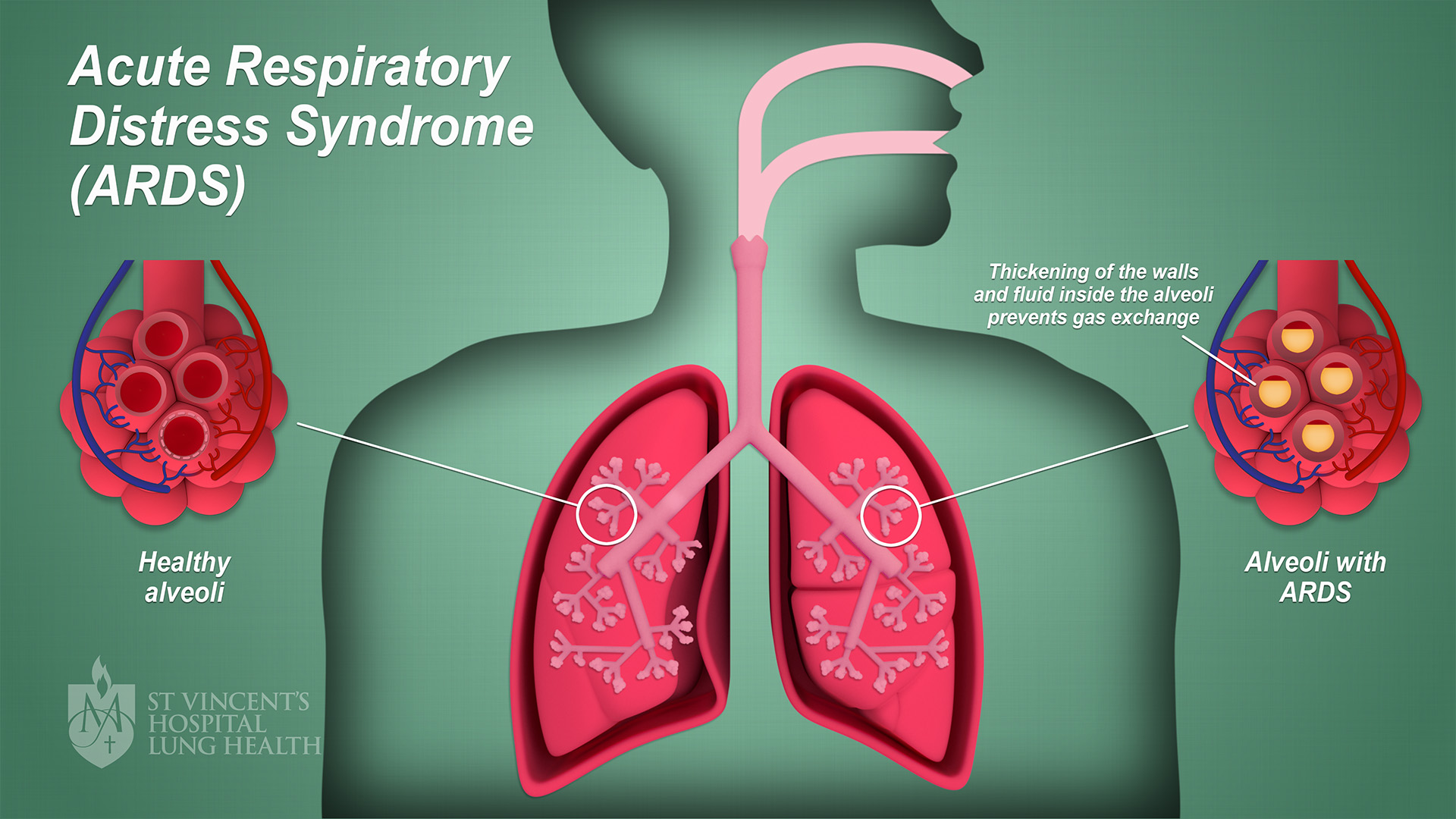
Acute respiratory distress syndrome, or ARDS, is a form of inflammatory lung injury characterized by increased pulmonary capillary permeability, bilateral lung infiltrates, and respiratory dysfunction that can't be explained by left-sided heart failure or simple fluid overload.
Lance WheelerHOST
Because the barrier is disrupted, fluid leaking into the alveoli is typically protein-rich.
Lance WheelerHOST
The 2021 study titled Fluid Therapy in Pulmonary Disease, How Careful Do We Need to Be? highlights an important species difference.

Kathy McDanielGUEST
I was admitted.
Kathy McDanielGUEST
They diagnosed it as ARDS, which was acute respiratory distress syndrome, also known as lung failure.
Kathy McDanielGUEST
And being a syndrome, it did not react to antibiotics.
Kathy McDanielGUEST
So they said, you know, you've got a 38% chance of making it.

Sergio ZanottiHOST
She's a physician scientist specializing in pulmonary medicine and critical care.
Sergio ZanottiHOST
Her research focuses on respiratory failure timing of initiation of invasive mechanical ventilation, resuscitation and management of ARDS and sepsis, both in the ICU and in non-critical care settings, and physiology of breathing during critical illness that can lead to lung injury.
Sergio ZanottiHOST
Dr. Gohal is the lead author of the recently published American Thoracic Society Clinical Practice Guidelines on Non-Invasive Respiratory Support for Adult Patients with Acute Respiratory Failure, which will serve as the basis for our conversation today.
Sergio ZanottiHOST
Nihao, welcome to Critical Matters.

Nicholas TemanGUEST
That I think is the easy population.
Nicholas TemanGUEST
It's the folks that are in ARDS who have been intubated for seven days on high dose sedation and paralyzed.
Nicholas TemanGUEST
How do you get them awake, extubated and ambulating?
J. W. Awori HayangaGUEST
Great question.
Nicholas TemanGUEST
who
J. W. Awori HayangaGUEST
are as a bridge to transplantation placed on ECMO, it's important to keep them mandatory.
J. W. Awori HayangaGUEST
So why not use the same philosophy and use the same techniques and the same kind of ethos for all the ARDS patients? And if it means that if You believe a patient is going to be on mechanical ventilation for seven days or greater.
J. W. Awori HayangaGUEST
Might we? cannulate earlier? Would that be so much of a crime?

speaker_0HOST
Something's going on.
speaker_0HOST
Maybe the patient is developing worsening ARDS.
speaker_0HOST
Maybe they're having progression of illness because the driving pressure has gone up, even though you haven't changed the PEEP.
speaker_0HOST
That suggests that the plateau pressure is going up.
speaker_0HOST
Okay, so assessing lung compliance.
speaker_0HOST
You can also use the titrate ventilator settings.
speaker_0HOST
And I think that's what a lot of us do now, especially in ARDS.
speaker_0HOST
You can try to find an optimal tidal volume and PEEP to achieve the lowest driving pressure.

Blake ForkeyHOST
Gastric contents enter the lungs and the chemical injury produces inflammation.
Blake ForkeyHOST
That can result in hypoxemia, bronchospasm, decreased lung compliance, pulmonary edema, and in severe cases, an ARDS-like picture.
Blake ForkeyHOST
Aspiration pneumonia is different.
Blake ForkeyHOST
That's an infectious process caused by aspiration of bacteria containing material.
Blake ForkeyHOST
Gastric contents enter the lungs and the chemical injury produces inflammation.
Blake ForkeyHOST
That can result in hypoxemia, bronchospasm, decreased lung compliance, pulmonary edema, and in severe cases, an ARDS-like picture.
Blake ForkeyHOST
Aspiration pneumonia is different.
Blake ForkeyHOST
That's an infectious process caused by aspiration of bacteria containing material.

Richard HorowitzGUEST
It turns out with Hantavirus and Ebola virus, the first four pathways, NF-kappa B, NLRP3 inflammasomes, NRF2, and prostaglandins are all relevant to Hantavirus and Ebola virus.
Richard HorowitzGUEST
And Dapsone showed in the first wave of the COVID, when people were dying from ARDS, acute respiratory distress syndrome, when there was a whiteout of their lungs because the lungs have 140 times more glutathione than any place else in the body so if you get an infection in your lung from hantavirus or ebola virus and you've used up your glutathione because you're dealing with infections and toxins you have nothing to protect your alveoli and your bronchi from all the inflammation you get ards they showed with dapsone it was a small study with covid but the 40 patients who took dapsone not one of them died from ards so when i looked at hantavirus and ebola virus dapsone blocks myeloperoxidase, and dapsone blocks NLRP3 inflammasomes, which are relevant to these viral infections.
Richard HorowitzGUEST
So NLRP3 inflammasomes is a pathway that is seen in Alzheimer's.
Richard HorowitzGUEST
So the study that was done in Korea with these 4,000 patients over 15 years, They took 100 milligrams of dapsone, not the doses I'm using for Lyme.
10 MINS LATER
Richard HorowitzGUEST
So it's like, maybe I have an answer, maybe I don't.
Richard HorowitzGUEST
But this is what science says is at least the next logical thing to protect yourself.
Richard HorowitzGUEST
And based on what I've looked at, I think based on the prior studies in COVID-19 where Dapsone stopped ARDS, even though it's a small study, that is the main reason why people die from hantavirus.
Richard HorowitzGUEST
I mean, it's a little bit different with Ebola, which also really affects the cells and destroys it.

Rick LawrenceNARRATOR
Here's an article of scientific interest from the UB News Center out of Buffalo.
Rick LawrenceNARRATOR
Lung inflammation and injury can quickly turn into acute respiratory distress syndrome, that's ARDS, the abbreviation, in patients with pneumonia, COVID-19, and other conditions.
Rick LawrenceNARRATOR
ARDS, that's the acronym, affects more than 200,000 people annually in the United States.
Rick LawrenceNARRATOR
Of these, 30 to 50 percent die, according to Zhenya Wang, Ph.D., SUNY Empire Innovation Professor in the School of Pharmacy and Pharmaceutical Sciences at the University of Rochester.
Rick LawrenceNARRATOR
I'm sorry, at the University at Buffalo.
Rick LawrenceNARRATOR
Wang recently received a $2 million four-year grant from the National Heart, Lung and Blood Institute, the NHLBI, to look for a safer and more effective treatment using omega-3 fatty acids.
Rick LawrenceNARRATOR
He is collaborating with Elsa Bo Ghanem, Ph.D., associate professor in the Department of Microbiology and Immunology at the Jacob School of Medicine and Biomedical Sciences at UB.
Rick LawrenceNARRATOR
Acute lung inflammation injury is a dysregulated inflammation disease, and it quickly precipitates to the more severe ARDS, Wang said.
32 more episodes mention acute respiratory distress syndrome.
Create an account to see the whole feed, search across every transcript, and follow the entities you care about.