Dec 15, 2025 · 52 min · 9 segments
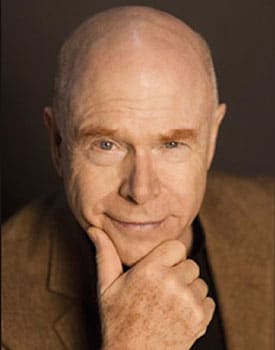
In this episode, I speak with Prof Clayton Williams, author of What Strategy Is: The 18 Fundamental Laws of Strategy, a thought-provoking synthesis that distils decades of strategic thinking into a…
Requier WaitHostYeah, I think given the fact that I'm so... belligerent on things like narrative bias in the book, I'm always careful of crafting this nice sort of perfect story, right? And I think with hindsight, I can look back to things like my childhood growing up in the Kruger, and I can definitely say like, oh, yes, that definitely contributed to it.
But But that's not the same as saying all roads pointed to this, right? So let's start in the sort of Kruger, I wanted to be a game ranger.
And if this feels like, where is this going to a book on strategy? I think that's kind of the authenticity of it, right? It's like there was never any sort of plan to write the book.
But the reason I mention that is that from a very young age, my mom definitely taught me to think in terms of ecosystems.
The other half of my childhood, I'd always tell the story was being dragged off either to my dad's office or my uncle Richard.
many,
many years ago, or being dragged off with my aunt, who was the PA to many CEOs to their offices for work.
But you kind of slowly take an interest because that's all there is to do on holidays.
As a teenager, I don't know if you remember the TV show Jag with the Tomcats, right? That got me into flying.
But I point to that as well, because I think that with a dad as an engineer, with learning the theory of flight, and putting it into practice from an age where there's still a lot of formative development, it definitely shaped my thinking in terms of firstly, first principles, but also thinking in terms of dynamic systems, multiple dimensions and things like that.
Yeah, I think given the fact that I'm so... belligerent on things like narrative bias in the book, I'm always careful of crafting this nice sort of perfect story, right? And I think with hindsight, I can look back to things like my childhood growing up in the Kruger, and I can definitely say like, oh, yes, that definitely contributed to it.
But But that's not the same as saying all roads pointed to this, right? So let's start in the sort of Kruger, I wanted to be a game ranger.
And if this feels like, where is this going to a book on strategy? I think that's kind of the authenticity of it, right? It's like there was never any sort of plan to write the book.
But the reason I mention that is that from a very young age, my mom definitely taught me to think in terms of ecosystems.
The other half of my childhood, I'd always tell the story was being dragged off either to my dad's office or my uncle Richard.
many,
many years ago, or being dragged off with my aunt, who was the PA to many CEOs to their offices for work.
But you kind of slowly take an interest because that's all there is to do on holidays.
As a teenager, I don't know if you remember the TV show Jag with the Tomcats, right? That got me into flying.
But I point to that as well, because I think that with a dad as an engineer, with learning the theory of flight, and putting it into practice from an age where there's still a lot of formative development, it definitely shaped my thinking in terms of firstly, first principles, but also thinking in terms of dynamic systems, multiple dimensions and things like that.
The rest of this transcript — segmented and speaker-labeled, so you land on the exact moment something was said
Search every transcript — by keyword, by phrase, or by meaning, across every show Radar indexes
Trends — what is surging across podcasts, measured against its own baseline
Alerts — when a name you follow appears in a newly indexed episode
No account is needed to search Radar.