#861: 4-Hour Workweek Success Story Brian Dean — From Dad’s Basement to Selling Two Companies
Apr 16, 2026 · 1 hr 2 min · 18 segments
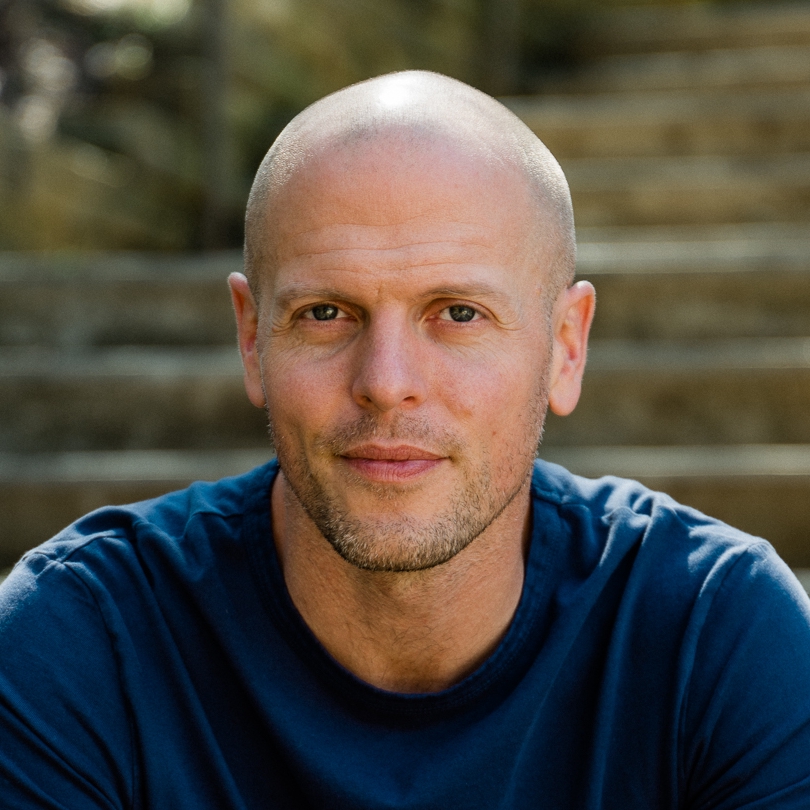
**Brian Dean** is the founder of Backlinko and Exploding Topics, both acquired by Semrush, which itself was recently acquired by Adobe for…
**Brian Dean** is the founder of Backlinko and Exploding Topics, both acquired by Semrush, which itself was recently acquired by Adobe for $1.9 billion. Brian's story starts exactly where a lot of great stories start: broke, directionless, and eating canned beef stew in his dad's basement during the 2008 financial crisis. He picked up a copy of The 4-Hour Workweek and took action. As is nearly always the case, his path wasn’t a straight line, but a series of winding turns, all fed by experiments. His journey includes failures, two successful exits, and a hard-won answer to the question most people never think to ask: what do you actually do with your freedom once you have it? **This episode is brought to you by:** - Incogni, **which automatically removes your personal data from the web, helping shield you from fraud, scams, and identity theft:** https://incogni.com/Tim **(use code TIM at checkout and get 60% off an annual plan)** - Fin **powerful AI Agent for all your customer service:** Fin.Ai/Tim **Timestamps**: - \[00:00:00] Start. - \[00:02:53] From PhD pipettes to Dad’s basement to Jerry Springer. - \[00:04:38] *The 4-Hour Workweek* finds its dream reader — marginal notes and all. - \[00:06:04] First product flops, free traffic beckons, and SEO. - \[00:07:40] The 200-domain AdSense empire. - \[00:09:40] Dreamlining: From “escape the basement” to “3k a month in Thailand.” - \[00:11:27] When Google’s Panda update slapped the internet (and Brian’s empire). - \[00:12:32] Scared straight: Black hat to white hat via a hostel in Spain. - \[00:17:55] Backlinko is born. - \[00:19:50] The 200 ranking factors post: 25 hours of patent-digging, a million visitors. - \[00:22:13] New rule: One post a month, 10x better than anything out there. - \[00:23:02] Semrush comes knocking to buy his company — Brian ignores the email. - \[00:24:02] Taking celebratory shots at Legal Sea Foods while wondering where the contract is. - \[00:25:32] Due diligence hell: Hunting down ghosted freelancers and the contractor commandments. - \[00:29:25] SEC market-close rules vs. Brian’s 10 p.m. bedtime. - \[00:30:16] Post-acquisition: Hopping from one treadmill to the next. - \[00:34:19] Backlinko on autopilot, boredom on full blast, and the chapter everyone skips. - \[00:35:42] Exploding Topics: The paid newsletter mistake vs. the obvious SaaS play. - \[00:38:41] Data-driven content and the ChatGPT user stats flywheel. - \[00:41:00] Noah Kagan’s advice: Double down on what works — then 10x down. - \[00:42:26] *Ready, Fire, Aim* — the litmus test for would-be founders. - \[00:44:06] Startup costs: $500 for Backlinko vs. $90k to acquire Exploding Topics. - \[00:47:29] How love and a Craigslist apartment scam in Berlin landed Brian in Portugal. - \[00:48:48] Geoarbitrage still works — just don’t trust the 2007 pricing. - \[00:50:20] Post-exit stress: Oura Ring at 2x baseline and the Algarve hard reset. - \[00:52:21] Why founders who launch within a year of selling usually regret it. - \[00:53:30] Tennis as the ultimate void-filler: Fun, fitness, community, and fresh air in one sport. - \[00:54:31] The paradox of choice after exit: Structure, identity, and vertigo. - \[00:56:52] Parting thoughts. *\** **For show notes and past guests on** *The Tim Ferriss Show***, please visit** tim.blog/podcast**.** **For deals from sponsors of** *The Tim Ferriss Show****,* please visit** tim.blog/podcast-sponsors **Sign up for Tim’s email newsletter (*5-Bullet Friday*) at** tim.blog/friday**.** **For transcripts of episodes, go to** tim.blog/transcripts**.** **Discover Tim’s books:** tim.blog/books**.** **Follow Tim:** **Twitter**: twitter.com/tferriss **Instagram**: instagram.com/timferriss **YouTube**: youtube.com/timferriss **Facebook**: facebook.com/timferriss **LinkedIn:** linkedin.com/in/timferriss See Privacy Policy at https://art19.com/privacy and California Privacy Notice at https://art19.com/privacy#do-not-sell-my-info.
**Brian Dean** is the founder of Backlinko and Exploding Topics, both acquired by Semrush, which itself was recently acquired by Adobe for…