Aug 25, 2026 · 28 min · 10 segments
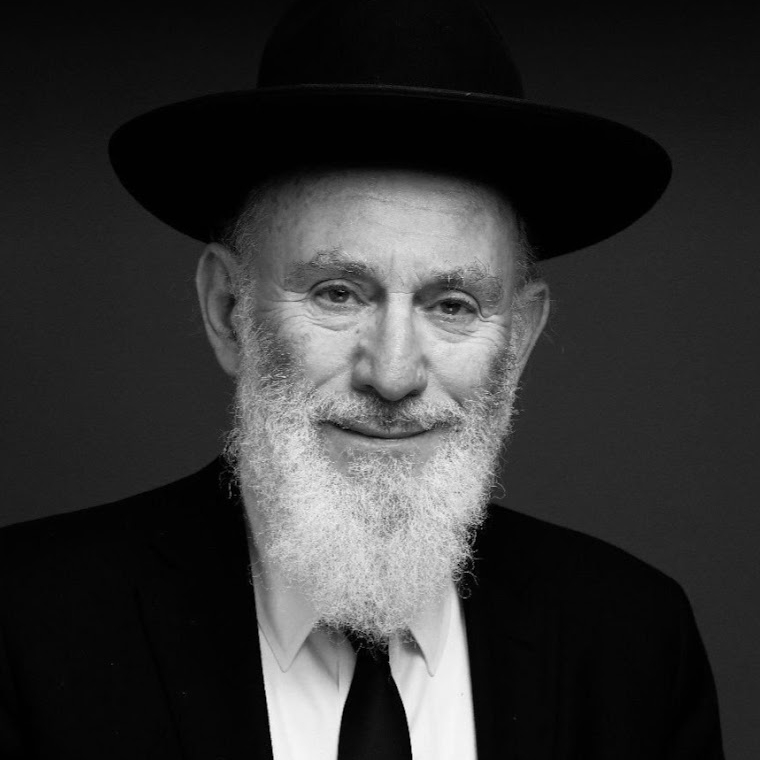
In 1972, Rabbi Yaakov Asher Sinclair opened SARM Studios the first 24-track recording studio in Europe where Queen mixed "Bohemian Rhapsody". His music publishing company, Druidcrest Music published…
Yaakov Asher SinclairHostUh, holiness on the ultimate level is this, the ability to take the physical and to elevate it to something which is beyond the physical.
This is a unique, uh, aspect, concept of Judaism, that the physical is not necessarily something which has to be beaten down and chomped on and, uh, destroyed.
Uh, for most of us, the physical is certainly a resource which has to be treated with a lot of care and has to be harnessed in the service of Hakadosh Baruch Hu.
There's a level which we spoke about last week, and we're gonna carry on tonight, where somebody who reaches such an elevated level of closeness to Hashem...
And I want to point out, it's interesting, it's kind of a, what's the word in English? It's a axiom.
It's, um, it's, what's the opposite of something? It's, uh, when you say something is the, the reverse of...
It's counterintuitive, but in order to achieve this, uh, ability to sublimate, to elevate the physical to the point where it becomes actual spirituality, as we said, there's nothing more physical than Shabbos.
There's nothing more physical than the Holy Temple, the Beis Hamikdash.
And yet Shabbos is the holiest part of time, and the Beis Hamikdash is the holiest part of space, and they're both very, very physical things.
In order to be able to elevate physicality, like the Kohen Hagadol or the, as the Mizbeach, the altar, takes the physical and elevates it to a, the point of, um, spirituality.
We pointed out last week, the main part of many korbonot, of many offerings, was when the Kohen actually ate, or the baalim, or the person who brought the, uh, the offering, ate from the s- the sacrifice itself.
[clears throat] Though that very physical thing is actually achieves the atonement.
But in order to get to that point, a person has to work on himself and go through all of the stages of this book and divorce himself from the physical to a very, uh, great extent, or at least to be able to separate himself sufficiently from the physical world and to sanctify himself and to sanctify all of his thoughts and of all of, all of his intentions, his kavanot, as they're called in Hebrew, to a point where he achieves, so to speak, a, an entry ticket, if you like, into this world of Kedusha.
He gets a ticket and Hashem, so to speak, reaches down and literally pulls him up to a level impossible to achieve by flesh and blood.
And at that point of his holiness, he now is able, because he has become totally kadosh, so everything he touches, every physical thing that he does becomes transmuted, becomes elevated into pure spirituality.
But in order for him to get there, he has to, of course, reduce his physical, um, footprint, as they call it nowadays, in the world to the maximum possible degree that a human being can, um, can do.
Uh, holiness on the ultimate level is this, the ability to take the physical and to elevate it to something which is beyond the physical.
This is a unique, uh, aspect, concept of Judaism, that the physical is not necessarily something which has to be beaten down and chomped on and, uh, destroyed.
Uh, for most of us, the physical is certainly a resource which has to be treated with a lot of care and has to be harnessed in the service of Hakadosh Baruch Hu.
There's a level which we spoke about last week, and we're gonna carry on tonight, where somebody who reaches such an elevated level of closeness to Hashem...
And I want to point out, it's interesting, it's kind of a, what's the word in English? It's a axiom.
It's, um, it's, what's the opposite of something? It's, uh, when you say something is the, the reverse of...
It's counterintuitive, but in order to achieve this, uh, ability to sublimate, to elevate the physical to the point where it becomes actual spirituality, as we said, there's nothing more physical than Shabbos.
There's nothing more physical than the Holy Temple, the Beis Hamikdash.
And yet Shabbos is the holiest part of time, and the Beis Hamikdash is the holiest part of space, and they're both very, very physical things.
In order to be able to elevate physicality, like the Kohen Hagadol or the, as the Mizbeach, the altar, takes the physical and elevates it to a, the point of, um, spirituality.
We pointed out last week, the main part of many korbonot, of many offerings, was when the Kohen actually ate, or the baalim, or the person who brought the, uh, the offering, ate from the s- the sacrifice itself.
[clears throat] Though that very physical thing is actually achieves the atonement.
But in order to get to that point, a person has to work on himself and go through all of the stages of this book and divorce himself from the physical to a very, uh, great extent, or at least to be able to separate himself sufficiently from the physical world and to sanctify himself and to sanctify all of his thoughts and of all of, all of his intentions, his kavanot, as they're called in Hebrew, to a point where he achieves, so to speak, a, an entry ticket, if you like, into this world of Kedusha.
He gets a ticket and Hashem, so to speak, reaches down and literally pulls him up to a level impossible to achieve by flesh and blood.
And at that point of his holiness, he now is able, because he has become totally kadosh, so everything he touches, every physical thing that he does becomes transmuted, becomes elevated into pure spirituality.
But in order for him to get there, he has to, of course, reduce his physical, um, footprint, as they call it nowadays, in the world to the maximum possible degree that a human being can, um, can do.
The rest of this transcript — segmented and speaker-labeled, so you land on the exact moment something was said
Search every transcript — by keyword, by phrase, or by meaning, across every show Radar indexes
Trends — what is surging across podcasts, measured against its own baseline
Alerts — when a name you follow appears in a newly indexed episode
No account is needed to search Radar.