SHOCKING2:31
A Coin-Flip to Armageddon
Vipin details moment nuclear war seemed possible.

May 21, 2026 · 52 min · 14 segments
MIT’s Vipin Narang joins Janice Stein to discuss the global nuclear arms race, how the United States “now faces a Category 5 hurricane of nuclear threats,” why China wants to become a nuclear…
 Vipin NarangGuest
 Janice SteinGuest
 Steve PaikinHost
Barack Obama is the President of the United States, and you wrote that when he came into office, nuclear weapons, quote, "Looked increasingly superfluous." Why did you take that position at that time?

It's great to be here, and it's great to do it with Janice, who's an old friend and mentor, uh, of mine.
Um, look, at the end of the Cold War, the belief was that the salience, if not the presence of nuclear weapons, was going to continue to head downward and become minimal in US and Russian nuclear strategy.
Remember, the Cold War was essentially defined by these two massive arsenals in the United States and the Soviet Union, and with the end of the Cold War, the primary sort of threat against whom we were relying on nuclear weapons to deter, the Soviet Union, fell apart, and the question was, "Why do we need to continue to maintain such a large nuclear arsenal?" And in fact, it was President George H.W.
And those cuts continued, first in the H.W. Bush administration, then the Clinton administration, um, uh, and then onward through, uh, the second George H.W. Bush administration.
And when President Obama came to office, Russia and the United States at that point had reduced their deployed nuclear arsenal from, you know, a maximum of, like, 30,000 during the Cold War, um, to, you know, what ended up being instantiated in the New START treaty, which was ratified in the US Senate in 2010, 2011, um, of 1,550 deployed weapons.
Call it 3,750 nuclear weapons or so, this is the public, uh, number a couple years ago, of which, um, 1,550 strategic weapons are currently deployed and active.
And the assumption when President Obama came to office and gave the Prague speech was that 1550 was just the beginning of the end, that we would continue to reduce the number and re- uh, the, uh, the reliance on nuclear weapons that, you know, sort of marked the Cold War, um, and that 1550 was not sort of the end of that march downward.
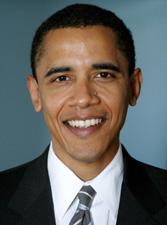



Barack Obama is the President of the United States, and you wrote that when he came into office, nuclear weapons, quote, "Looked increasingly superfluous." Why did you take that position at that time?
It's great to be here, and it's great to do it with Janice, who's an old friend and mentor, uh, of mine.
Um, look, at the end of the Cold War, the belief was that the salience, if not the presence of nuclear weapons, was going to continue to head downward and become minimal in US and Russian nuclear strategy.
Remember, the Cold War was essentially defined by these two massive arsenals in the United States and the Soviet Union, and with the end of the Cold War, the primary sort of threat against whom we were relying on nuclear weapons to deter, the Soviet Union, fell apart, and the question was, "Why do we need to continue to maintain such a large nuclear arsenal?" And in fact, it was President George H.W.
And those cuts continued, first in the H.W. Bush administration, then the Clinton administration, um, uh, and then onward through, uh, the second George H.W. Bush administration.
And when President Obama came to office, Russia and the United States at that point had reduced their deployed nuclear arsenal from, you know, a maximum of, like, 30,000 during the Cold War, um, to, you know, what ended up being instantiated in the New START treaty, which was ratified in the US Senate in 2010, 2011, um, of 1,550 deployed weapons.
Call it 3,750 nuclear weapons or so, this is the public, uh, number a couple years ago, of which, um, 1,550 strategic weapons are currently deployed and active.
And the assumption when President Obama came to office and gave the Prague speech was that 1550 was just the beginning of the end, that we would continue to reduce the number and re- uh, the, uh, the reliance on nuclear weapons that, you know, sort of marked the Cold War, um, and that 1550 was not sort of the end of that march downward.
Every episode on Radar is fully transcribed, speaker-labeled, and rich with metadata. Here is a taste of this one. Try Radar for free to see the rest.
3 of 5
A Coin-Flip to Armageddon
Vipin details moment nuclear war seemed possible.
Quiet Threat, False-Flag Fears
Behind Putin's silence, a disturbing false flag.
Allies Eye Their Own Bombs
America’s umbrella wobbles; allies weigh nuclear independence.
+2 more clips · 8 min 36 sec of audio in all
7 of 24
The rest of this transcript — segmented and speaker-labeled, so you land on the exact moment something was said
All 5 clips — the highlight moments, each cut as its own audio, with a title and a speaker
All 14 segments — the transcript broken into labeled sections, every ad read marked
All 24 topics — jump to every other episode discussing the same subject
Every related episode — other shows Radar links to this one
No account is needed to search Radar.

