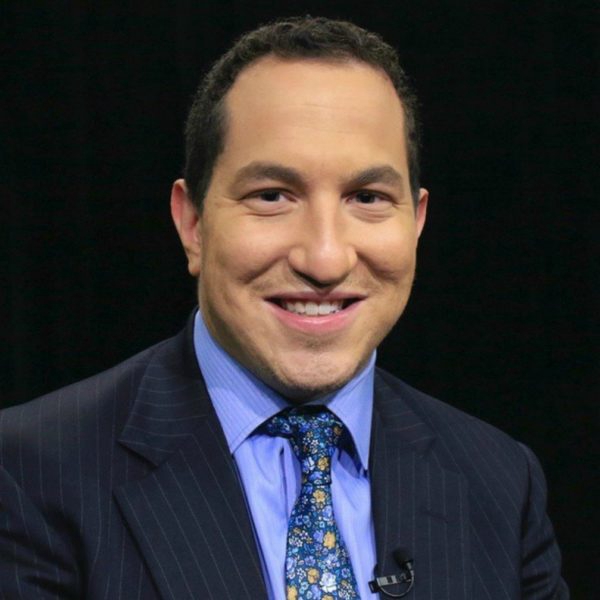
The Open Mind, Hosted by Alexander Heffner
Sep 25, 2026 · 28 min · 11 segments
At Franklin D. Roosevelt Four Freedoms Park, host Alexander Heffner interviews Mayor Zohran Kwame Mamdani. In the ongoing special "Mayors of the World," Mayor Mamdani and Heffner discuss the civic and…
Zohran Kwame MamdaniGuest
Alexander HeffnerHostWhen we think of your signature initiatives, another one of them I like to refer to as the anti-scaffolding initiative.
Like, in addition to finding those vacant brownstones eerie, I've found it to be unwalkable, unbreathable in the city.
So what percent of scaffolding can you remove from the city or will you remove from the city? So I think first to set the

stage, when we're talking about scaffolding, there's enough scaffolding that it is 26 times the length of Manhattan.

In terms of the local law that we've just put into effect, we're talking about affecting at least 20% of all of that scaffolding to start to actually ensure that we're bringing it down faster.

Now, some of this comes from whether we're extending an examination time from five years to six years.

Others of it also comes from extending it from five years to 12 years.

Some of it also comes from the utilization of a drone to actually make that inspection and not have to have the labor and time consuming ways that some of these buildings are currently required.

The other side of this is also enforcing our laws so that there's not an incentive to keep that scaffolding up.

Because what we've seen is sometimes for building owners, they would rather just keep it up and not have to bring it down.

But now, if you're not making repairs on a 90-day set of time, then the city is going to fine you on that basis.
What share of that is gouging, unnecessary, and what share of that is modernization, security, like have you made a calculation of like how much scaffolding, how many miles are necessary to keep the city running apace?

I think that we are still looking to that number because frankly, we have found a lot of examples of what is not necessary.

Because what we're finding is a lot of this is leftovers of a bureaucratic set of decision-making protocol that does not actually live up to what we need in the city.

We used to have a set of rules where you could have the scaffolding almost extend out to the entirety of all of the green space at a NYCHA campus.

And now we have put a limit of 40 feet so that it cannot extend all the way across.

That 40 feet can still provide the sufficient safety, but it's also keeping in mind that there is a negative cost to the city in terms of public safety, quality of life, if you allow that scaffold to continue beyond where it has to be.
When we think of your signature initiatives, another one of them I like to refer to as the anti-scaffolding initiative.
Like, in addition to finding those vacant brownstones eerie, I've found it to be unwalkable, unbreathable in the city.
So what percent of scaffolding can you remove from the city or will you remove from the city? So I think first to set the

stage, when we're talking about scaffolding, there's enough scaffolding that it is 26 times the length of Manhattan.

In terms of the local law that we've just put into effect, we're talking about affecting at least 20% of all of that scaffolding to start to actually ensure that we're bringing it down faster.

Now, some of this comes from whether we're extending an examination time from five years to six years.

Others of it also comes from extending it from five years to 12 years.

Some of it also comes from the utilization of a drone to actually make that inspection and not have to have the labor and time consuming ways that some of these buildings are currently required.

The other side of this is also enforcing our laws so that there's not an incentive to keep that scaffolding up.

Because what we've seen is sometimes for building owners, they would rather just keep it up and not have to bring it down.

But now, if you're not making repairs on a 90-day set of time, then the city is going to fine you on that basis.
What share of that is gouging, unnecessary, and what share of that is modernization, security, like have you made a calculation of like how much scaffolding, how many miles are necessary to keep the city running apace?

I think that we are still looking to that number because frankly, we have found a lot of examples of what is not necessary.

Because what we're finding is a lot of this is leftovers of a bureaucratic set of decision-making protocol that does not actually live up to what we need in the city.

We used to have a set of rules where you could have the scaffolding almost extend out to the entirety of all of the green space at a NYCHA campus.

And now we have put a limit of 40 feet so that it cannot extend all the way across.

That 40 feet can still provide the sufficient safety, but it's also keeping in mind that there is a negative cost to the city in terms of public safety, quality of life, if you allow that scaffold to continue beyond where it has to be.
The rest of this transcript — segmented and speaker-labeled, so you land on the exact moment something was said
Search every transcript — by keyword, by phrase, or by meaning, across every show Radar indexes
Trends — what is surging across podcasts, measured against its own baseline
Alerts — when a name you follow appears in a newly indexed episode
No account is needed to search Radar.