Sep 5, 2026 · 1 hr 19 min · 15 segments
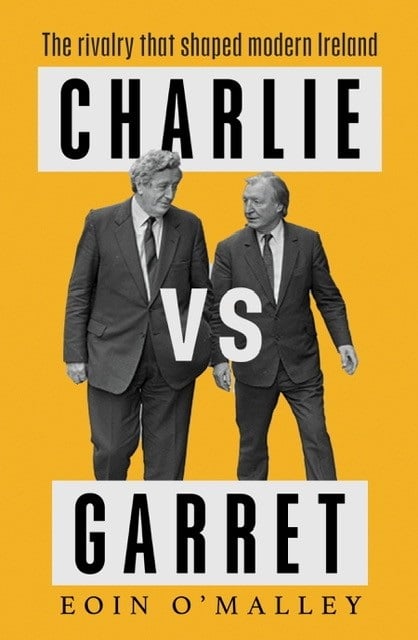
 On this episode of the Irish History…

Eoin O'MalleyGuest
Cathal BrennanHost
John DorneyHost
Now, Owen, we might drill down a bit more into the whole issues regarding the economy, because this was my childhood.

But you couldn't even as a child not be aware of the mood music regards emigration.

Back then, if you had a television, there wasn't kids TV and all the time you were watching whatever was on the television.

the way the economy was actually structured, like how much of the economy depended on the state.

And even looking back then at things like the Gregory deal, like everyone thinks so much money.

This was one of the independent TDs who formed an agreement with Charlie Hockey for his vote for Hockey to be Taoiseach.

There was an awful lot of failing... or failing semi-state companies and failing private companies that the government would have to bail out or put on the payroll, for want of a better word.

And it's very hard to get our minds back to just how difficult the economic situation was in Ireland in the 1980s.

And that was only kept low because we had an easy way out, and that was to go to England.

And so lots of young people were going to England, and it was less easy to go to the United States and Australia, but people were also going abroad.

And so the population was losing, I think, about 50,000 people a year through emigration.

There was no politician was kind of going, this is what we're going to do and we're going to fix it.

You know, as you said, the state was expected to bail everything out that went wrong, but it couldn't do that, nor could it even kind of keep going on.

So like the railway companies and, and the airlines and the telecommunications company.

So telecom Aaron became a new company, but it was seen as a bit of a, a bit of a failure, although Albert Reynolds did help to, to modernize things, but there was no sense in the 1980s that anything was going to get better.

And I mean, if you are looking at book written in 1982 and, and, It didn't quite say, let's give it back to the Brits, but it was kind of thinking, you know, we've kind of made the aims of this and maybe we'd be better off if we'd never had independence.

And I don't think anybody actually thought that we should not have been independent.
The rest of this transcript — segmented and speaker-labeled, so you land on the exact moment something was said
Search every transcript — by keyword, by phrase, or by meaning, across every show Radar indexes
Trends — what is surging across podcasts, measured against its own baseline
Alerts — when a name you follow appears in a newly indexed episode
No account is needed to search Radar.