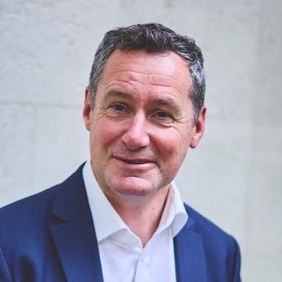
Eoin O'Malley
Associate Professor of Political Science at Dublin City University, Irish politics expert, author of "Charlie vs Garret" and "Contemporary Ireland", Sunday Independent columnist.
10
APPEARANCES
8
PODCASTS
Oct 29, 2026


Eoin O'MalleyGUEST
So I suppose the puzzle was that you saw in that coming up to 2024 local and European elections, there was a lot.
Eoin O'MalleyGUEST
I mean, I think I spoke to a fair number of politicians who did say that on the doors, they found a lot of anger when they were canvassing.
Eoin O'MalleyGUEST
especially people on the left, they kind of talking to people in the Sock Thames and in Sinn Féin and even people before profit.
Eoin O'MalleyGUEST
And they said that they did notice that there was anger on the doors and a lot of that anger was about immigration.
Eoin O'MalleyGUEST
And so there was kind of an expectation then that there might be a breakthrough from some of those kind of more extreme parties, the kind of the Irish people than the National Party.
34 MINS LATER

Mick CliffordHOST
And I just wonder, is underlying the whole thing, the kinds of upheavals we've seen in Europe in particular and America, that all basically down to the simple fact of economics and not enough people are being served by the system that has been in place for the last 70 odd years?


Nick DelehantyHOST
So my question is, Who are our political leaders going to be? Is it a case that we look fondly back at the past or do we have a political crisis at the moment?
Eoin O'MalleyGUEST
We don't is because would you go into politics? Would you? Obviously, Nick, you did try to you put your name on a ballot paper.
19 MINS LATER


John DorneyHOST
But I think just the bridge between the two areas is, can you explain how he finally becomes leader of Fianna Fáil?
Eoin O'MalleyGUEST
That 1973 to 77 government of the Fine Gael and Labour National Coalition, it faced oil crises and there was huge problems within government.
Eoin O'MalleyGUEST
And so what we see in 1977 is that Fianna Fáil gets a big majority for Jack Lynch.
Eoin O'MalleyGUEST
Jack Lynch is kind of coming to the end of his career, seems to lack much energy.
17 MINS LATER
John DorneyHOST
Now, this possibly is, again, a certain amount of opportunism, but, like, to what extent was this a real culture war, a social fissure in Ireland in those days?


Shane MoynihanHOST
And as we look at Fianna Fáil's contributions in the last 100 years, I'd love to get your thoughts on How do you think Fianna Fáil has shaped that modern identity in Ireland now in terms of economic, social, political contributions? What for you are the standout themes of that overall contribution?
Eoin O'MalleyGUEST
Well, I suppose to start off with, Sinead and Anne both mentioned the gun in politics.
Eoin O'MalleyGUEST
And so after the 1932 election, the gun was still very much part of politics.
Eoin O'MalleyGUEST
People went into the Dáil unsure whether they'd get out alive and carried guns into the Dáil in 1932 with that changeover in power.
Eoin O'MalleyGUEST
So I mean, if we think about 1930s Europe, it was a dangerous time where democracies were falling.
Eoin O'MalleyGUEST
And so I think probably the first and one of the most significant contributions of Fianna Fáil in that government was to consolidate democracy.
Eoin O'MalleyGUEST
De Valera introduced a constitution that galasized it to some extent, but also kind of bedded down and normalized parliamentary democracy and took the gun out completely.
26 MINS LATER
Shane MoynihanHOST
What sets Fianna Fáil apart in terms of other political parties? What explains that longevity? What explains that enduring nature? What explains that successful contribution, not just in terms of longevity, but also in terms of that dominant role in the political space in Ireland?

Eoin O'MalleyGUEST
They, I mean, there's a kind of a sense that, oh, they're all corrupt or they're all, uh, lazy, or they're just in it for themselves, which I think is probably unfair and untrue.
Eoin O'MalleyGUEST
But, uh, I mean, I think with Andy Burnham, probably because, I mean, he was only in the job a, a wet week, and, or it wasn't even wet, and he was, um, he was going on holidays, and it kind of felt, ugh, you know, you, you, you just got the job.
Eoin O'MalleyGUEST
Where the hell are you going? Uh, and so there wa- there is this sense, and I think politicians are s- too afraid of just kind of taking the time off.
Eoin O'MalleyGUEST
I mean, if you, if you look at what they're currently doing, half of them were up at the flat.
Eoin O'MalleyGUEST
They're, they don't seem to be willing to do what they, what all politicians used to do, which was take the month of August off and just leave it off.

Fionnuala JonesHOST
I'm probably needed in a more physical sense than something that I can sort over the phone"?

Eoin O'MalleyGUEST
They, I mean, there's a kind of a sense that, oh, they're all corrupt or they're all, uh, lazy, or they're just in it for themselves, which I think is probably unfair and untrue.
Eoin O'MalleyGUEST
But, uh, I mean, I think with Andy Burnham, probably because, I mean, he was only in the job a, a wet week, and, or it wasn't even wet, and he was, um, he was going on holidays, and it kind of felt, oof, you know, you, you, you just got the job.
Eoin O'MalleyGUEST
Where the hell are you going? Uh, and so there wa- there is this sense, and I think politicians are too afraid of just kind of taking the time off.
Eoin O'MalleyGUEST
I mean, if you, if you look at what they're currently doing, half of them were up at the flat.
Eoin O'MalleyGUEST
They're, they don't seem to be willing to do what they, what all politicians used to do, which was take the month of August off and just leave it off.
Fionnuala JonesHOST
I'm probably needed in a more physical sense than something that I can sort over the phone."

speaker_0HOST
Why do they hate them?
Eoin O'MalleyGUEST
But primarily, uh, and, and, you know, where their constituency is, but primarily it is about knowing that there's an election on.
Eoin O'MalleyGUEST
Like, I mean, a lot, fewer of us now are consuming, uh, normal news media, newspapers, radio, TV, and things like that in, in the way that we used to.
Eoin O'MalleyGUEST
And so it, it is actually now possible for a lot of people not to know that there's an election on.
Eoin O'MalleyGUEST
If, when, when an election is on in Ireland, because of the number of posters, it's impossible to ignore that.
speaker_0HOST
And they do generate a lot of waste, yes?

Eoin O'MalleyGUEST
He possibly does, except that, I mean, the census data does show that the people who drive to work tend to be middle-class people.
Eoin O'MalleyGUEST
Working-class people, poorer people don't tend to drive as much as middle-class people and don't tend to drive into the city And, you know, we could have an argument about whether it's fair or not, but it's certainly not fair on the people who live in the inner city to have their kind of area, their playgrounds used as a sort of, as a thoroughfare, as a throughway for people who want to get from one side of the city to the other.
Shane ColemanHOST
I'll go to Blanchardstown or to shop in Blanchardstown or Liffey Valley or Dundrum shopping centre?
Eoin O'MalleyGUEST
He'll be known as a president who was very popular, who, you know, when he went to get re-elected in 2018, no serious candidate went against him.
Eoin O'MalleyGUEST
And he's maintained kind of high approval ratings the whole way through his presidency.
Eoin O'MalleyGUEST
And so he's set a precedent for the office where the president of Ireland is now not just somebody who stands above politics, but actually actively gets involved in politics.
Eoin O'MalleyGUEST
And that probably will be something we may, I think will be something we come to regret, because it has fundamentally changed, he's fundamentally changed the nature of the office.
5 MINS LATER
Shane ColemanHOST
Eoin O'Malley, are you being a bit full-faced and are you reassured that there isn't that potential there?