Aug 10, 2026 · 34 min · 12 segments
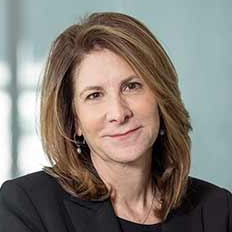
Professor Linda G. Mills, 17th President of New York University, scholar of social work, public policy and law, and founder of the Center on Violence and Recovery.
Linda G. MillsGuest
Susanna KempeHost
... with that because one of the things that I'm really struck by when I go to universities all around the world, and everybody now has an AI institute and they're thinking about AI, but nobody seems to have quite built in the what is the human aspect of AI and how do we make sure that AI helps us to become kinder, better people? So where, where is the flourishing part of that?

What was clear to me when I identified flourishing as a kind of key pillar was that the focus of universities on educating students often neglects the emotional dimensions of it, and you can't learn if you don't feel good.

And this generation has been particularly marked by a set of events, including COVID, that has deeply affected their ability potentially to learn-

All I'm saying is that we need to be mindful of the many dimensions that people come to the educational experience with, and if we are, they can flourish.

If we aren't, some will fall through the cracks, and that feels irresponsible.

Um, one of the things that at the Laidlaw Foundation I think we're marginally obsessed about is that the university rankings include research, as they should, um, but the piece around how do students leave the university, not just in terms of their career and their financial strength, but in terms of their ability to flourish-

... um, not so much the development of them as workers, so who do they become in terms of character as opposed to who do they become in terms of career, is something that we like to argue is incredibly important.

I love that, and not enough places, foundations, um, people concerned about higher education are thinking about that crucial element that defines a life.

You know, before it was, let's put them through this really challenging course of study, and somehow they'll come out stronger, better, and more equipped at the end of it.

And for whatever reasons, and we could look back on what has changed, that has changed.

And attention to the emotional quality, the, the EQ that our students may need in order to navigate this really complex world, is absolutely essential.

And education doesn't move that quickly, so how you integrate that shift is really important, and if you're not intentional about it, you will miss the opportunity to give that perhaps most precious gift of all.

... with that because one of the things that I'm really struck by when I go to universities all around the world, and everybody now has an AI institute and they're thinking about AI, but nobody seems to have quite built in the what is the human aspect of AI and how do we make sure that AI helps us to become kinder, better people? So where, where is the flourishing part of that?

What was clear to me when I identified flourishing as a kind of key pillar was that the focus of universities on educating students often neglects the emotional dimensions of it, and you can't learn if you don't feel good.

And this generation has been particularly marked by a set of events, including COVID, that has deeply affected their ability potentially to learn-

All I'm saying is that we need to be mindful of the many dimensions that people come to the educational experience with, and if we are, they can flourish.

If we aren't, some will fall through the cracks, and that feels irresponsible.

Um, one of the things that at the Laidlaw Foundation I think we're marginally obsessed about is that the university rankings include research, as they should, um, but the piece around how do students leave the university, not just in terms of their career and their financial strength, but in terms of their ability to flourish-

... um, not so much the development of them as workers, so who do they become in terms of character as opposed to who do they become in terms of career, is something that we like to argue is incredibly important.

I love that, and not enough places, foundations, um, people concerned about higher education are thinking about that crucial element that defines a life.

You know, before it was, let's put them through this really challenging course of study, and somehow they'll come out stronger, better, and more equipped at the end of it.

And for whatever reasons, and we could look back on what has changed, that has changed.

And attention to the emotional quality, the, the EQ that our students may need in order to navigate this really complex world, is absolutely essential.

And education doesn't move that quickly, so how you integrate that shift is really important, and if you're not intentional about it, you will miss the opportunity to give that perhaps most precious gift of all.
The rest of this transcript — segmented and speaker-labeled, so you land on the exact moment something was said
Search every transcript — by keyword, by phrase, or by meaning, across every show Radar indexes
Trends — what is surging across podcasts, measured against its own baseline
Alerts — when a name you follow appears in a newly indexed episode
No account is needed to search Radar.