#152 - Meet The Biophysicist Who Accidentally Discovered Telepathy
Sep 3, 2026 · 1 hr 41 min · 19 segments
JOIN THE GIANT'S SHOULDER FAMILY Become a YouTube Member for exclusive episodes, early access + ad-free viewing👇 https://www.youtube.com/@thegiantsshoulder/join Luca Turin is a biophysicist who…
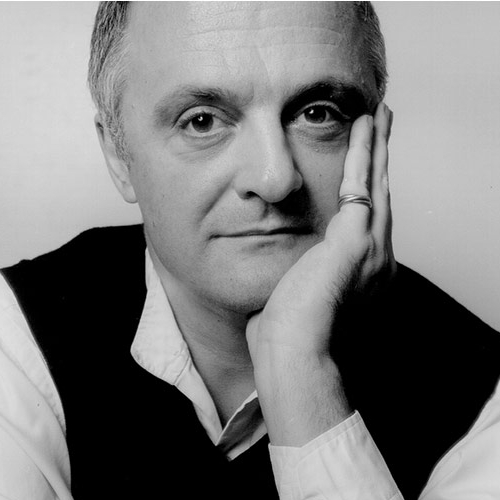
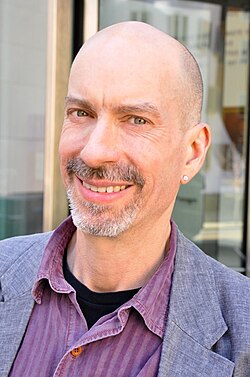
JOIN THE GIANT'S SHOULDER FAMILY Become a YouTube Member for exclusive episodes, early access + ad-free viewing👇 https://www.youtube.com/@thegiantsshoulder/join Luca Turin is a biophysicist who has spent thirty years arguing that the nose reads a molecule's vibrations rather than its shape, published in Nature at twenty-three, and co-wrote the definitive critical guide to perfume with his wife Tania Sanchez. The vibrational theory of olfaction was declared dead twice before he revived it, and he is still waiting for the one experiment that would settle it. His newest result has nothing to do with smell: fruit flies sealed in separate opaque wells, with no sight, sound or scent between them, coordinate their movement anyway — and the coordination vanishes the moment the plate is made of metal. This is a scientist who went looking for anaesthesia and found something that looks like insect telepathy. Expect to learn why creating a smell stimulus is nothing like creating a colour, how a startup elicited smell sensations with ultrasound for the first time in history, why the only two chemical groups in the universe that share one vibration are also the only two that smell of rotten eggs, how a receptor could read vibrations with no lenses or prisms anywhere in your nose, why the famous "trillion smells" figure was a mathematical error, why nobody in pharmacology can predict what a drug will do once it binds, how Google Quantum AI's xenon question led to fruit flies, what happened when the plates were swapped for aluminium, why radio frequency would be the perfect brain-wide reward signal, and much more… SPONSORS Download the most scientifically rigorous nutrition app MacroFactor! Use code GIANTS for a 2 week FREE trial - https://app.macrofactor.com/mfgiants GS EPISODES MENTIONED Earl K Miller - Meet the MIT Neuroscientist Showing Brain Waves Are the Secret Engine Behind Consciousness: https://youtu.be/7OFb-NG3jIw Marjorie Woollacott - Neuroscientist: "Your Brain Doesn't Create Consciousness" — NDEs, Telepathy and Terminal Lucidity: https://youtu.be/mDWtmfmIUHA GUEST LINKS Google Scholar: https://scholar.google.com/citations?user=fgXXdQYAAAAJ Wi-Fly Project: https://wi-fly.eu/ X: https://x.com/LucaTurin Substack: https://lucaturin.substack.com YouTube: https://www.youtube.com/@lucaturin SKOOL Want a full breakdown of your own conscious inner experience? Join the Giant's Shoulder community: https://www.skool.com/the-giants-shoulder-6526/about FOLLOW EVAN https://x.com/evan\_mcgl TIMESTAMPS 0:00:00 Trailer 0:02:20 Biophysicists Are Dreamers, Biologists Are Doomed 0:07:07 The Startup That Triggered Smells With Ultrasound 0:12:22 The Rotten-Egg Coincidence That Convinced Him 0:18:34 What The Receptor Is Actually Reading 0:19:54 Electron Tunnelling, Explained Simply 0:23:33 The Trillion-Smells Figure Was A Maths Error 0:28:21 What Perfumers Perceive That You Don't 0:32:14 Why Every Drug Receptor Might Be Electrical 0:33:12 The Mystery Nobody Admits: Drug Efficacy 0:39:28 "Cascade" Is A Word That Masks Ignorance 0:44:04 The Receptor As A Transistor 0:48:40 Google Quantum AI And The Xenon Puzzle 0:52:24 Two Years Of Work, A Definite Maybe 0:53:55 30 Flies Freeze Like The Guards At Buckingham Palace 0:55:28 One Fly Per Well, No Way To Communicate 0:56:17 To My Total Astonishment, They Coordinate 0:58:45 Metal Plates Kill The Signal 0:59:36 The Wi-Fly: A Radio Network For Flies 1:11:26 Radical Pairs: How A Fly Could Listen 1:16:34 What Is The Brain's Reward Signal? 1:19:59 Standing Waves And The Binding Problem 1:23:58 Could Humans Ever Do This? 1:27:46 Ramanujan And Latent Abilities 1:36:16 Giving Fruit Flies DMT .....Email for sponsorship enquiries: evan@thegiantsshoulder.com
JOIN THE GIANT'S SHOULDER FAMILY Become a YouTube Member for exclusive episodes, early access + ad-free viewing👇 https://www.youtube.com/@thegiantsshoulder/join Luca Turin is a biophysicist who…
- Show signals
- Audience≈38k followers