Jul 13, 2026 · 2 hr 10 min · 13 segments
The Count of Saint Germain. Most people have never heard of him, but to those who have, the name generally elicits one of three reactions. To someone who hears his name thrown about on the…
any of the previous, what, three episodes,
we're basically tracking the birth of Hermeticism into what is Christian mysticism, which is the Rosicrucians.
So the best way to describe the Rosicrucians is essentially they're the Sufis, but Christian.
Referred to in the 1700s as Theosophical Christianity.
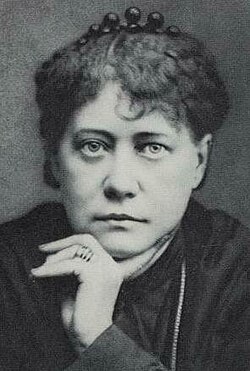
Helena came much later.
Oh, that's right.
She didn't invent it, did she? Yeah,
so she ruined
the
name for them.
Yeah.
Well, I mean, we'll get to exactly what she did probably in a couple episodes time because it branches off from this.
But we're going to focus mostly on someone who Helena herself admired.
We've sort of looked at the main figures of like, I'd say like, well, the first wave of like the occult of like the Templars or whatever.
And then you're like second wave of, of like john d and uh probably francis bacon you could probably throw in there and the early rosicrucians and the early freemasons and so now we're getting to the third wave we we all looked at also the um yeah the the renaissance uh into the enlightenment and uh how this sort of uh translation of all these occult texts by cosimo medici kind of sparked this just like um philosophical and artistic flourish in europe different ways to think about the world neoplatonism all that good stuff um so during the enlightenment the by the time you get to like the late 1700s uh rationality is taken over in britain so britain's kind of like i mean we we noted last time that people like isaac newton the head of the royal society was uh you know, writing more about alchemy and trying to figure out the, decode the dimensions of Solomon's temple to get the date for the end times than he was with gravity.
But on the surface anyway, like the occult had kind of, uh, was not, it's definitely its flattest time in Britain, um, since like the 1500s.
They were rationalists.
Yeah.
Yeah.
This, this period in time.
Um, but the, europe still had a pretty strong current going on um so the end of last episode we left benjamin franklin on a ship from london to the us going home after a long time right after 20 something years yeah um as the ambassador or whatever in um london franklin landed in uh philadelphia on may 5th 1775. the world he stepped onto was not the world he had left.
Two weeks earlier, while he was still at sea, the shot heard around the world had been fired at Lexington and Concord.
The time for information gathering and secret coordination in the lodges and secret societies of Europe was over, and the kinetic phase of the American Revolution had begun.
any of the previous, what, three episodes,
we're basically tracking the birth of Hermeticism into what is Christian mysticism, which is the Rosicrucians.
So the best way to describe the Rosicrucians is essentially they're the Sufis, but Christian.
Referred to in the 1700s as Theosophical Christianity.
Helena came much later.
Oh, that's right.
She didn't invent it, did she? Yeah,
so she ruined
the
name for them.
Yeah.
Well, I mean, we'll get to exactly what she did probably in a couple episodes time because it branches off from this.
But we're going to focus mostly on someone who Helena herself admired.
We've sort of looked at the main figures of like, I'd say like, well, the first wave of like the occult of like the Templars or whatever.
And then you're like second wave of, of like john d and uh probably francis bacon you could probably throw in there and the early rosicrucians and the early freemasons and so now we're getting to the third wave we we all looked at also the um yeah the the renaissance uh into the enlightenment and uh how this sort of uh translation of all these occult texts by cosimo medici kind of sparked this just like um philosophical and artistic flourish in europe different ways to think about the world neoplatonism all that good stuff um so during the enlightenment the by the time you get to like the late 1700s uh rationality is taken over in britain so britain's kind of like i mean we we noted last time that people like isaac newton the head of the royal society was uh you know, writing more about alchemy and trying to figure out the, decode the dimensions of Solomon's temple to get the date for the end times than he was with gravity.
But on the surface anyway, like the occult had kind of, uh, was not, it's definitely its flattest time in Britain, um, since like the 1500s.
They were rationalists.
Yeah.
Yeah.
This, this period in time.
Um, but the, europe still had a pretty strong current going on um so the end of last episode we left benjamin franklin on a ship from london to the us going home after a long time right after 20 something years yeah um as the ambassador or whatever in um london franklin landed in uh philadelphia on may 5th 1775. the world he stepped onto was not the world he had left.
Two weeks earlier, while he was still at sea, the shot heard around the world had been fired at Lexington and Concord.
The time for information gathering and secret coordination in the lodges and secret societies of Europe was over, and the kinetic phase of the American Revolution had begun.
The rest of this transcript — segmented and speaker-labeled, so you land on the exact moment something was said
Search every transcript — by keyword, by phrase, or by meaning, across every show Radar indexes
Trends — what is surging across podcasts, measured against its own baseline
Alerts — when a name you follow appears in a newly indexed episode
No account is needed to search Radar.