Sep 3, 2026 · 39 min · 13 segments
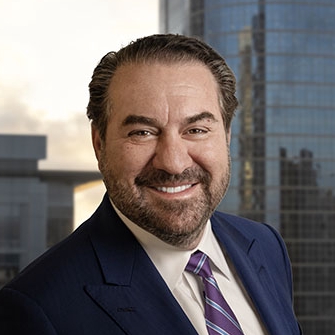
In this episode, Expand Democracy President Rob Richie speaks with Todd Cox, Associate Director-Counsel of the Legal Defense Fund, about the alarming impact of Supreme Court rulings—including…
Rob RichieHost
I did read that testimony of yours to the U.S. Senate Committee on the Judiciary Subcommittee on the Constitution from May 2017.

And I'd like to walk through some of what I saw as key parts of that testimony early on.

It's about the type of country we aspire to become for our next 250 years and what role each of us will play in charting a path to this destination.

To make sure our listeners understand its importance, why was the Clay ruling so important and so challenging to the United States being a multiracial democracy?
And they happened to draw it in a way that would preserve the political future and political and partisan nature of the existing congressional delegation.
And the second time they went to the Supreme Court, they put at the center whether or not the state could use Section 2 of the Voting Rights Act as a justification for creating that second opportunity district that afforded African-American voters an equal opportunity to elect candidates of choice.
What the Supreme Court got wrong in that decision was, in effect, it overturned Section 2 of the Voting Rights Act.
It overturned Milligan, which was a precedent that was set just a few years before, that said Section 2 could be a tool to remedy voting rights infractions and redistricting.
What the Supreme Court did was, look, they said, we're not going to say Section 2 is unconstitutional.
What we're going to do is we're going to say, if you have a Section 2 lawsuit that you want to bring or you consider it a violation of Section 2, you need to factor out partisanship.
The rest of this transcript — segmented and speaker-labeled, so you land on the exact moment something was said
Search every transcript — by keyword, by phrase, or by meaning, across every show Radar indexes
Trends — what is surging across podcasts, measured against its own baseline
Alerts — when a name you follow appears in a newly indexed episode
No account is needed to search Radar.