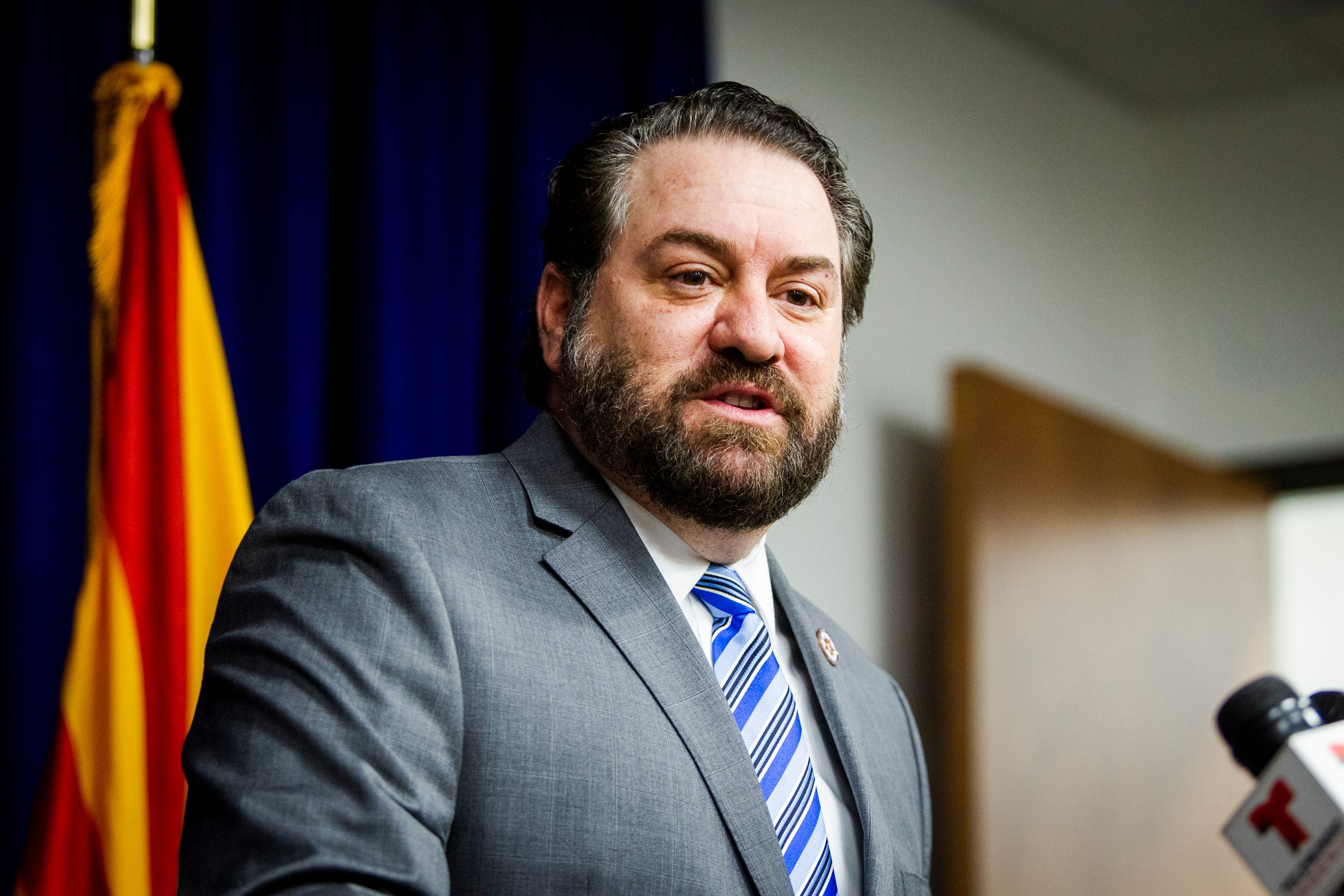
Mark Brnovich
American attorneyWikipedia
11
MENTIONS
7
EPISODES
7
PODCASTS
Search complete. 11 mentions across 7 episodes found for "Mark Brnovich".
Oct 24, 2026

Eliza Sweren-BeckerGUEST
So, yes, we're talking about the Kalei decision, but that decision comes on the heels of a series of decisions starting in 2013 when the court gutted the preclearance regime of the Voting Rights Act, which was a provision that said that states and localities with a history of race discrimination in voting had to clear changes to their voting policies with DOJ or a federal court.
Eliza Sweren-BeckerGUEST
Then later in 2021, we saw Brnovich, which made it harder for voters to get a remedy in court when their rights to vote have been burdened on the basis of race.
Eliza Sweren-BeckerGUEST
This has
Astead HerndonHOST
been building over time.

Stacey AbramsGUEST
And when we saw the direct attack on voting rights, For so many people, because they had gotten used to what had come of the 1960s voting rights movement, they believed it was always going to be so.
Stacey AbramsGUEST
And unfortunately, since then, we've seen the 2021 Brnovich decision.
Stacey AbramsGUEST
We are likely going to see a decision this coming June from the Supreme Court.
Stacey AbramsGUEST
And the erosion of the Voting Rights Act is nearly complete.
9 MINS LATER
Stacey AbramsGUEST
That is absolutely absurd.
Stacey AbramsGUEST
Yes, it was great for those who had power then.
Stacey AbramsGUEST
And so when you look at the Shelby decision, and I want us to remember, Shelby was the, and to use your phrase, it was a harbinger, but Shelby was then followed by the Brnovich decision.
Stacey AbramsGUEST
It was followed by the common cause decision that said that partisan gerrymandering was okay.

Kevin T. MorrisGUEST
And the...
Kevin T. MorrisGUEST
What, what happened in, in 2013, there were still these strong litigation tools that were available, and the Supreme Court in 2021, in a case called Brnovich, and then just earlier this year in a case called Louisiana v. Cala, they really stripped out the remaining provisions that could have been used.
LawrenceAUDIENCE
Mm.
Kevin T. MorrisGUEST
So we're in a world right now where there's really not much federal law on the books that makes it illegal-
11 MINS LATER
Kevin T. MorrisGUEST
There were, there were vote denial cases, so these are cases against the kinds of laws and policies that make it harder to cast a ballot.
Kevin T. MorrisGUEST
And then, like we started talking about at the very beginning, racial vote dilution, the kinds of policies like racial gerrymandering that took the votes that were cast, but kind of made them meaningless through the use of drawing districts.
Kevin T. MorrisGUEST
In 2021, in a case called Brnovich v. DNC, versus DNC, the Supreme Court basically got rid of the ability of Section 2 to strike down laws and policies that made it harder for voters of color to cast a ballot.
Kevin T. MorrisGUEST
And in fact, since 2021, there has not been one single policy that has been finally struck down in federal court for being racially discriminatory.

Doug TruaxGUEST
That's right
Aaron BaerHOST
... uh, and my, my old boss, the attorney general of Arizona, Mark Brnovich, uh, who passed away last year, would always say, "The worst thing you can be is a hypocrite."
Doug TruaxGUEST
That's right.
Aaron BaerHOST
And, and that's the thing that for those voters that might be on the fringe-

Rob SchillingHOST
Yeah.
Michael O'NeillGUEST
Uh, there's Keith Brnovich that happened, uh, they, a couple years ago, which involved, uh, partially one of the issues in Brnovich was, uh, the propriety of voter harvesting-
Rob SchillingHOST
Mm-hmm
Michael O'NeillGUEST
... ballot harvesting, and, uh, Arizona had severely limited it, in other words, didn't allow, there's a law on the books in Arizona that doesn't allow non-family members to go out and collect ballots.

Jeremy DudaGUEST
And once I figured out, like, oh, I need to talk the case files from the attorney general's offices at the state library and archives.
Jeremy DudaGUEST
And, you know, I had to get the attorney general's personal permission, Mark Brnovich's personal sign-off to go into the files.
Jeremy DudaGUEST
They want to make sure anyone going into them is, you know, a serious scholar or researcher.
Jeremy DudaGUEST
And once I got there, I realized there was about 150 banker's boxes worth of materials, you know, Police reports, attorney general's memos, court trial transcripts, God knows what else.

Michael A. CarvinGUEST
So what they did, frankly, was engage in a bit of subterfuge.
Michael A. CarvinGUEST
They have this language from the act, which has been studiously ignored until Brnovich in Calais and said, look at the Senate report.
Michael A. CarvinGUEST
The Senate report listed like nine factors, all of which reflected racial inequalities.
Michael A. CarvinGUEST
And they said, if you can, under the totality of circumstances, take those off, then you'll win.
Michael A. CarvinGUEST
Justice Brennan then invented his own test, not even found in the legislative history, called the Jingles preconditions, which essentially said if you could create even a marginally compact black district, And blacks, I'm using blacks as a shorthand for all minorities.
Michael A. CarvinGUEST
And if blacks are losing, then you have to create that district.
Michael A. CarvinGUEST
And this went largely unimpeded until we saw Calais And they returned for the first time since after the Brnovich decision, they said, well, let's look at the actual statutory language.
Michael A. CarvinGUEST
And what the statutory language says is blacks are entitled to a system that is equally open to them where they don't have less opportunity than other groups.