Nov 18, 2026 · 43 min · 11 segments
**Description:** International Education week offers an opportunity for SpeechMatters to highlight issues related to expression facing international students studying in the U.S. Karin Fischer, senior…
Karin FischerGuestMichelle DeutchmanHostAfter Democrats' sweeping victory in the midterm elections, pundits and press outlets are discussing how higher ed may be reshaped by the results.
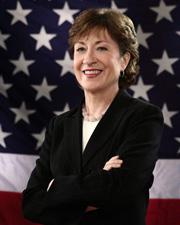
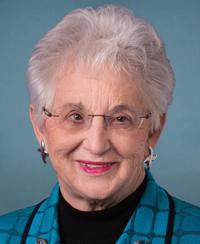
Influential lawmakers like Maine Senator Susan Collins and North Carolina Representative Virginia Fox were ousted from their seats.
Fox served as either the chair or ranking member of the House Education Committee from 2017 to 2025, during which time she interrogated college presidents in anti-Semitism hearings, and issued the committee's first of numerous subpoenas to higher ed leaders.
Candidates endorsed by the American Association of University Professors won big, taking 11 of 12 possible races.
Overall, higher education advocates hold hope with Democrats in office and that that will mean being better able to address issues of higher education affordability, among others.
According to new data from the Center for Information and Research on Civic Learning and Engagement, roughly 27% of eligible young voters ages 18 to 29 cast a ballot in the 2026 midterms, a number within a few percentage points of the highest youth turnout rate for a midterm election in American history.
The 35-point margin of support for Democrats among young voters in 2026 is also one of the largest recorded in a national election.
In non-election news, some higher ed institutions are abandoning flock camera surveillance on campus, an effort termed deflocking.
This follows privacy concern pushback from student communities like D-Flock Emory Coalition.
Universities, including Emory, Cornell, and Penn State, have declined to renew their contracts with Flock Safety and removed Flock technology from their campuses.
Lastly, a new study by the National Bureau of Economic Research exploring why students censored themselves in classroom discussions found that students with strongly held views on either end of the political spectrum, left or right, shared their perspectives most often, while students with moderate or mildly conservative beliefs spoke the least.
Students also tended to overestimate how much their peers disagreed with them.
According to the study's authors, when widely held views go unspoken in the classroom, students may see their peers as more extreme than they are and leave college less prepared to navigate disagreements.
After Democrats' sweeping victory in the midterm elections, pundits and press outlets are discussing how higher ed may be reshaped by the results.
Influential lawmakers like Maine Senator Susan Collins and North Carolina Representative Virginia Fox were ousted from their seats.
Fox served as either the chair or ranking member of the House Education Committee from 2017 to 2025, during which time she interrogated college presidents in anti-Semitism hearings, and issued the committee's first of numerous subpoenas to higher ed leaders.
Candidates endorsed by the American Association of University Professors won big, taking 11 of 12 possible races.
Overall, higher education advocates hold hope with Democrats in office and that that will mean being better able to address issues of higher education affordability, among others.
According to new data from the Center for Information and Research on Civic Learning and Engagement, roughly 27% of eligible young voters ages 18 to 29 cast a ballot in the 2026 midterms, a number within a few percentage points of the highest youth turnout rate for a midterm election in American history.
The 35-point margin of support for Democrats among young voters in 2026 is also one of the largest recorded in a national election.
In non-election news, some higher ed institutions are abandoning flock camera surveillance on campus, an effort termed deflocking.
This follows privacy concern pushback from student communities like D-Flock Emory Coalition.
Universities, including Emory, Cornell, and Penn State, have declined to renew their contracts with Flock Safety and removed Flock technology from their campuses.
Lastly, a new study by the National Bureau of Economic Research exploring why students censored themselves in classroom discussions found that students with strongly held views on either end of the political spectrum, left or right, shared their perspectives most often, while students with moderate or mildly conservative beliefs spoke the least.
Students also tended to overestimate how much their peers disagreed with them.
According to the study's authors, when widely held views go unspoken in the classroom, students may see their peers as more extreme than they are and leave college less prepared to navigate disagreements.
The rest of this transcript — segmented and speaker-labeled, so you land on the exact moment something was said
Search every transcript — by keyword, by phrase, or by meaning, across every show Radar indexes
Trends — what is surging across podcasts, measured against its own baseline
Alerts — when a name you follow appears in a newly indexed episode
No account is needed to search Radar.