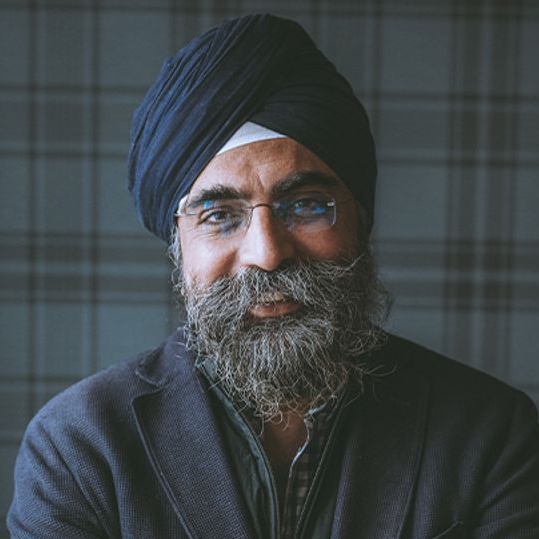
Rathna RamanathanGuest
Jarrett FullerHost
I always like to start this fall slate of episodes with a sort of back to school conversation.

I work as a design professor and so so much of my schedule and my life revolves around the academic calendar.

And so with a new semester here, I find myself thinking about what I do and why I do it.

But I'm also thinking about bigger questions around what design education is even for anymore.

And How do we adapt what we're doing for a changing world? And what are the things that we should be teaching? And what are the things that we can leave behind? And the person that I wanted to talk about all of this with, who I thought could help me maybe make sense of it all, is Rathna Ramanathan.

Rathna is the provost at Central Saint Martins, and she's the executive dean of global affairs at the University of the Arts, London.

And over the last few years at Central Saint Martins, Rathna has led a complete restructuring of the college that officially launched just last year.

Organized not by discipline or degree, CSM's new model is organized around what they call schools of thought.

There's the culture school, the system school, and the material school, and each degree sits both within one of those schools but also exists across all of them.

Rathna describes these schools not as hierarchies that sit on top of the disciplines, as borders around the disciplines, but as foundations for which each discipline can build upon.

And for my money, it's a completely new way of thinking about art and design education and thinking about how art and design education is structured.

And one that I really believe seems really well suited for the frankly precariousness that many graduates are entering into today.

So I wanted to have Ratha on the show to talk about the new schools of thought model and the ideas behind it.

But I also wanted to talk structurally about how it actually works in practice, what it means for students.

Through this all, we talk about the value of art and design education and the role it plays in setting up students for long careers in the arts.
Read the full transcript.
Create an account to read the whole episode, search across every transcript, and follow the shows you care about.